
Books and movies that have soul
 Jeroen
Not all those who wander are lostNetherlands Veteran
Jeroen
Not all those who wander are lostNetherlands Veteran
Lately I have been reading ‘Meetings with Remarkable Men’ by G. I. Gurdjieff, and in the introduction I came across a long memory of the writer where he cited a speech by a Persian gentleman of his acquaintance. This man told of how literature formed the minds of subsequent generations, and how he felt that modern literature had lost its soul. As an example of an older book that did have soul, he held up ‘A Thousand and One Nights’.
So that made me start thinking about modern works of fiction that did have soul, and I think this is the start of a very interesting discussion about fiction that has soul, versus that which is just entertainment. I did a little research on Goodreads, about what people there consider books that are food for the soul, and I’ve made up a short list of books and movies that may fit the bill.
The Alchemist, book by Paulo Coelho… This is a short book about a shepherd boy who goes on a journey from Spain across North Africa to the Pyramids in order to find treasure. What he finds is not just physical treasure but something of the mysterious.
The Little Prince, book by Antoine St Exupery… This novella follows a young prince who visits various planets, including Earth, and addresses themes of loneliness, friendship, love, and loss. Despite its style as a children's book, The Little Prince makes observations about life, adults, and human nature.
Eat Pray Love, book by Elizabeth Gilbert… This memoir chronicles the author's trip around the world after her divorce and what she discovered during her travels. She rediscovers food in Italy, prayer in India and love in Bali.
The Way, movie… This film follows a physician on a journey along the Camino de Santiago, as he follows in the footsteps of his dead son in order to leave behind his ashes. Along the way he discovers companionship, lightheartedness and diverse communities.
Spirited Away, movie… This animated film follows Chihiro, a young girl who finds herself in the world of the spirits. It is arguably Hayao Miyazaki’s masterwork, speaking visually and emotionally to the soul.
I think these works speak to the sensation of wonder and the mysterious, the sense of being nourished by something extraordinary. I stayed away from things like ‘The Lord of the Rings’ (too much darkness and battle) or ‘The Count of Monte Christo’ (it’s a story about revenge), which although they are great stories do not actually nurture.


Comments
The Tree of Life is a movie that I think qualifies here. Also anything by Andrei Tarkovsky. One doesn't have to like Tarkovsky's works, but if they have anything it's a soul. The Apu trilogy could also qualify, possibly.
Tarkovsky is interesting, I’ve seen Solaris by him and Stalker. I was familiar with the book Solaris and so could pinpoint the major themes, but Stalker I found hard to comprehend. Which probably just meant I should have put in a bit more effort.
Another movie with soul is Godfrey Reggio’s Koyaanisqatsi, which I found totally fascinating on first viewing. It just wouldn’t let me go until I had seen it another 5 or 6 times over the course of a couple of weeks. A very resonant film.
But I think there is a question here. If you truly look at which books have impacted the minds of the generations, you end up with a very different list. H. G. Wells’ War of the Worlds for example, which arguably birthed the first Superman comic and the whole superhero genre. Tolkien’s The Lord of the Rings started fantasy fiction books and movies.
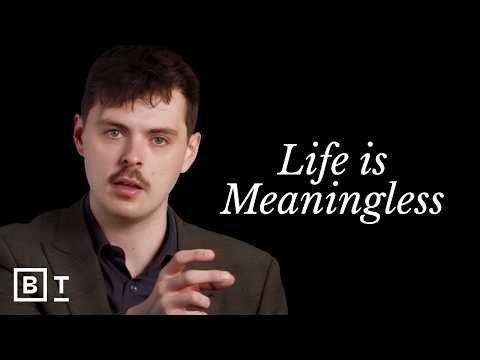
I found this video interesting, about the disappearance of the sacred from Western society. This goes back hundreds of years to the European overseas trading empires and the so-called Enlightenment, which led to the Industrial Revolution. The current materialist age driven by the internet is only the latest of a series of trends all pointing in the same direction.
All the native peoples of the Americas and Asia and Oceania who still retained their own mythology and sense of the sacred have not managed to overturn the tide of modernisation. Partially because centralised rule is often enforced at gunpoint. I find it sad that this part of human heritage is vanishing, that so many people are losing the sense of sacred meaning in their lives.
I think I watched that one when it came out, but watched it again. YouTube then recommended this one that was very much related coming about the issue from the other end of the spectrum.
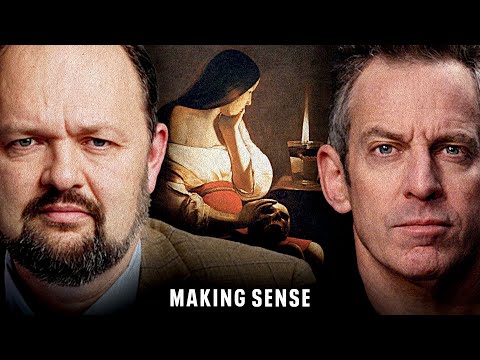
And then while out and about threw on Sam Harris talking to the New York Times "religious conservative" Ross Douthat and they talked about basically the same thing from their own perspectives. Though their conversation centered more around religion and culture rather than the more philosophical ideas of sacred and profane.
If you're interested in the rest of the Harris - Douthat conversation I believe I can share it privately somehow.
The thing is, the sacred used to represent the things you want to preserve. There used to be a very direct connection between living off the land and off nature, and wanting to preserve and nurture nature’s abundance. That was the old farmer’s wisdom blended with some ecology, respect and a deep brotherhood with nature form part of that. And in that way, we are all still farmer/ecologists because we partake of their lifestyle through the food chain.
So to talk about nihilism in the same breath feels to me like just an intellectual exercise, a piece of philosophy without real meaning to it because to be a nihilist is to be profoundly unhealthy, disrespectful of the life around you. I don’t choose to engage with it because to empathically embody those ideas, even just temporarily, makes me ill. To look for the sacred in life is the exact opposite.
Of course a lot of these podcasts are looking for talking points, and to consider the failure of a stream of mind such as secularism is a great talking point. From the standpoint of embodied wisdom though, I’m more concerned about what’s happening to the insect world than to humans.
The land is sacred to you. Life is sacred to others. You've expressed views that are profane against the sacredness of life in terms of assisted suicide or perhaps abortion. Why are you against the sacred? How do we all come to an agreement on what is sacred in the first place?
The sacred is also a means to tie communities together in that people who share views of the sacred tighten their bonds.
It wasn't a talk on how great nihilism was, it was talking about problems inherent with the view. Its pretty much the exact same thing you were bringing up, just viewing it from a different angle, your critical attitude is off base IMO. I don't think you're really understanding or grappling with the problem, its more a posturing of virtue.
I’m just considering whether philosophy and nihilism has anything to do with the soul and the sacred. The mind tries to turn everything into a problem to be grappled with - this is the disease of the mind. But not everything needs to be seen through its lens, it is possible to achieve a level of clarity while just relaxing in being.
For me, the meaning of the sacred is something I am exploring through musing about it. Yes I agree with you it is an individual opinion, born of my own unique background and childhood. But there is no need to agree with other people on its meaning. It is part of my own individual mythology, I’m not so interested in slotting into society.
So it’s not so much posturing, more a process of self-exploration. It’s a question of feeling, of understanding the junction where life has brought us.
I think you're talking about something experiential, what's it like from the inside, so to speak.
I find this view, wherever you got it from, to be rather condescending towards what is the finger pointing at the moon or the raft that gets us to the other shore. Its not the thing itself, its a tool not a disease.
Clarity about what though? If you're not asking where you're looking maybe you're clear about a misperception.
Alright, so long as you're making a point about how it is for you there isn't anything for me to disagree with. If you're making a larger point about how it should be for others or the world I think its fair game to contribute or see things differently.
An experiential path of feeling isn't something that is really open to me. As I talked about in a recent other thread, my feelings often aren't my own. Perhaps once I'm able to retire and retreat more from the world... A philosophical approach points the way and keeps my head above water. If it doesn't speak to what you're doing that's fine, but it doesn't make you right and me wrong.
Also, I'd argue that an exploration should include the shadow elements or its incomplete, it ignores part of life and experience.
I see that you’re grappling with the problem. For you, philosophy and the mind are a support for when your empathic gifts bring other people’s emotions too close. I hope this approach affords you peace and equanimity.
I wonder, have you ever approached a Buddhist teacher about your empathy? It seems to me an obstacle in the way of practice, and they may have a way of coping with it.
In some ways it is an obstacle, in other ways its helpful. I also take in emotions that are positive that may have taken work to develop. And once seen and experienced are easier to remember and train.
More importantly though it helps with non attachment and not identifying as strongly with what is occurring in the mind.
With internet communities there has been more information and help from others. And even more talk and recognition in the psychology sphere. But at least so far there doesn't seem to be a "cure" but there are plenty of strategies for adjusting and coping to manage the more negative aspects.