
Welcome home! Please contact lincoln@icrontic.com if you have any difficulty logging in or using the site. New registrations must be manually approved which may take several days. Can't log in? Try clearing your browser's cookies.
The Dalai Lama in ‘Wisdom of Happiness’
 Jeroen
Not all those who wander are lostNetherlands Veteran
Jeroen
Not all those who wander are lostNetherlands Veteran
I heard about this from people who had gone to see in the cinema here in the Netherlands…
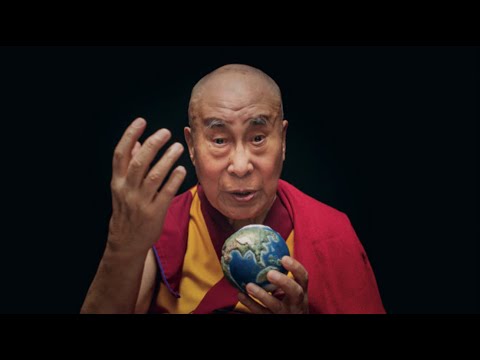
It’s a 1 hour 30 mins documentary, which seems to have been quite professionally done, in which the Dalai Lama brings his message in relatively simple terms. I might buy it once it releases on Apple TV, it’s on pre-order there for 10 euros. I heard it might be out on the 16th of October.
Has anyone seen it?

1
Comments
Much appreciated. I will be sure to watch!
A review I found and translated…
Against the background of an empty, dark universe, he looks straight at you. Wrapped in his red-yellow py. “Eight billion people. Everyone, including our enemy, wants peace.” That's how you get to the movie Wisdom of Happiness 'face to face with the Dalai Lama', sitting in a cinema chair of course.
Of course, this is not a meeting with the 90-year-old Buddhist spiritual leader, born Tenzin Gyatso. But there are less comfortable seats to listen to an hour and a half sermon about inner peace.
In addition, this reading will be provided with a musical and visual setting. With beautiful nature images, and historical film material, such as the Dalai Lama among the refugees crossing the Tibetan mountains on foot.
Professor Paul van der Velde, a specialist in Asian religions at Radboud University in Nijmegen, watched the film at our request.
The Dalai Lama says that he would have preferred to be just a child in the past. And could have played, instead of having to memorise all those Buddhist texts. Very painful.
“Yes, that boys should become monks or, like him, dalai lama, really deprives a child of the chance to want something else. The sixth Dalai Lama, who lived around 1700, stepped down and was killed perhaps because of that. That really couldn't be heard, that was a drama.
The Dalai Lama when he was young.
“It's a whole system in Tibetan culture: you take a boy away from his parents' tent. That's the rules. You may have reservations about that. But the journey of an average tourist to Tibet was only successful with photos of those little, cute monks.
“If I compare that to what is happening on Sumatra in Indonesia with five thousand boys being educated with the Koran, it is suddenly harmful. If I bring that up, it sounds like 'yes, but in Tibet the children are experiencing spiritual growth'. Yes, hoho.”
There was even a special, 'holy' whip for him, reveals the Dalai Lama. About which he says: 'But I didn't feel any sacred pain'.
“That whip is not an overdoing. If you now enter a Tibetan monastery, you will see that those monks are very ordinary boys, who just want to mess around. But there is often a monk's agent walking around there with a sturdy stick. He's hitting. That is still the case.”
Where does the rosy image of the Tibetan Buddhist world come from?
“At the beginning of the last century, it was the theosophists who became obsessed with Tibet. They came into contact with ancient Buddhist texts about Shambhala, a mythical kingdom, which was located in Tibet. This movement again had a lot of influence on the New Age movement of the 1960s and 1970s. Thus remained the somewhat naive idea of paradise around Tibet.
“An age-old deep wisdom would have solidised there, a 'culture of peace', the Dalai Lama calls it in the film. But that's not true. Tibetan history is all war, one and all struggle.
“What has been done by China, which occupied Tibet, is horrific, that is so. What has been done to the Tibetans is indefensible. Only the dream image of Tibet deserves an adjustment: we should not sweep the dark sides of that culture under the carpet. The Tibet of the Dalai Lamas also experienced a lot of slavery.”
Yet the Dalai Lama is widely seen as a moral leader. How did that happen?
“He owes that moral leadership in part to what happened to him, to the fact that he is the leader of an oppressed people, that he had to flee Tibet, and lives in exile in Dharamsala, India. When this became world news, he became a globally known figure.
“He is also a man with huge communication skills. Look, much of what he says is not that impressive, you can hang his tile wisdom on the wall in Delft blue in no time. But his lessons are very much about his personality. He sits there and looks at the man. You can clearly see that he himself believes in it. He embodies his message. That's cool.
In the film, the Dalai Lama addresses the viewer and talks about finding inner peace and universal happiness.
“What I liked about the film is that he has endured so much misery in his life, and has had to do such difficult things, but still comes with a relatively simple message. You should know: Tibetan Buddhism is full of complicated terms and concepts. But he knows how to bring everything back to a story about inner peace. As an old man, he looks back on a well-spended life, and no longer finds it necessary to be so difficult.
“He knows how to keep people together. It is a connecting figure. And he knows how to hold attention, no matter how old he is. That is admirable.”
Towards the end of the film, the Dalai Lama expresses the hope that women will rule the world, because they would be more peaceful. Is Tibetan Buddhism so female-friendly?
"No. That's really his own message. In the entire Buddhist world, the man is at the top. And people look down on nuns, who also have to abide by many more rules. Tibet does have a tradition of wise women, you have female gurus there. But here, too, the position of women is much less than that of men.
“I completely agree with the Dalai Lama that if we were to seek inner peace, we could make it a wonderful world. We have that potential. But the fact is, in the end we don't do it. That is the point. And that unfortunately remains fairly undiscussed.
“What I did like to hear is that you achieve that inner peace and mutual connection according to the Dalai Lama by using your head. With Western Buddhists you often hear that it would be about the heart. No, it's something that's essential, that's just Buddhism.”
The Dalai Lama’s Wisdom of Happiness teaches that true peace arises from understanding the nature of the mind and cultivating compassion for all beings. His approach beautifully aligns with Jung’s concept of anima and animus, which represent the inner balance of masculine and feminine energies within the psyche. Just as the Dalai Lama speaks of harmony between self and others, anima and animus remind us of the harmony we must achieve within ourselves.
By integrating both aspects of our inner world, we not only gain emotional balance but also embody the universal compassion the Dalai Lama describes — a state where happiness flows naturally from inner unity and awareness.
This is finally out on Apple TV so I just got a chance to watch it. I found it quite touching, that at 90 years old the Dalai Lama still finds the opportunity to carry a message out to the world. I’ll write a short review when I’ve seen it a second time, I keep falling asleep…
So he talks about how human beings at base are good and compassionate, but how emotions of greed and anger have gotten our minds to produce thoughts of being ruthless, and this has led to organised violence between groups, in other words war.
He talks about his mother, and how she taught him compassion. He talks about women around the world becoming more active in governance, and how women leaders might provide hope for peace and compassion in the world.
He talks about how we are not educated in managing our emotions, and how doing this might lead to better outcomes and a more peaceful and happier society.