
Welcome home! Please contact lincoln@icrontic.com if you have any difficulty logging in or using the site. New registrations must be manually approved which may take several days. Can't log in? Try clearing your browser's cookies.
The "ill fitting axle" all the way down
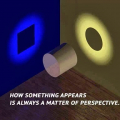 person
Don't believe everything you thinkThe liminal space Veteran
person
Don't believe everything you thinkThe liminal space Veteran
Dukkha literally translated comes out to something like Du (bad) and kha (axle-hole). So rather than a suffering that implies a disruption of something sound, dukkha says conditions are fundamentally unsatisfactory.
This has hit home recently as I've been involved with AI chats on problems and solutions. Over and over getting to the bottom of one thing pushes up something else. Grasping one solution causes other problems to flow out. The inertia to balance the scales tips over into injustice. Its tradeoffs all the way down.
I don't think that means we don't try. Trying is the only imperfect way we have to make things better or keep things good. Its just hitting home right now that there is no solid ground to stand on.
0
Comments
Hmm groundlessness
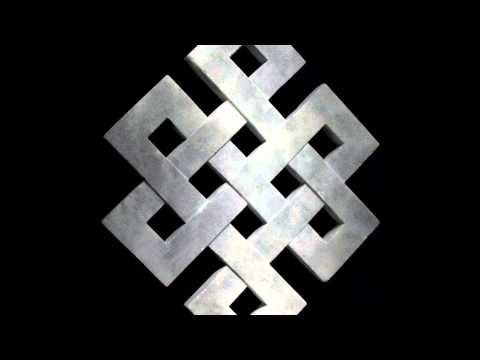
"Every thing evolves, comes to mean nothing is true"
~Friedrich Nietzsche~
"...It lets us see each personal encounter as happening for the first time..."
I like that.
FYI this apparently is a paraphrase of what Nietzsche thought rather than a direct quote.
I think the Two Truths of Buddhism would say Nietzsche is only half right. There is no absolute truth, or rather there is no unconditioned, fixed truth. But conventionally the world is still conditioned, non things combine to create other non things. "Trees" grow out of the "ground" rather than "clouds". So we can let go of a lot and hold things much lighter, but we also can avoid falling into arbitrariness and nihilism.
I am reminded of a seeker who quietly but powerfuly realized: 'My life will not turn out'. I take that to mean: as you say, there is no way to fiddle with ourselves and our lives and produce a suffering-free state. A deep realization of the 1st NT. However, he continued by deeply inquiring into 'what then is it like to be human?' for 1.5 years and had a big realization.
https://www.amazon.com/Awake-Wheel-Highway-Adventures-Unmasking/dp/0986445738
Personally, I am reminded of David R Hawkins' Map of Conciousness. Around six to seven years ago I had an intense period of personal training for around 1.5 years in which I believe I rose up for sustained periods of time to his level of 'willingness'.
The mental and emotional 'space' of this way of being is totally different from how I lived before. For instance, when some trouble arose, I would no longer think 'woe is me' or be frustrated/scared/angry/etc. Rather, I would think: 'What must I be doing to remedy or improve the situation?' and then 'OK, I guess I'm doing that' and continue with doing it with a positive attitude.
There was a lot of acceptance, energy (freed up from a diminishment of negative emotion), courage, joie de vivre even in the midst of difficulties and... willingness. So, here Dukha was not eliminated, but very much reframed and encountered with a much healthier overal attitude.
https://share.google/FWwrrpcjHHfLKqhXN
Great Insight everyone,
Dharma has many ways of explaining and understanding and practicing. It is the ability to hear, see (for example the yin/yang animation that @Shoshin1 posted) and understand from different impacts/directions that allows us to to unravel our own bundle of meaning and Way...
A bit like a hall of mirrors or shards of reality...
https://en.wikipedia.org/wiki/Melong
I'm aware that Nietzsche didn't actually use the quote, I came across the quote in a book about his philosophy, it just simplifies what he was getting at. Reality is a constant flux of "becoming".
The universe is not in a state of flux, it is flux Every thing evolves would come to mean no thing is true ...no thing...
I guess I would ask, what does it mean to you then? What isn't true? How does it impact how any of us live or think or feel?
Thus have I heard and from what I gather, the whole idea of Dharma practice is for the practitioner to see through the veils of deception conjured up by a conditioned mind, a mind that defaults to the negative outcome when confronted with dukkha events.
And those negative outcomes more often than not involve the misleading concept of permanence, perceiving some situations as unchangeable, when the ultimate teaching is that nothing is permanent, everything is flux.
Pleasant things are dukkha just as much as what one perceives as negative things, because the same conditioned mind grasps at pleasure as if it could last.
There is no permanent entity doing the thinking, feeling, or living, and the more there is a realisation of this, an experiential understanding, the looser the attachment to things becomes, which will eventually lead to going with the flow of change and not against it.
None of this should stop the practitioner from showing empathy and putting this empathy into action, aka compassion, when confronted with a situation where other sentient beings are suffering injustice.
I think this is correct to a degree. People cling to ideas and notions for the sake of those ideas and notions. I think my point about the Two Truths was that it can be taken too far. The conventional world still operates in a lawful, cause and effect manner. You could tell someone we're going to grow crops with Brawndo now rather than water, because it has electrolytes. And they could resist the idea not because they are resistant to change, but because they think Brawndo won't work and will actually kill the plants. Or would you be willing to go with the flow of Trump's changes because you have a deep sense of emptiness?
I don't suffer fools and Trump is a fool, but a very dangerous one.
Change is inevitable; and in this case suffering is optional. One does not have to give in to this forced change brought about by an unhinged psychopath. What Trump is trying to implement goes against the grain of most people with empathy and compassion. Silence in this case is not golden... it is complicity.
What Trump is doing is barbaric and causing major suffering, not only to what I would call decent American people who oppose what Trump is doing by 'peacefully protesting,' but to most of the world. Trump, for all intents and purposes, is going against the flow.
That is why I mentioned this.
Which brings me to an interesting encounter I had yesterday when I was standing with another peace activist in the CBD. This peace activist in her 80s stands there Monday to Friday holding different signs, each with different text and images highlighting the injustices and war crimes by the US/Trump and Israel/Netanyahu on the innocent civilians of West Asia, aka the Middle East. I have free time on two weekdays to go and stand with her. I was there holding one of the signs when a couple of people, one a Tibetan Buddhist monk in robes, walked by. The monk paused, looked at the sign, and greeted me with a smile and a nod of approval with the words "Tashi Delek."
Well, my point is that on the conventional level some things are better than others and that's okay. The argument that people should see the flux of things and let go for our ideas but we shouldn't let go for their ideas isn't really a view of emptiness.