
Best Of
Re: Drunken meditation...
With the title I wasn't sure what this would be  With the legs I might play it cautious and do some walking meditation shortly after my legs had felt numb. I have experience with that in the past and I would stretch them out until enough feeling was back that I trust standing on them and then do walking meditation. You might be able to adjust posture or try: chair, zafu cushion, or other options for meditation.
I think it's a great idea to do mindful breathing while under the influence of your medical treatment. I'd actually say that I'm somewhat critical of meditation practices that are only held as meaningful when you feel at ease. Idealy I think meditation should be something that you can practice with when you are not feeling at your best such as when you have to have medical treatments.
 Jeffrey
Re: Drunken meditation...
Hello yagr
If you are suffering circulation difficulties because of your choice of a meditation posture then you should either get that position checked by a qualified meditation teacher or you should try another position that doesn't cause those difficulties. (Higher cushions, better positioning on those cushions, thicker zabuton, Burmese, seiza, bench, thinner clothing, Chair?)
Long term circulation difficulties deprive the cells downstream of oxygen and depending on the severity and length of time of that restriction will result in their decline and eventual cell death.
Restrictive blood flow can also facilitate the creation of blood clots which can be a deadly circumstance to be casual about. So yeah ...permanent damage is possible while also probably being completely un necessary.
The second bit about meditating while feeling intoxicated can be a bit controversial in a number of schools. (mostly around selling the wine of delusion or not being respectful enough of the meditation practice to be sober when you're doing it).
Because I can practice no where else except within this present nano second, I subscribe to attempting to do so in whatever circumstances are occurring right now.
If we only learn how to meditate when all conditions are ideal, how will that possible help prepare us to do likewise when conditions are less than ideal ......like when we are medicated and dying. How much of our life circumstances are ever actually ideal anyway.
Plus in your circumstances its a medically induced feeling of drunkenness so it can't even be said that you are encouraging drunken behavior's by meditating with it.
I also think that if you set up a specific time everyday for when you will formally meditate then you should just meditate then regardless of whether you happen to be mad/ sad/ sick/ healthy/happy/ depressed/ sleepy/ stimulated/ drunk or alert because it all has something to teach you when you are prepared to simply face it as it is.
 how
Re: bell hooks on moving towards a culture of love
So it's a personally-spiritual decision, not necessarily a Grammarly-correct one. God save me from the precious politically-correct. Sheeesh... rolleyes.
 federica
Re: I am really, really confused about what meditation actually is
Trying to define what meditation actually is, is like trying to define what love actually is.
You'll get almost as many different definitions of meditation as there are people ready to give them.
The plethora of different Buddhist schools out there are all reflections of that diversity of view but are really just different facets of the same Dharmic jewel of the Buddha's Four Noble Truths & the Eight fold Path.
It's not so much about wondering which definition might be correct or incorrect as it is checking out the various styles that are available to you and then choosing one that you think you can persevere with long enough to experience what they are offering.
It sounds like this is what you have actually done, so bravo & don't get confused by the alternative certainties of others. The path towards suffering's cessation is wide and you might be surprised at the diversity of different pilgrims that you'll end up sharing it with.
I come from the Soto Zen school which offers such helpful tips on thinking & meditation as "Don't try to think & and Don't try not to think! Just sitting with no deliberate thought is the important aspect of Zen Meditation."
Its a marvel that anyone ever tries it.
So your question of "what am I missing?" Maybe nothing but....
One of the things that meditators often miss is that they end up becoming attached to some aspect of their experiences of meditation, not really understanding that meditation is a viewing of everything changing. So when that change also begins to include the very meditative experiences that they've become attached to, confusion and suffering is the inevitable result.
Cheers & welcome aboard.
how
Re: An old mans ponderings
This seems related to when to polish, before enlightenment or after. In other words, are we aiming for perfection or maximum dukkha freedom?
I have too many flaws. It is why inspiration, prayers/puja/blessing/well wishes are so essential ...
I have too little strength. It is why I tend to stay within strengths as much as possible. Balance of mind, body and speech is probably unattainable. Good companionship is so important ...

 lobster
Re: Is meditating on a subject skillful or not, in your opinion?
@Ren_in_black said:
By this I mean something is bothering you, perhaps a craving. Is it a good idea to meditate on that craving, perhaps letting yourself observe that it is there and reminding yourself that it will cease? And letting the thoughts come and go on that.Or would it be more skillful to sit and focus on the breath until you're deep in a meditation anyway, so the craving just becomes one of many thoughts that passes away?
From writing this, it sounds like both approaches are good. But first impressions are sometimes deceiving.

I think it depends on the person and the subject in question. I think it could be skillful for someone who's able to watch thoughts and cravings arise and cease. But it may not be very helpful for one who has difficulties doing that and may be compelled to indulge in those thoughts and cravings and eventually act on them by focusing on them. If that's the case, then using the breath as a focus may help to let them pass and then observe that, or in more difficult cases, focusing on a counter subject to discourage mentally delighting in whatever the subject is.
 Jason
Re: Getting back on the cushion
The facing of your particular arising experiences of fear is not something to rely on strangers about on any internet site.
They don't know you, or your history, just as you don't know theirs. They will not be able to see how you respond to their guidance or even be reliably there for you through that process.
I would look for some personal "one on one" help from a professional who might also be open to including some meditation in that help.
While everyone here on this meditation site would love to see you back on your cushion, meditation is just not for everyone, all of the time, especially as a stand alone solution to regular and unwitnessed overpowering (EF's).
Good luck in this journey and I hope you will return here again to teach us of what you are learning about it all.
how
Re: Getting back on the cushion
I don't have PTSD but I do have periods of psychosis with things like superstitious delusions and voices and I have the idea that meditation can make things worse. What I have done at times is stop meditating for 2 months and then start again later when I feel it is a good time.
And meditation isn't the only dharma practice and don't feel that your not properly doing Buddhism merely because you would need to take a break from meditation.
Jeffrey
Re: The Complete Picture
@Kerome said:
I think that’s very true, there is a point where one has had enough of sutras. I find that reading one anthology is enough to take me there. For me absorbing one reasonably complex sutra is enough for a day or a few days even.
As a western practitioner you have that luxury, to say I’d like a sutra today, or to say I feel like digesting the wisdom I already have. It takes a certain kind of passion to accumulate a lot of sutras in the brain, or to learn Pali for it.
The Tibetan Dharma teacher/Lama who used to come to the island to give Dharma talks, would often say at the end of the talk "Don't just go away 'thinking' about what I've said, put it into practice and see for yourself!"
Unfortunately there are those who are good at intellectually absorbing the teachings and can paraphrase the contents of the Dharma talk weeks (even months) later, but they seem to have a hard time putting the actual teachings into practice,...In other words they are becoming scholars (learning only by rote, and not by practical experience...ie, developing experiential understanding/knowledge) ...
Perhaps existing karmic/habitual behaviour patterns are blocking the next level/step....and maybe one day when the conditions are right (fertile soil/mud) the seeds of the Dharma talk will germinate and grow...
No mud...no lotus ..... ~TNH~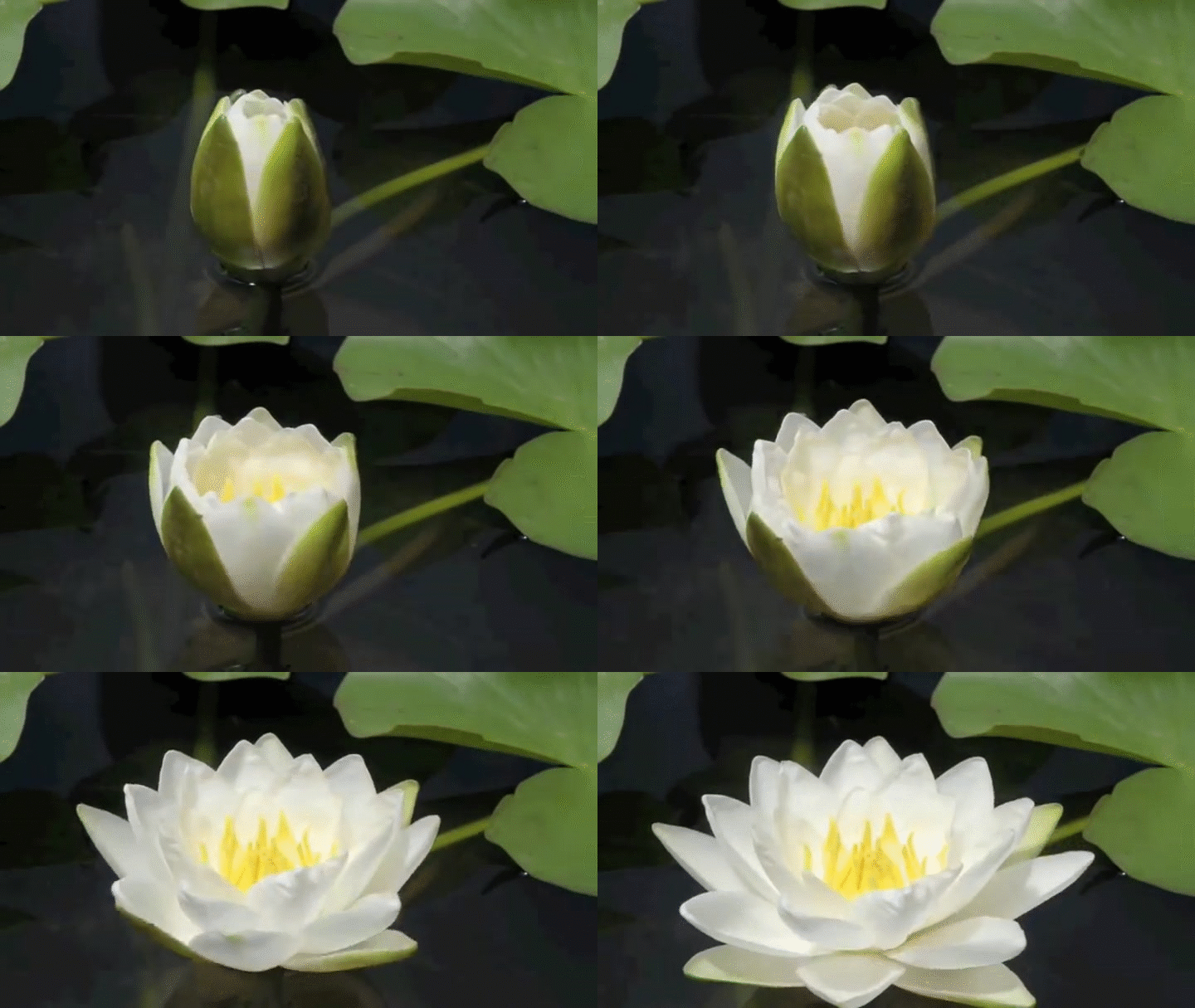
...however at times the mind's lotus (through karmic interference=not knowing AKA ignorance ) may continue to wallow in the mud and not rise up through it....force of habit (pattern)
The interesting thing about the 4NTs & 8FP is no matter what the Dharma talks are about, there are always some seeds of the Truths that are flowing through it...(if one is actively looking for them and not just listening )
If one thinks about it, living in Samsara with Dukkha around every corner, there are plenty of opportunities to put into practice what's been taught...one just has to work/prepare the soil.........for experiential understanding/knowledge to develop and grow...Carpe Diem & Ehipassiko......
Well that's the plan
 Shoshin