
Best Of
Re: The Complete Picture
@Kerome said:
I think that’s very true, there is a point where one has had enough of sutras. I find that reading one anthology is enough to take me there. For me absorbing one reasonably complex sutra is enough for a day or a few days even.
As a western practitioner you have that luxury, to say I’d like a sutra today, or to say I feel like digesting the wisdom I already have. It takes a certain kind of passion to accumulate a lot of sutras in the brain, or to learn Pali for it.
The Tibetan Dharma teacher/Lama who used to come to the island to give Dharma talks, would often say at the end of the talk "Don't just go away 'thinking' about what I've said, put it into practice and see for yourself!"
Unfortunately there are those who are good at intellectually absorbing the teachings and can paraphrase the contents of the Dharma talk weeks (even months) later, but they seem to have a hard time putting the actual teachings into practice,...In other words they are becoming scholars (learning only by rote, and not by practical experience...ie, developing experiential understanding/knowledge) ...
Perhaps existing karmic/habitual behaviour patterns are blocking the next level/step....and maybe one day when the conditions are right (fertile soil/mud) the seeds of the Dharma talk will germinate and grow...
No mud...no lotus ..... ~TNH~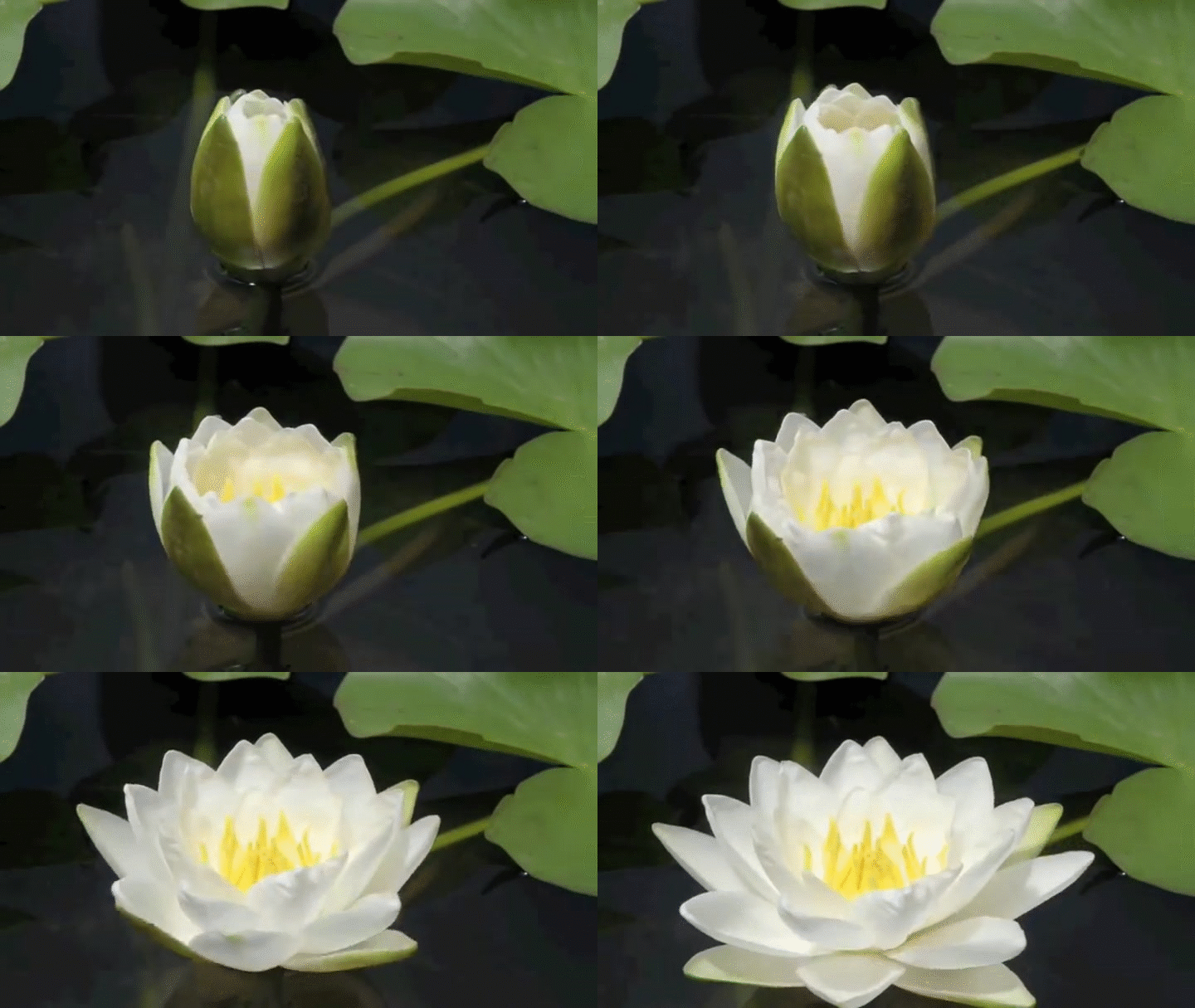
...however at times the mind's lotus (through karmic interference=not knowing AKA ignorance ) may continue to wallow in the mud and not rise up through it....force of habit (pattern)
The interesting thing about the 4NTs & 8FP is no matter what the Dharma talks are about, there are always some seeds of the Truths that are flowing through it...(if one is actively looking for them and not just listening )
If one thinks about it, living in Samsara with Dukkha around every corner, there are plenty of opportunities to put into practice what's been taught...one just has to work/prepare the soil.........for experiential understanding/knowledge to develop and grow...Carpe Diem & Ehipassiko......
Well that's the plan 
 Shoshin
Re: The Complete Picture
The Complete Picture
How useful is it, according to you, to build up a complete intellectual understanding of the Buddhist path while you walk it?
Not useful unless I have a desire to become an academic scholar.... in other words if one does not know how to balance intellectual study and practice...one could become just a talker...talking the talk ...but not walking the walk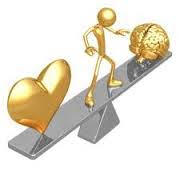
bearing in mind that the Devil too can cite scripture for his purpose ( think Dharma teachers who act unskillfully )
My aim ( if it can be called aim) is to become a diligent practitioner and this takes practice...practice which goes beyond words spoken, heard, read or thought...
I see the intellect as just a starting point, serving its purpose as a springboard ...however if one is not careful, one could end up bouncing up and down on the board in a state of confusion...

...or when the time is right one can take a leap of faith (out of the comfort zone of the intellect)
I'm under the impression that after a while, one reaches a point where the mind can become over saturated with Buddhist sutras, becoming waterlogged so to speak, a mind weighed down with thoughts...Saturation points vary from practitioner to practitioner....
I find the complete picture/sutra here..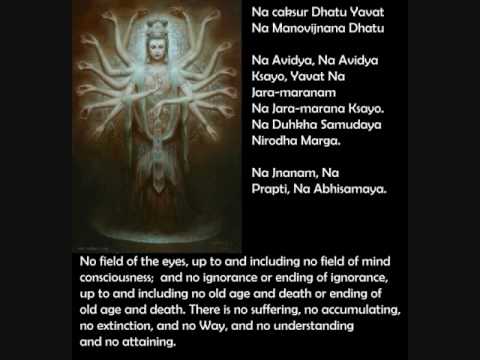
...I like to keep things basic/simple and travel light....4NTs & 8FP = Sunyata
Shoshin
Re: The Complete Picture
I think its important to remember that practice is the most important part and keep focused on that. If study becomes a distraction it can become a detriment to our development.
I find it useful to have the broad philosophical framework in place to work with my mind. Applying antidotes, cultivating deficient qualities.
I suppose it also depends on your aim. For our own practice a limited amount of knowledge is fine. This isn't intended as a slight in any way, I just think the example is good, take Forest Gump, his knowledge was small but he applied what he did know in a very skillful and productive manner. I think if you also want to advise others or actually teach, a wide variety of tools and teachings allows one to adjust better to the individual.
In the end I don't think there is a one size fits all approach here. The Dalai Lama is a great scholar and there are yogis who have maybe received only a few teachings but spend their lives in practice.
 person
Re: The Complete Picture
Hi Kerome!
I find it extremely useful for my practice, in fact, for some reason I keep seeing how this is another proof of how Buddhism is probably the ultimate path. It covers the intellectualism and meticulousness you would find inside modern Academia and Scientific centres. It also does not deny science nor Academia. Buddhism will just remind you that Ultimate Reality is Nibbana 
However, it can be distracting and one can unfortunately become too keen and concerned with the intellectual learning and, at the end, become a scholar of Buddhism, something that doesn't necessarily mean you are a practicing Buddhist. And this is the main point of this path. It reminds me of what Yuttadhammo Bhikkhu advised me to do when I asked him about how to improve my mindfulness during postmeditation / daily life.
"Practice, practice, practice."
PD: Thanks for the puredhamma.net link!
 Kotishka
Re: What happens if we stop meditating?
I began meditation in October. It was great and I kept getting better at longer sessions, kept studying the Dhamma and eventually attended a few group meditation sessions. I liked it so much!
Then.... I stopped in February and it got harder to return. Each day that passed I kept lying to myself, making up new excuses and eventually spent around 2 months in chaos. I realised how confused I was, my mind drifting and moving me from one spot to another carelessly, particularly certain vices.
However, meditation provided me with an insight and perspective -I think also ageing and leaving the early-mid 20s section- that helped me face what I was doing and why I was doing it. I understood it and, instead of being possessed by guilt, I accepted it. The point then was: what was I going to do?
I retook it! And it was hard... but I kept the dhamma study and meditation practice. Now I'm doing one hour minimum in the mornings, and if lazy or "busy" during the morning, I do a 30 minute evening sesh. This latter one is probably one of the greatest discoveries during my path. It helps me to go to sleep, it is so nice! I understand now why some meditators recommended splitting the practice into two sessions minimum.
Meditation is like a gym for me. A gym for my mind to construct a better self....by rejecting the idea of a self.... haha!
Kotishka
Re: Covid Cabin
Well guess what happened at work today ???
I had just been out the office to do a home visit and to pick up donated food from the supermarket, as I was about to get out the car to go back into the office, the manager came out saying "Keep your distance" then she went on to say that a client came into the office whilst I was out for food, he was in close contact with the two staff members who were in the office at the time, (no social distancing)... anyhow when the client asked for food assistance, he then told the staff that he had arrived back on the island on Monday after visiting his 'sick' daughter in Australia , he also said he was not checked at the boarder on arrival and was not told to go into quarantine by the boarder Covid 19 health control (the normal procedure is for all people arriving in NZ to go into quarantine for 14 days, they are taken by bus to one of the quarantine hotels) ...naturally the two staff members were in a bit of a panic when he said this (he has been wandering around the island coming in contact with other islanders for five days)...They asked what flight he was on but he said he couldn't remember...he was pretty vague about things...
When it comes to Covid19 quarantining, there have been a number of breaches where some returnees have been interacting with the general public when they are supposed to be in quarantine for 14 days...So the staff have a right to be genuine concerned, as this person too may have been breaching quarantine ...
Anyhow to cut a long story short...This client is in the habit of lying about things, especially when he wants something, he had done so on more than one occasion when he's come into our office....We are hoping that this is just another lie...but to be on the safe side, we contacted the local police and they are going to follow it up...
However if it is true, the two staff members will have to go into quarantine for 14 days and all the people the guy had come in contact with will have to be notified and also go into quarantine, and it being an island and a small island at that, over half the population could be infected...
Watch this space....
Shoshin
Re: Do all spiritual paths lead to the same ultimate goal?
What is a spiritual path? 
I used to be a determined militant atheist. I would consider the metaphysics of Buddhism for example, as absolute useless as they could not be verified by the scientific method. My path was to live life to the fullest, enjoy it and die after living a good life. However, this didn't go the way I expected. The more I tried to ignore the reality of Samsara, the stronger it got: what is the meaning of life? Why are we here? What happens after death? Why do we suffer? And then I began to see the limits of the path I was in... Not only I still had the same unresolved doubts I had classified as "useless" to have -because they could not be verified by science / logic- but I had the gut instinct there was something more, something I was not seeing. Paraphrasing Ajahn Sona, I confused freedom, which is to see things clearly as they are with being able to do what I wanted to do.
Slowly, I realised how much time I was wasting in a hedonistic and highly egoistic lifestyle. I like the term "confused" to describe my state. After exploring different paths -including a few months assisting to the local ISKCON temple - I started meditation and the study of Buddhism last year.
From my experience so far, I sense that, while some paths share the same road, even check-points / inns / scene points, there is a last trek that is more specific. In this sense, I'm starting to consider Buddhism as this ultimate path..
Why Buddhism? I perceive this practice as extremely beneficial for humankind and how its metaphysics actually make a lot of sense to me. It blends a perfect combination of faith, logic, and personal experience. Unlike the excessive bhakti -devotion- expected in ISKCON or the Catholic Church. It has helped me to change my life in an unprecedented way
Anyhow, I'm still learning.. 
Kotishka
Re: Finally got a zafu. I recommend for others with numb legs?
Update:
I have added an extra cushion and it worked! Cross-legged for one hour and 0 numbness.
I will be going anyway to the chiropractor to sort out my lower back to avoid any problems in the future.
Conclusion: listen to your body and get proper meditation instruction! 
Thank you all!
Kotishka
Re: Buddhist quotes
A Cup of Tea
Nan-in, a Japanese master during the Meiji era (1868-1912), received a university professor who came to inquire about Zen.
Nan-in served tea. He poured his visitor’s cup full, and then kept on pouring.
The professor watched the overflow until he no longer could restrain himself. “It is overfull. No more will go in!”
“Like this cup,” Nan-in said, “you are full of your own opinions and speculations. How can I show you Zen unless you first empty your cup?”
 Zenshin
Re: Funny Stuff
Yes, he studied with Sir Malcolm Sargent and conducted a couple of symphonies and orchestral pieces at the Royal Albert Hall. Chiefly - primarily though, he was a concert pianist. Loved Schubert but adored Rachmaninov.
ETA. After one Choral concert, during which my father played the organ as Sir Malcolm conducted, my father was able to obtain an ivory conductor's baton from the Conductor's Dais. The tip had snapped - as they often do, when a conductor taps the rail to gain attention - and my father kept it as a souvenir, all his life.
When my father died, my mother placed it in his hands. "To keep the Choir of Angels in check", she said.
 federica