
Best Of
Re: My meditation has been getting worse over time.
At a time when I counted breaths and my mind was in an ungodly uproar, I asked an instructor for some fruitful means of attack. "Count to ten," he replied. "If you can't count to ten, count to nine. If you can't count to nine, count to eight ... [etc.} ... and if you can't count to two, count to one. Anyone can count to one."
 genkaku
Re: Emotions
The Second Seal: All Emotions are Painful
The Tibetan word for emotion in this context is zagche, which means “contaminated” or “stained,” in the sense of being permeated by confusion or duality.
Certain emotions, such as aggression or jealousy, we naturally regard as pain. But what about love and affection, kindness and devotion, those nice, light and lovely emotions? We don’t think of them as painful; nevertheless, they imply duality, and this means that, in the end, they are a source of pain.
The dualistic mind includes almost every thought we have. Why is this painful? Because it is mistaken. Every dualistic mind is a mistaken mind, a mind that doesn’t understand the nature of things. So how are we to understand duality? It is subject and object: ourselves on the one hand and our experience on the other. This kind of dualistic perception is mistaken, as we can see in the case of different persons perceiving the same object in different ways. A man might think a certain woman is beautiful and that is his truth. But if that were some kind of absolute, independent kind of truth, then everyone else also would have to see her as beautiful as well. Clearly, this is not a truth that is independent of everything else. It is dependent on your mind; it is your own projection.
The dualistic mind creates a lot of expectations—a lot of hope, a lot of fear. Whenever there is a dualistic mind, there is hope and fear. Hope is perfect, systematized pain. We tend to think that hope is not painful, but actually it’s a big pain. As for the pain of fear, that’s not something we need to explain.
The Buddha said, “Understand suffering.” That is the first Noble Truth. Many of us mistake pain for pleasure—the pleasure we now have is actually the very cause of the pain that we are going to get sooner or later. Another Buddhist way of explaining this is to say that when a big pain becomes smaller, we call it pleasure. That’s what we call happiness.
Moreover, emotion does not have some kind of inherently real existence. When thirsty people see a mirage of water, they have a feeling of relief: “Great, there’s some water!” But as they get closer, the mirage disappears. That is an important aspect of emotion: emotion is something that does not have an independent existence.
This is why Buddhists conclude that all emotions are painful. It is because they are impermanent and dualistic that they are uncertain and always accompanied by hopes and fears. But ultimately, they don’t have, and never have had, an inherently existent nature, so, in a way, they are not worth much. Everything we create through our emotions is, in the end, completely futile and painful. This is why Buddhists do shamatha and vipashyana meditation—this helps to loosen the grip that our emotions have on us, and the obsessions we have because of them.
Question: Is compassion an emotion?
People like us have dualistic compassion, whereas the Buddha’s compassion does not involve subject and object. From a buddha’s point of view, compassion could never involve subject and object. This is what is called mahakaruna—great compassion.
I’m having difficulty accepting that all emotions are pain.
Okay, if you want a more philosophical expression, you can drop the word “emotion” and simply say, “All that is dualistic is pain.” But I like using the word “emotion” because it provokes us.
Isn’t pain impermanent?
Yeah! If you know this, then you’re all right. It’s because we don’t know this that we go through a lot of hassles trying to solve our problems. And that is the second biggest problem we have—trying to solve our problems.
From: http://www.lionsroar.com/buddhism-nutshell-four-seals-dharma/
 Gui
Re: Another Situation
I am going to get a feeding tube this week. I changed the way I was looking at things,
Had my 6 month appointment with my cardiologist.
He is a special human being. Throughout my heart attack, back issues and
my dyspepsia he has truly cared about how I feel.
On Monday he suggested that a tube may be a good idea while we figure out what is going on as not to let my body get weak.
As he was listening to my chest he noticed the tattoo on the left side of my chest of Buddha. He asked why I got it. I told him that after the loss of my brother I started studying Buddhism. He listened as I told him what it has done for me. When I was done he told me he was Muslim. He said that times are hard right now but keeps positive by remembering that we all have the same DNA. We are all in the same God or what ever we choose to call the power. He then wished me luck in my studies and suggested I read the Coran, not abbreviated, rather the full version. His eyes smiled as he reached out and grabbed my hand. He told me to be well and hang in there...
Afterwards I decided to embrace the use of the feeding tube and do what I can to keep my body healthy. I feel rejuvenated.
A profound experience in an unlikely environment. We will forever be connected.
 33_3
Re: Buddha was a guy
Yup. And Jesus was just a guy, too, who inspired others. I think it's helpful to realize that these spiritual leaders were just people. If they can do it, we can.  One day at a time, one foot in front of the other...
Dakini
NY Times: Dalai Lama says institution of DL is "backward". "I proudly, voluntarily ENDED [it]!"
Yet another thread on the topic: will the DL choose to reincarnate, or not? It seems that more recently, since announcing years ago that he might not, and thus sending the Chinese authorities into a tailspin, he's become resolved to end the tradition once and for all. In an unusually frank feature article in Sunday's New York Times Magazine, he explains (as reported by author Pankaj Mishra).
"...all religious institutions ... developed in feudal circumstances. Corrupted by hierarchical systems, they began to discriminate between men and women, they came to be compromised by such cultural spinoffs as Sharia law and the caste system. But, 'time change, they have to change. Therefore, Dalai Lama institution, I proudly, voluntarily, ended. So ... it is backward' " (Emphasis original to the article.)
This is a great way to justify a decision that was originally designed to throw a wrench into the Chinese government's plans to choose their own DL reincarnation, so as to better control the Tibetan people. It's also consistent with his past efforts to democratize his government-in-exile.
http://www.nytimes.com/2015/12/06/magazine/the-last-dalai-lama.html
Dakini
Re: Music that cheers you up
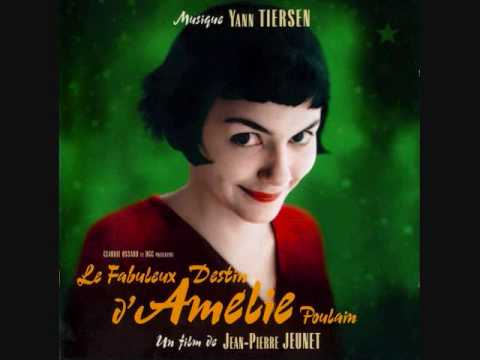
I love every song on the Amelie soundtrack. This is one of my current faves because I'm going through a powerful love for the piano lately.
 inyo
The Art of Knowing Directly
The Art of Knowing Directly
"Don’t be united in anything other than developing awareness; be aware – pure awareness. Be aware in a straight and direct way, straight and direct SATI. Feel the body directly, in a straight way. Be fully aware: don’t let there be anything in front or behind. This is called really teaching [oneself].
Let awareness move around: let it be with the body, with RUPA. And let awareness see the mind. When there are thoughts don’t prevent or obstruct anything, give awareness the full opportunity [to see]. As for the body: know directly and straightly, know purely. Use and search for whatever ways that makes you have awareness within your body. Make it direct and straight, know immediately.
But some people don’t do it like this; before, I was the same myself: I didn’t know directly and straightly. I reserved it and knew other things and there were thoughts. Why do we do it like this? One goes and uses reasoning, figuring out what is right and what is wrong. ‘Like this is right’. There is like and dislike. Why do we practice like that? What’s the point of knowing this and that? For example, when we are aware, we ask ourselves, ‘Am I aware or not’? Is this SATI or not? Is this kind of knowing, awareness? Or is it thought? Sometimes we’re thinking and we don’t know what awareness is and so there is a division all the time. Reasoning and perceptions of right and wrong come to interfere with practice and so one doesn’t practice fully."
"KNOW, KNOW, KNOW, KNOW, BE AWARE
When you start off practicing you shouldn’t use reasoning and think about what is right and wrong. Don’t do it like that! Know directly, using whatever method that makes you be aware of either the body or the mind. Don’t concentrate. Don’t think about right and wrong before you experience right and wrong, don’t think about ‘being and seeing’ before you actually ‘are and see’. That’s not it! It is wrong when something is wrong, it’s right when something is right, you are when you are and you see when you see.
Be aware directly, don’t concentrate and don’t use reasoning. You shouldn’t think, from now on there is no need to think. When there is awareness of the body and the mind for a long, long period, seeing automatically occurs. This is not called thinking, it is called discrimination (DHAMMAVICAYA) or ‘orderly reflection’ (YONISO-MANISIKARA), it differentiates and wisdom-knowledge or wisdom arises by itself. This is called practicing directly"
~LOO-ANG POR KAMKEE-AN SUVANNO
Based on the teachings of Luangphor Teean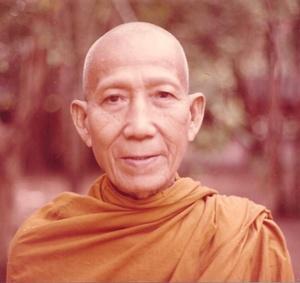
Source: WATCHING: NOT ‘BEING’
Re: Winter joke thread
A Pom, fresh off the plane at Sydney airport, is trying to negotiate Australian customs. Finally, when it's his turn to get his passport stamped, the customs officer starts rattling off the usual questions:

C.O. "How long do you intend to stay?"
POM "One week."
C.O. "What is the nature of this trip?"
POM "Business."
C.O. "Do you have any past criminal convictions?"
POM with a surprised look "Oh ...I didn't think we still needed to!"


 Shoshin