
Best Of
Re: How can someone practice no-self and improve his self at the same time?
@FleaMarket said:
@Dakini said:
Meditating on attachment/grasping, dukha and its sources, on ever-expanding circles of love, on letting go of envy and jealousy, etc., with the goal of achieving an Enlightened state, is not attachment to self. It's guiding the evolution of self in the right direction.What about the enjoyment of spiritual practice? Such as positive emotions toward the challenges of elements of spiritual practice, the progress the self has made, freedoms from mental bondages, fondness of literature, etc.. Do these fall under flattery of self and an attachment to self? I am the one doing the enjoying of the spiritual practice after all. Is it that the self can enjoy but not be conditioned to seek the enjoyment? I'm not about to eat these strawberries expressionless but I won't long for the sensation of eating them after they are eaten. I will be on to the next thing.
I feel like I've asked this but couldn't find where. Apologies if this has been answered before and thanks in advance for any clarity offered.
Interesting question! I think it's natural to spontaneously enjoy a pleasurable activity. I don't see any attachment there. The joy comes and goes, it arises and falls. You just let it flow through you, you don't cling to it. (Do you?) You say, you'll enjoy the strawberries in the moment, but you won't long for them after they're consumed. That sounds like non-attachment to me. 
Similarly, as the Dalai Lama says, when you experience loss, like the death of a loved one, it's natural to experience grief. You let the grief flow through you, you don't hold it back and try to pretend you're above it all, or something. You just let it flow.
It's ok to experience sadness and grief, as long as you don't get stuck in it. It's a human thing to feel sad at the loss of a loved one, and we are human. It's also natural to experience joy. But if we get stuck in grief and can't move on, or if we go around chasing after joy, like OD-ing on chocolate chip cookies or becoming bliss junkies chasing after the bliss state from certain types of meditation, that's attachment. Then one risks having the depression or the bliss-seeking take over one's life. One loses the ability to lead a balanced life and attend to day-to-day obligations and chores.
 Dakini
Re: How can someone practice no-self and improve his self at the same time?
Remember, nothing is permanent. So there isn't a permanent self; it's always changing. And with dedicated Buddhist practice, it can evolve in a more healthy, positive direction.
The teaching is about not becoming attached to a fixed idea of self, like some people do, patting themselves on the back for being intelligent or generous or however it is they flatter themselves. That's attachment to self. Meditating on attachment/grasping, dukha and its sources, on ever-expanding circles of love, on letting go of envy and jealousy, etc., with the goal of achieving an Enlightened state, is not attachment to self. It's guiding the evolution of self in the right direction.
Once Enlightenment is achieved, one leaves ideas of self behind; they're irrelevant, and are abandoned like a snake shedding its skin.
Dakini
Re: so many masters available
the buddhadharma has been turned into popular buddhism. large temples and smiling masters are endorsed by the crowds from their mobile phones and online donations.
Magazines and books sprout like mushrooms everywhere. Mindfulness institutes and schools promise everything fast and easy.
Those who move fast and without scruples will be able to make a lot of money and live like princes at the expense of the rest.
everything is bought and sold, because it is all in the hands of the marketing experts.
The same thing happened to Europe in the past. They let psychology supplant the spiritual unity of the people.
And we all went from being believers to being customers.
Re: so many masters available
There are no true masters - only teachers and coaches.
You are the master, perhaps not yet realized.
all other are guides, teachers, coaches, helpers.
The path is yours, not theirs.
Peace to all
Lionduck
Re: Just for fun: the random, useless announcements thread!
When you say "skinny dip" I take it you mean you swam naked, yes? because that's what a skinny dip is, in the UK.
The 10 best ones are:
Brighton Naturist Beach, East Sussex.
Studland Naturist Beach, Dorset.
Rye Harbour Nature Reserve, East Sussex.
Druridge Bay, Northumberland.
Pedn Vounder and Treen, Cornwall.
Rhossili Bay, Wales.
Holkham Bay, Norfolk.
Winterton Dunes Nature Reserve, Norfolk.
There are in fact, over 40 Naturist beaches in the UK.
 federica
Re: When does the path come to an end?
I am not sure that the Buddha cared about where the path began or ended. He seemed to only speak of the direction it headed towards. Its end seems more within the purview of an ego's view than in any transcendence of that ego. I have a hard enough time delineating when this present fleeting moment in front of me begins and ends, to worry over what the Buddha has said had little to do with our heading towards suffering's cessation.
 how
Re: Pure Land
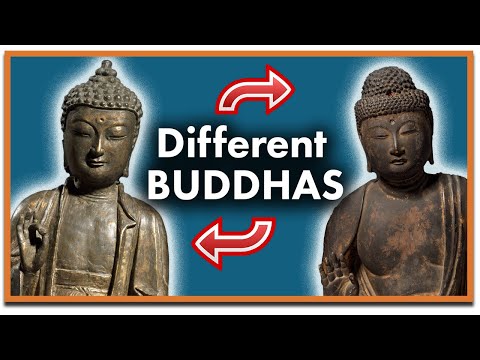
Dr. Andrew M Henry (a scholar of religious studies) speaks about the history of Pureland Buddhism.
Namo Amitabha Buddha 
 Bunks
Re: Buddhist quotes
There are 84,000 Dharma paths in Buddhism. Those who can develop faith in the Pure Land way have truly obtained “great benefit.” Why is that?
Because Pure Land can be practiced and Buddhahood achieved without leaving secular life. All we need to do is have faith in Amitabha’s deliverance and recite his name. It’s simple and easy. People from all circles and social strata, good or evil, rich or poor, educated or illiterate, are able to recite Amitabha’s name, whether at home or amid social activities. In this way, all Amitabha reciters can attain Buddhahood, completing their Dharma learning.
Bunks