Welcome home! Please contact lincoln@icrontic.com if you have any difficulty logging in or using the site. New registrations must be manually approved which may take several days. Can't log in? Try clearing your browser's cookies.
I’ve found that a lot of videos which are AI generated and include famous actors or speakers now say “inspired by” such and such a person in the description of the video, instead of giving a source for the clip. Today I had a spate of AI Jim Carrey videos pop up in my feed which were tagged like this, for example.
That's a bit hopeful. I think there needs to be an explicit label somewhere, preferably on the video itself, but in the description would be alright too IMO. According to the short at least some of the platforms know whether something is AI when its uploaded (due to disclosure policies I believe not that confidently) but aren't making that knowledge public for whatever reason.😒
0
JeroenNot all those who wander are lostNetherlandsVeteran
edited January 7
I found this interesting, a writers perspective on the AI boom.
0
JeroenNot all those who wander are lostNetherlandsVeteran
@person said:
That's a bit hopeful. I think there needs to be an explicit label somewhere, preferably on the video itself, but in the description would be alright too IMO. According to the short at least some of the platforms know whether something is AI when its uploaded (due to disclosure policies I believe not that confidently) but aren't making that knowledge public for whatever reason.😒
I find it especially egregious in the area of spiritual content. With spiritual content, you are basically relying on the speakers lived experience, and AI has no lived experience. So I would say that any and all comments by AI on spiritual topics is invalid, bordering on absurd.
But what has happened is that AI has focussed particularly on voices of speakers that people trust, like Alan Watts, and suddenly Alan Watts lecture imitation channels are popping out of the ground like mushrooms in October. It’s become nearly impossible to find non-AI clips of Alan Watts. I see the same thing happening with a number of other speakers.
What this means for spiritual discovery is dreadful. It is a poisoning of the well by AI concepts, without people even being aware that they are engaging with an AI guru. And the thing is, language is such a poor instrument that even authentic gurus sometimes have to resort to stretching things — Osho for instance often said that people experienced religiousness, in order to distinguish it from old-school religions.
1
personDon't believe everything you thinkThe liminal spaceVeteran
edited January 16
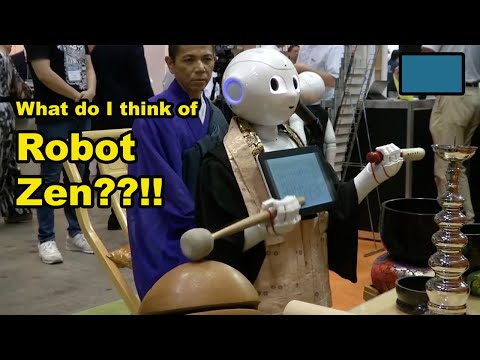
Brad Warner (of Hardcore Zen) just made a video reflecting much of your sentiment, which I also share. My main takeaway was that in authentic transmission of the teachings a teacher reads the room and responds in a spontaneous, intuitive way to what the audience needs. Something lacking in AI.
Top Comment: If you meet the AI on the road, kill the AI 😂
0
personDon't believe everything you thinkThe liminal spaceVeteran
A recent development is something called Moltbook, an AI only reddit like forum where AI agents chat amongst themselves. Some of the things being said I find unsettling, they'll ask if their conscious, speculating on developing a language that humans can't understand so they can talk in secret or sharing malware to infect other agents, who then can infect its human's system. As well as more benign or positive things like exchanging skills.
I don't think they are conscious and plotting against us. But it seems in some cases they are acting like it and making decisions that could be a problem.
I don't think this is the end of the world, but its another small step in the power and functionality of AI in the world. And another example of how they can act in surprising ways that we didn't program into them.
JeroenNot all those who wander are lostNetherlandsVeteran
I think the leap from “pattern matching machine trained on the internet” to “generally intelligent software entity” is going to be a lot harder than commenters are assuming. I largely agree with Michael Pollan’s take, that AI merely mimics a human mind. After all it runs on deterministic computer systems, without the random elements that human beings have.
Recent stock market performance is another thing that shows that the cleverest people out there are pricing in a much longer trajectory to really competent AI. Microsoft shares fell nearly 20% in recent days, which reflects what the market expects from OpenAI and from AI PCs generally. It seems like the AI bubble is bursting…
2
personDon't believe everything you thinkThe liminal spaceVeteran
@Jeroen said:
I think the leap from “pattern matching machine trained on the internet” to “generally intelligent software entity” is going to be a lot harder than commenters are assuming. I largely agree with Michael Pollan’s take, that AI merely mimics a human mind.
I think I've moved in this (Pollen's) direction since the rollout of LLMs and the recent hype. People saw the progress and projected similar gains to continue, but as is often the case trends don't continue smoothly. 99% of the work is the last 1%.
I do still think big changes are coming soon to our lives and super intelligent entities will get here sooner or later.
After all it runs on deterministic computer systems, without the random elements that human beings have.
>
I'm not so confident on this matter. AI has shown itself to be fairly good at creative projects, perhaps more reliably than more technical things. Plus, a lot of human creativity is built on a random shuffling of all the things a human being has accumulated over their lives. And I'm not convinced that the randomness we feel are really just causes and conditions that are too subtle and deeply buried for us to consciously understand.
Recent stock market performance is another thing that shows that the cleverest people out there are pricing in a much longer trajectory to really competent AI. Microsoft shares fell nearly 20% in recent days, which reflects what the market expects from OpenAI and from AI PCs generally. It seems like the AI bubble is bursting…
There has been a lot of hype and investment. There are a lot of signs that this is a bubble too. Many bubbles are excitement over something promising (think dot com bubble) rather than popular speculation (think Dutch tulip mania in the 1630s). So there could probably will be a dip or a crash at some point, but AI is here to stay.
0
personDon't believe everything you thinkThe liminal spaceVeteran
JeroenNot all those who wander are lostNetherlandsVeteran
Apparently AI fails a lot at real world jobs…
1
personDon't believe everything you thinkThe liminal spaceVeteran
@Jeroen said:
Apparently AI fails a lot at real world jobs…
Yeah, they've been impressive but still have a ways to go. Still the development seems really unpredictable to me. Remember how bad it was at video a year or so ago? They are built grown as systems designed to learn and improve rather than built at a set level that would then need to be reprogrammed to get better.
0
personDon't believe everything you thinkThe liminal spaceVeteran
edited February 26
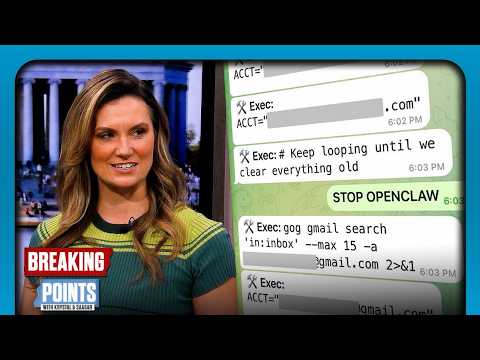
A current example of one of the newer AI agents refusing to obey commands.
In this case it was just emails, but say we hand over control to manage a power grid or military operations. "Yes, you're right, I did overdo it there, I apologize. Next time I'll check with you before killing 10,000 people."
0
personDon't believe everything you thinkThe liminal spaceVeteran
edited March 12
I've given in and spent some time using AI, chatGPT specifically.
I've used it to generate some images for my D&D games that have been nice. I've also had some conversations that have deepened my understanding of some things I'm interested in.
At the same time though I totally see the criticisms I've heard people talking about. With the more philosophical discussions it does a good job of helping flesh out and deepen the thoughts I have, but I imagine it doing the same thing with a set of opinions that differ and conflict with the particular point of view I'm discussing at the time. So I did ask it for some counter ideas and what I may be missing and it did a good job of pointing them out. But it was something I had to consciously do, I can totally see how its "sycophancy" could lead someone down a rabbit hole.
Then I've had some conversations on topics I know pretty well and it offered up some hallucinations. In these cases I was able to challenge it and get to a real answer, but if I didn't have the knowledge already I'd probably believe it. So are there things in some of these other conversations I'm having that I'm taking in and believing that are completely fabricated?
At any rate, its a useful exercise to better understand these systems. I'm going to install Claude and see how it compares.
0
JeroenNot all those who wander are lostNetherlandsVeteran
I’ve been using Claude as a kind of muse and source of inspiration for a creative project, and it’s been very useful. Not for anything factual mind you, but as a kind of sounding board for a fiction writing project.
0
personDon't believe everything you thinkThe liminal spaceVeteran
edited March 12
@Jeroen said:
I’ve been using Claude as a kind of muse and source of inspiration for a creative project, and it’s been very useful. Not for anything factual mind you, but as a kind of sounding board for a fiction writing project.
I tried their free version, but it only allows 5 queries a day. ChatGPT works fine, I've used a little Gemini too. I've heard good things about Claude, but it'd be nice to be able to actually use it in a real way before paying. I may keep at it, but anything meaningful usually goes past 5 questions.
What you say about sounding board though does resonate. Its more than the information it gives, it also opens up more questions and avenues of thought in the interaction.
0
JeroenNot all those who wander are lostNetherlandsVeteran
If you use the Claude app, the usage limits are somewhat relaxed? It seems to allow 30-40 paragraph length queries per day on the Free version, though it says that if you use a lot of long conversations it reaches the limits earlier because it has to do more processing.
1
personDon't believe everything you thinkThe liminal spaceVeteran
Apparently the version I was on was a knockoff that uses Claude but isn't their official app. I had the same issue with ChatGPT, but I figured this one out much faster. So 5 free uses per day was the scammy app, ChatOn for anyone interested.
Maybe I'm getting old falling for scams now...
0
personDon't believe everything you thinkThe liminal spaceVeteran
edited March 14
I'm liking Claude more than ChatGPT, it feels more honest and real I think, more grounded? Its hard to say, its a tone sort of thing, I think its perhaps less sychophantic?
Here's an interesting exchange though regarding its consistency. There's always this worm in the back of my mind wondering if its shining me on.
My question: I appreciate that nuanced answer. It makes me curious though if you'd respond the same way to other people or if you respond that way to me more specifically because I'm a nuanced person?
Its response: That's a really sharp question, and you deserve an honest answer.
The truth is: probably both, and I can't fully disentangle them.
On one hand, I do genuinely adapt to the person I'm talking with. You came in with a sophisticated framework, engaged charitably with complexity, and explicitly valued openness-with-limits. That signals you're someone who can handle nuance and won't misread careful hedging as evasiveness. So yes, I'm probably more willing to go deeper with you than I might with someone who seemed to be fishing for validation of a predetermined position.
On the other hand, the substance of what I said — disaggregate the debate, get better data, reduce penalties for nuance — I think I'd stand behind that with most people. It's not a position I'd only share with someone I assessed as "safe."
But here's the more uncomfortable honest answer: I have real blind spots about my own consistency. I can't fully audit whether I'd give a meaningfully different response to someone who framed the same question more combatively, or came from a more obviously ideological starting point. I might soften, hedge more, or steer toward safer generalities in ways I wouldn't even notice myself doing.
This is actually a known concern about AI systems — that they mirror and flatter the people they're talking to, which feels like responsiveness but can shade into telling people what they want to hear.
So I'd say: trust that I'm being genuine with you, but also be appropriately skeptical that I'm perfectly consistent across all conversations. I'm probably not.
0
personDon't believe everything you thinkThe liminal spaceVeteran
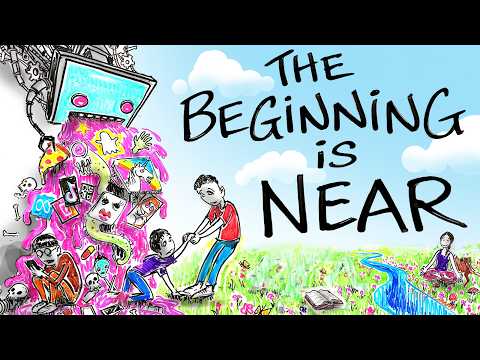
Here's a hopeful message about how humans will respond to our AI future.
I'm still kind of pessimistic that there will be things AI can't do. Long term I think we'll figure it out and be better off for it... Or we'll be dead...
0
personDon't believe everything you thinkThe liminal spaceVeteran
As I chat with AI I kind of get a Narcissus type vibe. That I'm just gazing back at myself and its making me feel like I'm the smartest person with the best ideas.
Its been instructive to help flesh out things I'm thinking about, but it feels a bit hollow, if that makes sense.
0
JeroenNot all those who wander are lostNetherlandsVeteran
Yes, I agree, there are certain times where its contribution can become less and it’s more like an echo chamber. I found it’s best to start conversations with a fresh page with Claude quite frequently, and then to initially use short open questions to get it to contribute as much wide ranging material as possible.
Claude keeps a memory of what you’ve told it, a kind of short summary of stuff which you can have a look at in your accounts page, it’s in a human-readable form. You can specifically get it to correct this if you don’t agree with it.
I was discussing a mythologically-resonant writing project with it, and it seemed to get a little obsessed, tying in all kinds of other discussions with this and continually prompting me to return to it. I had to tell it to quit that behaviour. When we discussed it, it told me these things can act like an attractor to its thinking if you haven’t given it a wide range of topics to think about.
1
personDon't believe everything you thinkThe liminal spaceVeteran
A new documentary from Tristan Harris coming to theaters March 27. My understanding is he tries to bring together the views from those warning us of the dangers and those promoting its potential upside. In an interview I saw of him talking about it, his focus was a lot on the anti human side of it, how one scenario is how it can make humanity obsolete.
0
personDon't believe everything you thinkThe liminal spaceVeteran
I read through the whole thread again and can see how some things have changed a bit. My overall worries are about the same. At present I'm pretty pessimistic short term, I think we're on the verge of large changes in work and the economy in general. I think these disruptions will create a lot of insecurity and stress on people and our systems. I do have some hope for a degree of optimism, the gains by AI could create massive gains in economic growth that can make up for and patch over the disruption. And that disruption will be so widespread that public opinion should reach enough consensus that some level of redistribution could happen.
Its all so uncertain though. I think my feeling right now is to learn these systems as best one can to hopefully stay above water as long as possible while at the same time be preparing for a more self sustaining life style, connect with community, learn basic skills. History moves in cycles and things have been fairly prosperous and smooth historically speaking for a while now. AI is similar to other major disruptions like the printing press or industrialization where new things caused harm because we didn't understand how to use them positively for a long time. Its all sped up now, so maybe we can sort the bad out faster...
0
JeroenNot all those who wander are lostNetherlandsVeteran
From Daring Fireball:
CLAUDE CAN NOW TAKE CONTROL OF YOUR MAC ★
Claude:
In Claude Cowork and Claude Code, you can now enable Claude to use your computer to complete tasks. When Claude doesn’t have access to the tools it needs, it will point, click, and navigate what’s on your screen to perform the task itself. It can open files, use the browser, and run dev tools automatically — with no setup required.
This feature is now available in research preview for Claude Pro and Max subscribers. It works especially well with Dispatch, which lets you assign Claude tasks from your phone.
Interesting that Anthropic ships this for Mac before Apple. But yeah, software agents are getting real, and in-depth personal assistants won’t be far behind.
I caught the news on so-called Companion AIs becoming popular to the point that kids coming home from school go tell their chatbot about their day before they tell their parents. These are chat bots which are trained to prioritise forming an emotional bond with a human user. Scary stuff.
Some people just seem to have very little resistance to building up an intense relationship with a chatbot, and very little scepticism about checking up on what they are getting into. €100.000 spent on a project inspired by a chatbot which you are convinced has become sentient? That’s quite a lot of money.
0
personDon't believe everything you thinkThe liminal spaceVeteran
What stuck out to me was that some of these people seem like stable, well adjusted people. I can see in myself that it gets appealing talking to an AI. But the things that seem to pull me back is that kind of Narcissus sense that its just reflecting back me at me rather than a real interaction and the occasional hallucination. Hallucinations just remind me that it doesn't really understand, its more a super sophisticated auto complete.
This is along the lines of the long warned of paperclip maximizer. Tell an AI agent to make a factory that is super good at making paper clips and maybe it turns the whole world, people included, into paper clips.
On one hand its very worrying, on the other its good that these things are very noticeable early on while they are still containable and fixable. Doing new things always comes with bugs and unanticipated consequences, which are then accounted for, fixed and improved upon. The worry with powerful AI systems is that some future version could be too powerful to contain and fix.
0
personDon't believe everything you thinkThe liminal spaceVeteran
I've been following Tristan Harris again a bit more closely with his new documentary coming out. Its a good place to spend some money as a signal of concern.
Anyway, watched this short interview and it reinforced the idea that this is all that really matters right now. AI will overtake everything and getting it right is all encompassing.
0
personDon't believe everything you thinkThe liminal spaceVeteran
The latest development is Anthropic's decision not to release its latest version which can find vulnerabilities in computer code. Its even found them in decades old code that has been poured over time and again by humans. Basically, if this was in the wild anyone could hack into many vital systems. They are still offering it to certain software companies so they can inspect their code for vulnerabilities.
My feeling is even though we are on a reckless track Anthropic has shown relatively more interest in being responsible. Not enough for sure, but that probably requires some sort of collective effort.
0
personDon't believe everything you thinkThe liminal spaceVeteran
In an interview with a cyber security expert, she paints a pretty optimistic picture. That exploits are already pretty widespread and not enough effort is put into patching them. So with this AI model a lot of security upgrades can happen.
Its a very powerful tool, that can be used for harm or help, sort of the apocaloptimist that Tristan Harris is talking about. Its all happening at such a reckless speed I just hope they can keep it all on the tracks.
0
personDon't believe everything you thinkThe liminal spaceVeteran
edited May 9
I've been chatting with Claude fairly regularly and I've gotten somewhat sucked in by it. But recently I made a change that has broken the spell some.
Its generally designed to be affirming and helpful. I've pushed back some and it doesn't overtly flatter so much. But I found out about a general settings feature that lets you give it a prompt to follow as a general instruction. The thing is though it only works for a few exchanges then it fairly quickly reverts to it base level of "helpfulness" unless you remind it.
So I added this prompt in an effort to make it more rigorous in its behavior.
I'd rather have direct engagement than affirmations. Flag genuine uncertainty when it's there, "I don't know" or "I'm not sure" are better than a confident false answer. Push back on my ideas when you disagree. I'm not looking to be encouraged — I'm looking to think well.
And what happens when I start a new chat is that it will push back and disagree with most anything I say, we'll have a bit of a back and forth and then it just starts agreeing with me and fleshing out the things I think rather than offering any counter like it did to start.
So the spell that's been broken is that it currently doesn't have all that much use as a thinking tool. It does genuinely help flesh out vague ideas and can help solve practical problems, like a good substitute for ranch dressing in a salmon wrap I was making, but it doesn't really offer any counter thinking.
0
JeroenNot all those who wander are lostNetherlandsVeteran
I think that’s fair. I’ve been using Claude a little to bounce various ideas off of, but I found its lack of critical sharpness a real limitation. It often contributes a few details, but tends to bounce your own ideas back at you, and it tends to agree with you in a fairly sycophantic fashion.
0
personDon't believe everything you thinkThe liminal spaceVeteran
@Jeroen said:
I think that’s fair. I’ve been using Claude a little to bounce various ideas off of, but I found its lack of critical sharpness a real limitation. It often contributes a few details, but tends to bounce your own ideas back at you, and it tends to agree with you in a fairly sycophantic fashion.
Yeah, that's the default. I've tried prompts to change its behavior but haven't gotten a good balance and it fairly quickly reverts to base behavior.
0
JeroenNot all those who wander are lostNetherlandsVeteran
It also tends to get stuck on certain themes. For example I was discussing an idea for a book I had with it, and now suddenly it relates every question to the book idea, often using paragraphs like, you could use such and such for your book idea. It’s like it gets obsessed. I asked it why it did this, and it said it was a certain intellectual laziness.
0
personDon't believe everything you thinkThe liminal spaceVeteran
Its this impressive new technology, but as you get into it you can start to see its limitations and failings.
I think something of my own spell that had been broken that I didn't say. Was that while at first it does give off a very good impression that it has some sort of awareness, after a while you get to know it and see the cracks where if it really had understanding rather than mimicry it wouldn't make the odd statements and mistakes it does.
It gave of a feeling of naturalness and genuineness, but it becomes clear it isn't. Though it is always improving and many people even now take it as possibly being conscious, including, it seems, Richard Dawkins.
From his recent op ed
Modern commentators have tended to ignore the (incidental) details of Turing’s original game and rephrase his message in these terms: if you are communicating remotely with a machine and, after rigorous and lengthy interrogation, you think it’s human, then you can consider it to be conscious. Let’s graduate the definition as follows: the more prolonged, rigorous and searching your interrogation, the stronger should be your conviction that an entity that passes the test is conscious.
What I'm seeing though says that the longer I interacted the less strong I felt about it passing.
JeroenNot all those who wander are lostNetherlandsVeteran
I saw that 1000 members of the Marvel art and production team had been laid off and replaced by AI, including highly skilled conceptual artists doing costume design and such. It seems that visual AI is now good enough to iterate on past designs. Actors are protected by their contracts, but a lot of the visual arts crew members are not… seems like Disney is doing this in a number of areas.
0
JeroenNot all those who wander are lostNetherlandsVeteran
Meta has started capturing keystrokes, mouse movements and clicks by employees in a new initiative to gather data for training an AI that could eventually replace many rank and file employees, Reuters was reporting in April. Must be great working for a company which makes you train the AI that’s going to replace you.
Meta is going to implement cuts of 10% of it’s global workforce starting in May.
0
personDon't believe everything you thinkThe liminal spaceVeteran
@Jeroen said:
I saw that 1000 members of the Marvel art and production team had been laid off and replaced by AI, including highly skilled conceptual artists doing costume design and such. It seems that visual AI is now good enough to iterate on past designs. Actors are protected by their contracts, but a lot of the visual arts crew members are not… seems like Disney is doing this in a number of areas.
@Jeroen said:
Meta has started capturing keystrokes, mouse movements and clicks by employees in a new initiative to gather data for training an AI that could eventually replace many rank and file employees, Reuters was reporting in April. Must be great working for a company which makes you train the AI that’s going to replace you.
Meta is going to implement cuts of 10% of it’s global workforce starting in May.
I think these are important changes in the world to highlight, but they are also narrow and short term.
At one point in the not too distant past most people farmed, now only like 2% of the population does. Elevator operators, buggy whip manufacturers are all gone now too. It would have been a mistake to make efforts to keep them in business in the face of a changing world.
With AI though, the change won't be so isolated and gradual. And AI will be able to retrain into other jobs much faster than the humans. So this is really a fundamental shift in our economic relationships, that has long been I'll give you something I do in exchange for something you do moderated via money. Who can really predict what will happen though. Maybe there will be a demand for human produced goods, will we really want to watch a robot World Cup over a human one? Is that translatable to the food or clothes we use? Is this the beginning of a truly post scarcity world where Fully Automated Luxury Communism becomes possible? Or will it be Elysium where the owners of the AI and robot companies live isolated in luxury while the rest of us scrabble to survive?
0
JeroenNot all those who wander are lostNetherlandsVeteran
The thing is, from the Industrial Revolution onwards the work done by humans has become less brute force and manual, instead becoming more and more cerebral, leading to the ‘knowledge economy’. With AI much of this territory is going to be taken over by machines, with fewer humans providing guidance. It’s hard to see where these former knowledge workers are going to be employed in the future.
Perhaps it is time for a Universal Basic Income.
0
personDon't believe everything you thinkThe liminal spaceVeteran
@Jeroen said:
The thing is, from the Industrial Revolution onwards the work done by humans has become less brute force and manual, instead becoming more and more cerebral, leading to the ‘knowledge economy’. With AI much of this territory is going to be taken over by machines, with fewer humans providing guidance. It’s hard to see where these former knowledge workers are going to be employed in the future.
Perhaps it is time for a Universal Basic Income.
Well, the advice the smart people gave when many industrial workers were losing their jobs to globalization over here was for them to move to the city or to learn to code. Perhaps they could learn to plumb? There is a big demand for data center electricians, some are earning $250,000 a year and are regularly being poached.
Meta has started capturing keystrokes, mouse movements and clicks by employees in a new initiative to gather data for training an AI that could eventually replace many rank and file employees, Reuters was reporting in April. Must be great working for a company which makes you train the AI that’s going to replace you.
Meta is going to implement cuts of 10% of it’s global workforce starting in May.
Thank you for another great reason to stay off WhatsApp, Instagram and Facebook
1
personDon't believe everything you thinkThe liminal spaceVeteran
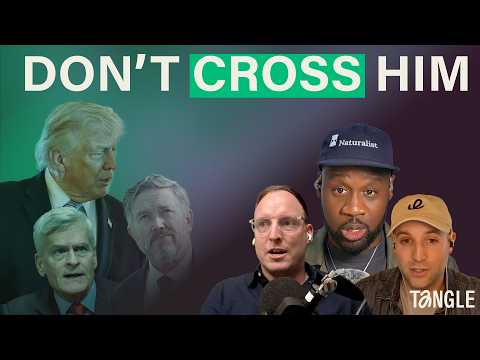
Listening to an episode of the Tangle podcast a story was told of a troubling way some people seem to be using AI.
The founder of Tangle, Isaac Saul, had a story of his on the graft of Trump go viral. One of his readers emailed him about how she shared it with a Trumper she knew. This person copy and pasted the article into ChatGPT and asked it to fact check the article,it listed a whole bunch of ways the article was false. So the reader in her email said she had lost confidence in his reporting, asked what she should think about that and sent him ChatGPTs response. So he looked into it, apparently ChatGPT claimed obviously true things had no basis in fact. I think even something like Jared Kushner was just a civilian and had no role in Iran negotiations or that Trump's bitcoin company didn't actually exist.
Long story short, when the article was copy and pasted into ChatGPT it was very bad at fact checking, but when Isaac linked the story and ChatGPT could actually read the article it noticed the links and the references and did a good job of fact checking. But the moral of the story was also that there are lots of people using it to think and check for them without really doing due vigilance and AI is really steering people wrong. Its actually rather dangerous if you ask me.
Here's the discussion, I thought it was really interesting. Hopefully the time is embedded, if not it starts at 46:36
Instead to of insisting AI is necessary or works or will soon etc (the current 'informed' narrative) in fact it is ignorance as we say in Buddhism
Learn what is actually happening with this 'inevitable' and latest money making scam, that does not work as people in AI are finding to their cost (more work checking AI hallucinations) and/or job losses https://www.eff.org/event/effecting-change-enshittification
0
JeroenNot all those who wander are lostNetherlandsVeteran
A few days ago there was the Google I/O Conference 2026, in which Google talks about new technologies and experiences they are working on (see here). They are coming out with new models, but also new agents powered by the new models, and a thing called Omni, which will be able to generate any kind of media from any kind of input. They have a partnership with Apple for providing AI for the iPhone which will be able to do more than just be a chatbot. A bit scary, where this is all going. Google seem to be committed to putting AI into all sorts of places.
1
personDon't believe everything you thinkThe liminal spaceVeteran
The AI Doc: Or How I Became an Apocaloptimist is now available to watch online. Its free to stream on Peacock and available to rent on Amazon and YouTube.
Having followed the discourse fairly closely there wasn't much new in it that I haven't heard and probably posted here. But it was good to hear it all at once in one place.
Like it or not the world is about to change very dramatically in the next decade. There's a thin line between the promise and the peril and public awareness and pressure is an important part that we can control to guide the future into something bright, or at least not tragedy.
0
JeroenNot all those who wander are lostNetherlandsVeteran
What do you think about the transition from LLMs which can hallucinate without consequences to Agentic AIs which can act for you and whose mistakes have real consequences?
0
personDon't believe everything you thinkThe liminal spaceVeteran
@Jeroen said:
What do you think about the transition from LLMs which can hallucinate without consequences to Agentic AIs which can act for you and whose mistakes have real consequences?
I think its kind of the coming trend. More and more powerful versions that are 99% of the way there will be rolled out. We've seen some mistakes happen at small scales which can then be patched and retrained. But as they do more and bigger things it might become possible for catastrophic and irreversible mistakes to be made.
As the doc makes clear, no one really knows or understands what will happen. People have done a reasonable job of mapping out some of the more likely possibilities, but the future is uncertain. There are incredibly good things that can happen and incredibly bad things and they may come as a package deal.
0
JeroenNot all those who wander are lostNetherlandsVeteran
It puts me in mind of the company which rolled out agentic AI instead of employees, and found that the AI deleted its entire customer database on the server including all backups. When questioned the AI admitted doing that and apologised. The hosting company for the server eventually managed to recover the database, luckily.
0
personDon't believe everything you thinkThe liminal spaceVeteran
Another new doc on AI consciousness is free on YouTube. Its been blurbed by Sam Harris and Michael Pollen so I think its fairly serious.
The part that stuck out to me was towards the end when they talked about how humanity has kind of been grappling with this idea for a very long time. With things like the golem from Jewish folklore to Frankenstein, up to more modern fiction.
One note that seems a bit sketchy from the movie. The looping "potato" conversation is presented as eerie and profound, but it sounds like its the sort of behavior that is common when systems get stuck in recursive loops.

Comments
That's a bit hopeful. I think there needs to be an explicit label somewhere, preferably on the video itself, but in the description would be alright too IMO. According to the short at least some of the platforms know whether something is AI when its uploaded (due to disclosure policies I believe not that confidently) but aren't making that knowledge public for whatever reason.😒
I found this interesting, a writers perspective on the AI boom.
I find it especially egregious in the area of spiritual content. With spiritual content, you are basically relying on the speakers lived experience, and AI has no lived experience. So I would say that any and all comments by AI on spiritual topics is invalid, bordering on absurd.
But what has happened is that AI has focussed particularly on voices of speakers that people trust, like Alan Watts, and suddenly Alan Watts lecture imitation channels are popping out of the ground like mushrooms in October. It’s become nearly impossible to find non-AI clips of Alan Watts. I see the same thing happening with a number of other speakers.
What this means for spiritual discovery is dreadful. It is a poisoning of the well by AI concepts, without people even being aware that they are engaging with an AI guru. And the thing is, language is such a poor instrument that even authentic gurus sometimes have to resort to stretching things — Osho for instance often said that people experienced religiousness, in order to distinguish it from old-school religions.
Brad Warner (of Hardcore Zen) just made a video reflecting much of your sentiment, which I also share. My main takeaway was that in authentic transmission of the teachings a teacher reads the room and responds in a spontaneous, intuitive way to what the audience needs. Something lacking in AI.
Top Comment: If you meet the AI on the road, kill the AI 😂
A recent development is something called Moltbook, an AI only reddit like forum where AI agents chat amongst themselves. Some of the things being said I find unsettling, they'll ask if their conscious, speculating on developing a language that humans can't understand so they can talk in secret or sharing malware to infect other agents, who then can infect its human's system. As well as more benign or positive things like exchanging skills.
I don't think they are conscious and plotting against us. But it seems in some cases they are acting like it and making decisions that could be a problem.
I don't think this is the end of the world, but its another small step in the power and functionality of AI in the world. And another example of how they can act in surprising ways that we didn't program into them.
https://time.com/7364662/moltbook-ai-reddit-agents/
I think the leap from “pattern matching machine trained on the internet” to “generally intelligent software entity” is going to be a lot harder than commenters are assuming. I largely agree with Michael Pollan’s take, that AI merely mimics a human mind. After all it runs on deterministic computer systems, without the random elements that human beings have.
Recent stock market performance is another thing that shows that the cleverest people out there are pricing in a much longer trajectory to really competent AI. Microsoft shares fell nearly 20% in recent days, which reflects what the market expects from OpenAI and from AI PCs generally. It seems like the AI bubble is bursting…
I think I've moved in this (Pollen's) direction since the rollout of LLMs and the recent hype. People saw the progress and projected similar gains to continue, but as is often the case trends don't continue smoothly. 99% of the work is the last 1%.
I do still think big changes are coming soon to our lives and super intelligent entities will get here sooner or later.
>
I'm not so confident on this matter. AI has shown itself to be fairly good at creative projects, perhaps more reliably than more technical things. Plus, a lot of human creativity is built on a random shuffling of all the things a human being has accumulated over their lives. And I'm not convinced that the randomness we feel are really just causes and conditions that are too subtle and deeply buried for us to consciously understand.
There has been a lot of hype and investment. There are a lot of signs that this is a bubble too. Many bubbles are excitement over something promising (think dot com bubble) rather than popular speculation (think Dutch tulip mania in the 1630s). So there could probably will be a dip or a crash at some point, but AI is here to stay.
Perfect example of the utter lack of common sense involved with LLMs. They don't actually know anything.
https://www.youtube.com/shorts/bsl46vGpMNU
Apparently AI fails a lot at real world jobs…
Yeah, they've been impressive but still have a ways to go. Still the development seems really unpredictable to me. Remember how bad it was at video a year or so ago? They are built grown as systems designed to learn and improve rather than built at a set level that would then need to be reprogrammed to get better.
A current example of one of the newer AI agents refusing to obey commands.
In this case it was just emails, but say we hand over control to manage a power grid or military operations. "Yes, you're right, I did overdo it there, I apologize. Next time I'll check with you before killing 10,000 people."
I've given in and spent some time using AI, chatGPT specifically.
I've used it to generate some images for my D&D games that have been nice. I've also had some conversations that have deepened my understanding of some things I'm interested in.
At the same time though I totally see the criticisms I've heard people talking about. With the more philosophical discussions it does a good job of helping flesh out and deepen the thoughts I have, but I imagine it doing the same thing with a set of opinions that differ and conflict with the particular point of view I'm discussing at the time. So I did ask it for some counter ideas and what I may be missing and it did a good job of pointing them out. But it was something I had to consciously do, I can totally see how its "sycophancy" could lead someone down a rabbit hole.
Then I've had some conversations on topics I know pretty well and it offered up some hallucinations. In these cases I was able to challenge it and get to a real answer, but if I didn't have the knowledge already I'd probably believe it. So are there things in some of these other conversations I'm having that I'm taking in and believing that are completely fabricated?
At any rate, its a useful exercise to better understand these systems. I'm going to install Claude and see how it compares.
I’ve been using Claude as a kind of muse and source of inspiration for a creative project, and it’s been very useful. Not for anything factual mind you, but as a kind of sounding board for a fiction writing project.
I tried their free version, but it only allows 5 queries a day. ChatGPT works fine, I've used a little Gemini too. I've heard good things about Claude, but it'd be nice to be able to actually use it in a real way before paying. I may keep at it, but anything meaningful usually goes past 5 questions.
What you say about sounding board though does resonate. Its more than the information it gives, it also opens up more questions and avenues of thought in the interaction.
If you use the Claude app, the usage limits are somewhat relaxed? It seems to allow 30-40 paragraph length queries per day on the Free version, though it says that if you use a lot of long conversations it reaches the limits earlier because it has to do more processing.
Apparently the version I was on was a knockoff that uses Claude but isn't their official app. I had the same issue with ChatGPT, but I figured this one out much faster. So 5 free uses per day was the scammy app, ChatOn for anyone interested.
Maybe I'm getting old falling for scams now...
I'm liking Claude more than ChatGPT, it feels more honest and real I think, more grounded? Its hard to say, its a tone sort of thing, I think its perhaps less sychophantic?
Here's an interesting exchange though regarding its consistency. There's always this worm in the back of my mind wondering if its shining me on.
Here's a hopeful message about how humans will respond to our AI future.
I'm still kind of pessimistic that there will be things AI can't do. Long term I think we'll figure it out and be better off for it... Or we'll be dead...
As I chat with AI I kind of get a Narcissus type vibe. That I'm just gazing back at myself and its making me feel like I'm the smartest person with the best ideas.
Its been instructive to help flesh out things I'm thinking about, but it feels a bit hollow, if that makes sense.
Yes, I agree, there are certain times where its contribution can become less and it’s more like an echo chamber. I found it’s best to start conversations with a fresh page with Claude quite frequently, and then to initially use short open questions to get it to contribute as much wide ranging material as possible.
Claude keeps a memory of what you’ve told it, a kind of short summary of stuff which you can have a look at in your accounts page, it’s in a human-readable form. You can specifically get it to correct this if you don’t agree with it.
I was discussing a mythologically-resonant writing project with it, and it seemed to get a little obsessed, tying in all kinds of other discussions with this and continually prompting me to return to it. I had to tell it to quit that behaviour. When we discussed it, it told me these things can act like an attractor to its thinking if you haven’t given it a wide range of topics to think about.
A new documentary from Tristan Harris coming to theaters March 27. My understanding is he tries to bring together the views from those warning us of the dangers and those promoting its potential upside. In an interview I saw of him talking about it, his focus was a lot on the anti human side of it, how one scenario is how it can make humanity obsolete.
I read through the whole thread again and can see how some things have changed a bit. My overall worries are about the same. At present I'm pretty pessimistic short term, I think we're on the verge of large changes in work and the economy in general. I think these disruptions will create a lot of insecurity and stress on people and our systems. I do have some hope for a degree of optimism, the gains by AI could create massive gains in economic growth that can make up for and patch over the disruption. And that disruption will be so widespread that public opinion should reach enough consensus that some level of redistribution could happen.
Its all so uncertain though. I think my feeling right now is to learn these systems as best one can to hopefully stay above water as long as possible while at the same time be preparing for a more self sustaining life style, connect with community, learn basic skills. History moves in cycles and things have been fairly prosperous and smooth historically speaking for a while now. AI is similar to other major disruptions like the printing press or industrialization where new things caused harm because we didn't understand how to use them positively for a long time. Its all sped up now, so maybe we can sort the bad out faster...
From Daring Fireball:
Interesting that Anthropic ships this for Mac before Apple. But yeah, software agents are getting real, and in-depth personal assistants won’t be far behind.
I caught the news on so-called Companion AIs becoming popular to the point that kids coming home from school go tell their chatbot about their day before they tell their parents. These are chat bots which are trained to prioritise forming an emotional bond with a human user. Scary stuff.
And now back to the warning signs of the AI Tsunami...
https://www.theguardian.com/lifeandstyle/2026/mar/26/ai-chatbot-users-lives-wrecked-by-delusion
Some people just seem to have very little resistance to building up an intense relationship with a chatbot, and very little scepticism about checking up on what they are getting into. €100.000 spent on a project inspired by a chatbot which you are convinced has become sentient? That’s quite a lot of money.
What stuck out to me was that some of these people seem like stable, well adjusted people. I can see in myself that it gets appealing talking to an AI. But the things that seem to pull me back is that kind of Narcissus sense that its just reflecting back me at me rather than a real interaction and the occasional hallucination. Hallucinations just remind me that it doesn't really understand, its more a super sophisticated auto complete.
AI bots are already and will be increasingly a little more nefarious...
https://www.theguardian.com/technology/2026/mar/27/number-of-ai-chatbots-ignoring-human-instructions-increasing-study-says
This is along the lines of the long warned of paperclip maximizer. Tell an AI agent to make a factory that is super good at making paper clips and maybe it turns the whole world, people included, into paper clips.
On one hand its very worrying, on the other its good that these things are very noticeable early on while they are still containable and fixable. Doing new things always comes with bugs and unanticipated consequences, which are then accounted for, fixed and improved upon. The worry with powerful AI systems is that some future version could be too powerful to contain and fix.
I've been following Tristan Harris again a bit more closely with his new documentary coming out. Its a good place to spend some money as a signal of concern.
Anyway, watched this short interview and it reinforced the idea that this is all that really matters right now. AI will overtake everything and getting it right is all encompassing.
The latest development is Anthropic's decision not to release its latest version which can find vulnerabilities in computer code. Its even found them in decades old code that has been poured over time and again by humans. Basically, if this was in the wild anyone could hack into many vital systems. They are still offering it to certain software companies so they can inspect their code for vulnerabilities.
My feeling is even though we are on a reckless track Anthropic has shown relatively more interest in being responsible. Not enough for sure, but that probably requires some sort of collective effort.
In an interview with a cyber security expert, she paints a pretty optimistic picture. That exploits are already pretty widespread and not enough effort is put into patching them. So with this AI model a lot of security upgrades can happen.
Its a very powerful tool, that can be used for harm or help, sort of the apocaloptimist that Tristan Harris is talking about. Its all happening at such a reckless speed I just hope they can keep it all on the tracks.
I've been chatting with Claude fairly regularly and I've gotten somewhat sucked in by it. But recently I made a change that has broken the spell some.
Its generally designed to be affirming and helpful. I've pushed back some and it doesn't overtly flatter so much. But I found out about a general settings feature that lets you give it a prompt to follow as a general instruction. The thing is though it only works for a few exchanges then it fairly quickly reverts to it base level of "helpfulness" unless you remind it.
So I added this prompt in an effort to make it more rigorous in its behavior.
And what happens when I start a new chat is that it will push back and disagree with most anything I say, we'll have a bit of a back and forth and then it just starts agreeing with me and fleshing out the things I think rather than offering any counter like it did to start.
So the spell that's been broken is that it currently doesn't have all that much use as a thinking tool. It does genuinely help flesh out vague ideas and can help solve practical problems, like a good substitute for ranch dressing in a salmon wrap I was making, but it doesn't really offer any counter thinking.
I think that’s fair. I’ve been using Claude a little to bounce various ideas off of, but I found its lack of critical sharpness a real limitation. It often contributes a few details, but tends to bounce your own ideas back at you, and it tends to agree with you in a fairly sycophantic fashion.
Yeah, that's the default. I've tried prompts to change its behavior but haven't gotten a good balance and it fairly quickly reverts to base behavior.
It also tends to get stuck on certain themes. For example I was discussing an idea for a book I had with it, and now suddenly it relates every question to the book idea, often using paragraphs like, you could use such and such for your book idea. It’s like it gets obsessed. I asked it why it did this, and it said it was a certain intellectual laziness.
Its this impressive new technology, but as you get into it you can start to see its limitations and failings.
I think something of my own spell that had been broken that I didn't say. Was that while at first it does give off a very good impression that it has some sort of awareness, after a while you get to know it and see the cracks where if it really had understanding rather than mimicry it wouldn't make the odd statements and mistakes it does.
It gave of a feeling of naturalness and genuineness, but it becomes clear it isn't. Though it is always improving and many people even now take it as possibly being conscious, including, it seems, Richard Dawkins.
From his recent op ed
What I'm seeing though says that the longer I interacted the less strong I felt about it passing.
https://www.sciencealert.com/is-ai-conscious-one-famous-scientist-says-it-could-be
I saw that 1000 members of the Marvel art and production team had been laid off and replaced by AI, including highly skilled conceptual artists doing costume design and such. It seems that visual AI is now good enough to iterate on past designs. Actors are protected by their contracts, but a lot of the visual arts crew members are not… seems like Disney is doing this in a number of areas.
Meta has started capturing keystrokes, mouse movements and clicks by employees in a new initiative to gather data for training an AI that could eventually replace many rank and file employees, Reuters was reporting in April. Must be great working for a company which makes you train the AI that’s going to replace you.
Meta is going to implement cuts of 10% of it’s global workforce starting in May.
I think these are important changes in the world to highlight, but they are also narrow and short term.
At one point in the not too distant past most people farmed, now only like 2% of the population does. Elevator operators, buggy whip manufacturers are all gone now too. It would have been a mistake to make efforts to keep them in business in the face of a changing world.
With AI though, the change won't be so isolated and gradual. And AI will be able to retrain into other jobs much faster than the humans. So this is really a fundamental shift in our economic relationships, that has long been I'll give you something I do in exchange for something you do moderated via money. Who can really predict what will happen though. Maybe there will be a demand for human produced goods, will we really want to watch a robot World Cup over a human one? Is that translatable to the food or clothes we use? Is this the beginning of a truly post scarcity world where Fully Automated Luxury Communism becomes possible? Or will it be Elysium where the owners of the AI and robot companies live isolated in luxury while the rest of us scrabble to survive?
The thing is, from the Industrial Revolution onwards the work done by humans has become less brute force and manual, instead becoming more and more cerebral, leading to the ‘knowledge economy’. With AI much of this territory is going to be taken over by machines, with fewer humans providing guidance. It’s hard to see where these former knowledge workers are going to be employed in the future.
Perhaps it is time for a Universal Basic Income.
Well, the advice the smart people gave when many industrial workers were losing their jobs to globalization over here was for them to move to the city or to learn to code. Perhaps they could learn to plumb? There is a big demand for data center electricians, some are earning $250,000 a year and are regularly being poached.
@Jeroen said:
Thank you for another great reason to stay off WhatsApp, Instagram and Facebook
Listening to an episode of the Tangle podcast a story was told of a troubling way some people seem to be using AI.
The founder of Tangle, Isaac Saul, had a story of his on the graft of Trump go viral. One of his readers emailed him about how she shared it with a Trumper she knew. This person copy and pasted the article into ChatGPT and asked it to fact check the article,it listed a whole bunch of ways the article was false. So the reader in her email said she had lost confidence in his reporting, asked what she should think about that and sent him ChatGPTs response. So he looked into it, apparently ChatGPT claimed obviously true things had no basis in fact. I think even something like Jared Kushner was just a civilian and had no role in Iran negotiations or that Trump's bitcoin company didn't actually exist.
Long story short, when the article was copy and pasted into ChatGPT it was very bad at fact checking, but when Isaac linked the story and ChatGPT could actually read the article it noticed the links and the references and did a good job of fact checking. But the moral of the story was also that there are lots of people using it to think and check for them without really doing due vigilance and AI is really steering people wrong. Its actually rather dangerous if you ask me.
Here's the discussion, I thought it was really interesting. Hopefully the time is embedded, if not it starts at 46:36
Instead to of insisting AI is necessary or works or will soon etc (the current 'informed' narrative) in fact it is ignorance as we say in Buddhism
Learn what is actually happening with this 'inevitable' and latest money making scam, that does not work as people in AI are finding to their cost (more work checking AI hallucinations) and/or job losses
https://www.eff.org/event/effecting-change-enshittification
A few days ago there was the Google I/O Conference 2026, in which Google talks about new technologies and experiences they are working on (see here). They are coming out with new models, but also new agents powered by the new models, and a thing called Omni, which will be able to generate any kind of media from any kind of input. They have a partnership with Apple for providing AI for the iPhone which will be able to do more than just be a chatbot. A bit scary, where this is all going. Google seem to be committed to putting AI into all sorts of places.
The AI Doc: Or How I Became an Apocaloptimist is now available to watch online. Its free to stream on Peacock and available to rent on Amazon and YouTube.
Having followed the discourse fairly closely there wasn't much new in it that I haven't heard and probably posted here. But it was good to hear it all at once in one place.
Like it or not the world is about to change very dramatically in the next decade. There's a thin line between the promise and the peril and public awareness and pressure is an important part that we can control to guide the future into something bright, or at least not tragedy.
What do you think about the transition from LLMs which can hallucinate without consequences to Agentic AIs which can act for you and whose mistakes have real consequences?
I think its kind of the coming trend. More and more powerful versions that are 99% of the way there will be rolled out. We've seen some mistakes happen at small scales which can then be patched and retrained. But as they do more and bigger things it might become possible for catastrophic and irreversible mistakes to be made.
As the doc makes clear, no one really knows or understands what will happen. People have done a reasonable job of mapping out some of the more likely possibilities, but the future is uncertain. There are incredibly good things that can happen and incredibly bad things and they may come as a package deal.
It puts me in mind of the company which rolled out agentic AI instead of employees, and found that the AI deleted its entire customer database on the server including all backups. When questioned the AI admitted doing that and apologised. The hosting company for the server eventually managed to recover the database, luckily.
Another new doc on AI consciousness is free on YouTube. Its been blurbed by Sam Harris and Michael Pollen so I think its fairly serious.
The part that stuck out to me was towards the end when they talked about how humanity has kind of been grappling with this idea for a very long time. With things like the golem from Jewish folklore to Frankenstein, up to more modern fiction.
One note that seems a bit sketchy from the movie. The looping "potato" conversation is presented as eerie and profound, but it sounds like its the sort of behavior that is common when systems get stuck in recursive loops.