
Sitting with uncertainty
 person
Don't believe everything you thinkThe liminal space Veteran
person
Don't believe everything you thinkThe liminal space Veteran
Just a little reflection. The idea of sitting with uncertainty in Buddhism is a pretty central tenet. From the Buddha refusing to answer certain metaphysical questions on the ground that they're unproductive to the practice and can cause one to get stuck in them, to the Kalama sutta. Nagarjuna's emptiness saying all views eventually undermine themselves. Zen's "don't know mind" and emptying the cup. To everyday meditation practice letting go of mental arisings.
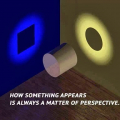
The thing that gave rise to the thought was how its a pretty common disposition for people to be uncomfortable with uncertainty, to have a need to collapse down into a definitive position. My thought was that for me at this point in my practice, is that certainty is the uncomfortable position to be in. Its like living with blinders on, refusing to look behind me at what I'm not seeing. Its not that nothing I see or believe is real, its more that the feeling of "I've got this figured out" means I've stopped looking and am missing something.

Comments
My finding was that curiosity is largely about the questions “is there something threatening me” or “am I in danger in some way”. Once you realise that nothing real can be threatened, that threats are just the affairs of the body, then your mind quickly loses the habit of exploring nooks and crannies, and a measure of peace settles over you.
Curiosity as a fear response. I hadn't heard that one before. I suppose it makes some sense, curiosity could be driven by fear. Not sure that means that always the case, I think the aspect I'm talking about is an openness to possibility, an emotional valence of wonder and exploration.
Being closed can also be a fear response. Or maybe someone is afraid of physical harms so as a response they abandon concern for physical safety? Is spiritual seeking a fear response too because the spiritual journey often starts from a place of fear? I think my point is it seems like lots of things can be seen through multiple lenses.
Curiosity is an unending journey into the unknown, a never-ending search… in order to know peace, one would want to find its roots, to see if it is just a young man’s response to the unknown and can be let go of with maturity.
I don't think that's a very good framing (not sure why you're so down on curiosity). That curiosity falling away with age is a positive aspect of aging. I'd frame it as it means you're old and tired, rigid and stuck in your ways, too fixed to an identity.
I just see peace as primary, an important way station of the spiritual search, while curiosity has very little real value. If you’ve satisfied one curiosity, another pops up in its place, it is never ending, and therefore a fool’s game.
And the notion of beginner's mind, or not attaching to views? I never actually used curiosity in my OP. I was talking about sitting with uncertainty, not needing to collapse into something definitive.
I don’t think beginners mind and not attaching to views speak to curiosity? They are different approaches towards the same mental area, indeed, it all relates to the mind at peace.
But I think curiosity and perhaps restlessness do have something to do with how to sit with uncertainty. Both of them can be the needle which forces one into resolving that which is unknown into that which is known. That which is known is comfortable to the mind.
So I think where I am now with the question has more to do with the mental attitude one is approaching uncertainty with.
Like being uncertain can be a kind of craving for knowledge, a fear of not knowing. And a feeling of certainty is a way to help the mind feel comfortable and at peace in the face of an uncertain world.
But the opposite can be true too. Curiosity can be a playful exploration of the unknown, born out of a wish to add clarity to the world. And a peaceful mind is one that isn't always craving answers.
Bringing it back to my original thought about comfort and discomfort around uncertainty. I'd say can you be curious without needing a final answer, can you be peaceful without feeling like you have the final answer? Can you say and feel "I don't know"?
That happens to me with some regularity, being peaceful while saying “I don’t know”. Being curious about things seems to be reduced to the very occasional thought of “I wonder if…”
I thought about making a new thread, but I think this fits well here.
In an interview with a couple Theravadin monks one of them mentioned MN 95, the Canki sutta. In it the Buddha talks about how we relate internally to views.
Its a medium length discourse that also goes into analyzing a teacher and pursuit of the final spiritual truth. But for this thread, I'm focusing on the safeguarding of truth aspect.
So I think what the Buddha is saying is less that we shouldn't have views, but he's more saying that we should hold our views as views rather than the truth. Something like "this is what I think" rather than "this is true". Psychologically I think it avoids both the certainty position and the relativist (that every view has as much validity as any other view) position.
I am not even sure I have uncertainty. For sure.
Views change. Enlightenment is not a different view. It is an unchanging aspect.
Is it 'superior' to views? It is a continual difference.