
Good and Bad People
 person
Don't believe everything you thinkThe liminal space Veteran
person
Don't believe everything you thinkThe liminal space Veteran
Just a minor comment about Superman's parents being bad people kind of triggered a bit of aversion in my mind, and I reflected on why that might be. What is going on with that?
Its like there are people in the world who do harmful, unskillful actions regularly enough that it is part of their character. So I don't want to say this doesn't exist in the world. Perhaps its more a philosophical thing about what such a label means. It kind of says something metaphysical about a core identity rather than seeing people in terms of conditionality and dependent arising. Everything arises in dependence on other factors, people are complex and have an interiority that labels and judgements like good and bad erase.
I also wouldn't want to fall into the opposite view, that people are fully the product of external forces and hold no culpability for their actions.
Its not like the judgment is factually wrong, its more that it closes down real world complexity and understanding. Perhaps something related to a kind of certainty of view.
I also think of Ajahn Brahm's idea that people aren't "criminals", they're someone who has committed a crime. I think its an important distinction.
Comments
Hi. I have worked with sociopaths and, unfortunately, they do commit a lot of very unwholesome acts and tend to justify their actions and denigrate other people to the point of dehumanising them completely. Some of them even hold positions of power and have a good economic balance in the sense of properties, income, etc. All of them by the way were extremely unhappy and could not find any pleasure beyond drugging themselves, sex, and other fetishes. There are also psychopaths who are people that are born without the ability of forming any connection whatsoever and, while it is not very common for them to become vicious killers or destructive, some careers and sectors of the world which are not very...clean... have their ranks composed by them.
Going back to sociopaths or people committing bad acts purposely and knowingly do have traumatic childhoods and very adverse/poor upbringings. This, however, does not excuse them from their actions. Have you seen the series Bojack Horseman? Without spoiling it too much, it is about the life of a famous one-hit wonder series actor who deals with depression, substance abuse, and basically being a narcissist and using people (particularly women) for his own advantage. In the following scene which I attach, he is basically admitting his done wrong...but here is where his friend does say something that reminded me of your post: you are also to blame and responsible for the actions. And you need to do something to avoid this pattern of repetitive compulsion. Ah, so hard the latter to break....
Here is a thought.
Happy and contented people don't do harm to others.
You can put the blame on the poisons of greed, fear, anger and aversion that is the cause of all the "badness".
The "rich" want more because they always feel they don't have enough.
The "poor" hate the rich because they fear that what they have is going to be taken away.
Platitudes for Buddhists? Or...
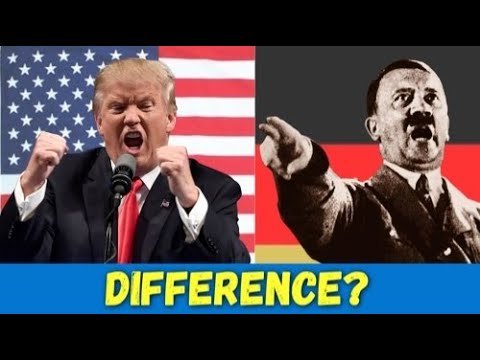
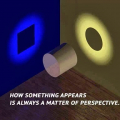
Maybe we should work out who is who and what is what?
Same message, different messenger.
Trust the message, not the container.
I would say something like he's doing harm to people, he's acting selfishly and corruptly, it would be good to stop his ability to do damage. Its the collapsing down into something fundamental and irreducible, that removes complexity and humanity. Perhaps a hard ask for the extremes. But also not exactly a platitude and not as hard of an ask towards the average person or fictional characters.
Trump has done quite a lot of damage to the US governmental apparatus, he came close to turning the US into a giant banana republic.
As a very mixed person (good, bad and incomprehensible) I know a thing or 72 about defining things in another way.
So the orange turd is a lost cause, practically dead. Only alive on ego and meanness. Good people here and elsewhere are surviving, improving the lot and luck of others.
This is where I try and align with any good I can. Something we discuss in many ways and over time on NewBuddhist.
Bonus goodness:
https://vegplotter.com/blog/the-magic-of-square-foot-gardening
I was just watching this, and found it very apropos on the topic of good and bad people. Basically the whole of Steinbeck’s East of Eden is a long riff on the story of Cain and Abel and original sin.
Its a long watch, I read through Gemini's summary, it seemed to talk about good and evil. What does it mean to you in relation to the thread?
I would have given this two or even three insightfuls, if I could. The last few days on all kinds of forums I have been coming across the reality of bad people existing in the world. It’s easy to build a little bubble on the internet where there are only good people, but that doesn’t seem to be the way things are - there are enough sociopaths and psychopaths and narcissists and what-have-you out there.
The conclusion of Steinbeck’s novel talks about choice — that though there seem to be patterns in human destiny, there is always the choice to follow that path and perhaps the possibility of redemption if you do make the wrong choices early in life. It’s a very Christian story, but it may be universally applicable.
The western way of thinking does tend more towards a good/evil dichotomy. But doesn't this run counter to the idea of people having an essentially good or bad to them? Like if its possible to choose otherwise are they really bad?
Aside from that though, my point is more about conditionality. That circumstance plays a role and things aren't fixed and concrete. Not everyone who meets the clinical definition of psychopath does bad and not everyone with a kind disposition does good. Its more in line with the thread on sitting with uncertainty, can you mentally stay in the messier place where people remain complex and unresolved?
But there is still a need to act in the world, it isn't very practical to sit in suspended judgement while someone is beating you over the head. I'd like to try to do both.
Well to return to the beginning of the topic, we were talking about Superman’s Kryptonian parents who in their message were revealed to have told him to go and conquer the Earth and rule over the humans ruthlessly. Which places them in the ‘villains’ category in standard comic book morality.
I think I used my reaction as a jumping off point for real world views, more than comic book reality. Its fine as an easy identifier to think of Thanos as the bad guy and Captain America as the good guy.
A story Pema Chodron tells about a meeting between Trungpa Rinpoche and Dilgo Khyentse Rinpoche I think gets at a deeper sense of where I'm pointing, if so I think it needs to come with my acknowledgment that this is a subtle teaching that I myself shouldn't be so quick to impose.
Maybe another, simpler way to frame it is the distinction between judging and discerning.
Certainly Steinbeck’s novel offers rich opportunities for commentary on good and evil — his character Kate is first a wife who shoots her husband in the shoulder, then becomes a prostitute and later a madam with a line in using powerful men’s sadistic sexual weaknesses to get them into compromising situations. She is portrayed as someone who sees the evil in people, while her former husband Adam Trask is shown as someone who sees only the good.
The Book Club commentators quoted this line from East of Eden:
“I believe that there is one story in the world, and only one. . . . Humans are caught—in their lives, in their thoughts, in their hungers and ambitions, in their avarice and cruelty, and in their kindness and generosity too—in a net of good and evil. . . . There is no other story. A man, after he has brushed off the dust and chips of his life, will have left only the hard, clean questions: Was it good or was it evil? Have I done well—or ill?”
Certainly there is plenty of thought given to a view towards good and evil. I'm not denying that people think that way.
In the Buddhist context, anger, greed, delusion aren't seen as concrete, inherently existing evils. They are temporary stains on the mind. They arise not due to some essence but from conditionality.
For nn individual, we perceive Good as Good Thought, Good Speach, Good Action as opposed to Evil thought, Evil Speach, Evil Action
Evil, in society, as the saying goes, grows strong when good people do nothing.
For individuals, for a person, good and evil.
Good and Evil may be seen as relative.
an example:
From the vantage of a certain corporation, the actions of it's employees and agents that enhance the corporation and/or generate gain for the corporation are good. On the other hand, said employees ans agents actions which diminish the corporation and/or reduce profits or generate losses are evil.
From the vantage of the community (Society), any actions by or on behalf of the corporation that, intentional or not, generate a benefit, say, enhance the quality of the community water supply, constitutes an action of good. Whereas actions by or on behalf of the corporation which harms or damages or otherwise causes loss to/for the community is evil.
The label of Gain or Loss is based upon both the affected entity and the affected society.
Here, I am not speaking of perceived gain or loss, but actual gain or loss.
The corporation, to gain good will, builds a school near the factory it is building. At first, the community is happy, (a new school!). But, as the schools is downwind of the factory and said factory is spewing toxic smoke out of it's smokestaks, many of the children, teachers and other around the school become quit ill. The perceived "Good" (Community gain) proved to be an Evil (actual loss)
So, insted of labeling these actions as "Good vs Evil", let us restate as Value. Thus a perceived Gain became an actual Loss.
True value must arise from the combination of Gain (personal) and Goodness (benefit to society). Thus , even when an individual or entity derives a gain from an action or activity, if it does not benefit the community (society), it can not be construed to pave any (positive) value (good) and must be attributed a loss (evil).
[While there is a third element, that of Beauty, it is an intrinsic value and not within the perview of this missive.]
This barely scratches the surface here. I have poorly illistrated the concept that a Japanese Educator named Tsunesaburo Makaguchi, in the the era of (pre-war Japan) wrote an entire book on in depth as "The Value Creation Education Pedegogy" and it was initially addressing educators form the standpoint of an educationasl philosophy (but which extends into society as a whole.).
Peace to all
I think that is pretty good in that it looks into conditionality (causes and conditions) rather than essences.
But I'd push back in that it stops at binaries and finalities. Something like the parable of the Chinese farmer
@person
Your point is well taken.
However, it appears you are, in your farmer allegory, presenting the concept of personal gain or loss and the probability of an event appearing to be a gain resulting in a loss or a loss turning into a gain. The probability arises from the conditional uncertainty arising from the unknown or uncontrollable, by the individual.
Good or bad is thus a relative to the circumstance, not of an individual's actions, but to the circumstance of events.
Good or bad, as it appears presented in the original premise, refers to the deliberate actions of the individual. The act of giving one's food to a hungry person can be seen as a good act while stealing food from another is considered a bad act.
This is not viewed from the aspect of Gain or Loss. Rather from the perspective of, "Was this act a good act or a bad act in and of itself. Was someone helped or hurt?"
Thus the Farmer analogy does is a relatavistic approach to whether an event is or become a good or bad event based upon subsiquent events. It does not approch the issue of a deliberate action of an individual being itself good or bad, be it from the the action itself being one of good or one of bad. Nor does it address the relative value or lack thereof, of the individual's specific action.
Good vs Bad can be approached from different perspectives, be they relatavistic or situational, be they applying to an event, a deliberate action, the relation to subsequent events, to immediate circumstances, or the effect upon the community or society at large.
I must admit here and appologize that I unintentionally wandered into a different area, one of the concept of Value and the Creation thereof which was not the apparent intended direction of the subject as you originally presented it.
Good or Bad was, if I am correct, a presentation of either the actions of an individual, specific to the individual or specific events relative to the individual, not to an individuals words or actions projecting out to and having an effect, positive or negative, upon the community or society at large.
Peace to you
Peace to all
This is a good challenge, I appreciate it. The point you make about gain and loss vs intention is important.
I think my poorly formulated intent with the "something like" the Chinese Farmer, was more about the suspension of a final judgement in relation to intent as well.
Maybe a better way to put it that might square (or not) our disagreement, would be to separate a good (skillful, helpful) or bad (unskillful, harmful) action from essentializing an individual who engages in said actions.
@person To place it as good (skillful,helpful) or bad (unskillful, harmful) action from essentializing an individual who engages in said action is a significant clarification
From that viewpoint, I present no dissenting argument. From that vantage, an individual's statement or action is either good or bad. From that point on, argument would be a mear semantic exercise.
it is my hope we have both gained from this exchange.
Thank you
I pose a question here:
Which is worse:
The commission of acts of evil (bad actions)
(or)
Seeing the bad/evil/negative actions (knowing such actions are bad)
and doing nothing.
A famous person said that true evil not someone doing something evil, but (aware of the evil) good people doing nothing.
Someone also said, "The easy path is to do nothing: The hard paths is to take action."
My issue is the lack of conviction and finality with any act or outcome. Is it good, bad, or who knows? Have I identified the problem and found a good solution that will make things better or is my intention misaligned with reality. By preventing some harm or doing some good am I creating the conditions for something worse, like preventing small fires or brush clearing leading to catastrophic forest fires.
I feel like a focus on the good of personal growth and development doesn't run into the complexity of the world. Rather than worry about the external ethics, virtue ethics says worry about the quality of the people in the world. Am I right, wrong, or who knows? Does everyone have to be all things or is alright for the priest to focus on faith and the fireman to focus on fires?
Or what if your good or prevention of evil harms my good? I think a major problem in the world is the mountain of information people have to sort through, much of it not very good and misleading. If one of the tactics you use in fighting evil is hyperbole or mischaracterization (intentional or not) does that not harm the good I care about?
Here are the actions I take to combat evil. I think the extreme partisanship of the US is undermining the possibility of consensus and the functioning of government, which are the foundation for all the other things we want. There are a bunch of reasons for this and many of the solutions are effectively out of reach (like amending the constitution), so putting energy into them is a waste of energy, dare I say a similar sort of evil to the good person who does nothing is the good person who tilts at windmills? One place that can be changed that would have a fairly big impact is in our primary elections. As they are now, the people who show up to vote are the most engaged and thus the most partisan, which pushes the candidates available in the general election to be the ones that won't reach across the aisle and won't build consensus, so nothing gets done and no problems are solved. You may like one side of this, but that one side comes with the other side in this system of high partisanship. So to fight evil and try to shore up the crumbling foundations of our liberal democratic system (a good in my view) I put some of my energy (albeit probably a small amount compared to the good™ people of the world) into understanding voting issues and at times emailing the appropriate people.
Another thing I do to combat evil is develop my inner resources to live a good and decent life. To acquire the knowledge and skills to understand and communicate ways other people can improve their lives so they can be happier and better people in the world.