
Best Of
Re: The Truth about Blacks vs Whites & George Floyd Protests.
I've been lurking-only for years, but feel compelled to comment on this thread. I live in the USA. I'm white, and generally calm and articulate, so therefore in this context I am in the privileged class and so my observations should be viewed as coming from that perspective.
First, these are not riots. Yes, there has been a little bit of violence and destruction, but relatively quite little considering the absolutely massive scale of the protests. These are vigils. Per some reporting, a few of them have been celebratory in ambiance. Bands, picnics. To refer to them all collectively as riots is to side with the oppressors, whether deliberately or not. I actually think riots would have some credible justification, but by and large they are not really happening.
Second, IT'S ABOUT TIME this was queued up for change. There has been abuse and oppression for far too long. There has been all talk no action for far too long. Status quo for far too long.
Third, I am SO proud of the American public, including a large multitude of non-blacks, for showing up and being counted. And polling shows strong support throughout the public, not just among those who take to the streets. I saw the video Jason posted above as part of John Oliver's show this week, and it moved me to tears. It still does again today.
Fourth, I unfortunately think I perceive a lack of sincerity among corporate America. Websites and e-mails now universally open with Black Lives Matter banners replacing Covid-19 banners. I think too many of them are following, not leading. They look at the polling, weigh the pros and cons, and craft their stance based on money and nothing else. Colin Kaepernick is a leader. Daryl Morey is a leader. Kimberly Jones (in the video above) is a leader. These people take risky stands and commit. Most of the corporations are followers. I think they'll post whatever they think makes them the most money in the long run. I'm happy to see them on the right side of history here, but I don't think they really care if they are or not. They're cheerleaders; they're not really in the ring.
 Steve_B
Re: A minor point about rebirth
Much has been said about past lives and rebirth.
But it is the here and now that matters. This moment is really all we have. We can't change the past and we do not know the future. But we can act now. We can live now. If you are concerned about your Karma, now is the time to do something to better your Karma.
The Four sufferings of Birth, Old Age, Sickness and Death are only sufferings if we allow them to be. Instead of suffering, face each challenge and make it a source of happiness, growth, strength, Joy. The losses I have endured have made me stronger. They have enabled me to empathize with and help other to alleviate their suffering, They have enabled me to encourage others. They have enabled me to appreciate everything and everyone in my life.
We have all made the causes which have brought us here to this moment, as we are. It is up to each of us to make the causes to improve our lives and attain happiness in this life and good fortune in the next.
But the causes must be made now. For all we truly have is the now.
Peace to all
Lionduck
Re: Why I do Not Believe in Hell Realms
The good thing about being a person is that you can believe whatever you want. My approach is to believe in things to the extent that I find them useful.
The teachings on kamma and rebirth obviously have two interconnected dimensions, i.e., intentions/actions and how their results are mentally experienced and intentions/actions and their causal effects in the world. When our intentions and actions are coloured by greed, hatred, and ignorance, those actions are often experienced by ourselves and others in painful ways, such as the pain of remorse for harming someone or another person's experience of physical and emotional pain from that harm, the painful consequences of resulting from our harmful actions (retribution, jail, etc.), and things of that nature. And those painful feelings are likened to hell realms. Attention to these experiences help us to make our actions more skillful and less harmful, which is for our long-term welfare and benefit and that of others.
It's not inconceivable that such a causal phenomenon conditions experiences after death, but whatever the case, both sides focus on the same objective, uprooting greed, hatred, and ignorance from our minds.
 Jason
Re: The precepts, love and the positive form
@Bunks said:
@Zenshin said:
I think there's a (sometimes) misguided idea as Buddhists we shouldn't enjoy a sensory experience! It's not enjoying the sensory experience that's the problem, it's clinging to it and believing it will bring you any lasting happiness, there is no need to react to an experience with aversion, for me, that's not the middle way that's just judging the experience as wrong from a dualistic perspective, just don't over indulge it and try not to get "strung out" on it. There is no need to be a dried up stick! Shunryu Suzuki had a wife and is probably one of wisest people I've ever read.Personally I enjoy blasting out my 90's dance floor trance bangers on Spotify more than I ever did in drugged up Raver days, they give me a boost and relax my social anxiety when I'm out and about but I don't rely on them. I also enjoy a good video game but I try to be mindful of the dopamine buzz they give me.
There's no need to make an issue out of either enjoyment or aversion, reacting that way for me is extreme and not the middle way, just be aware of your reactions and use them to foster wisdom. And if you can't just keep trying, you will strengthen your ability to be mindful and just be grateful for the moments you are and don't criticise yourself when your not, that's just the Sakkaya-ditthi spouting it's rubbish.
@Dakini, I'd have to agree, though that there is a lot of (slightly) crazy wisdom thinly veiled in @lobster's humorous posts.
I think one of the distinct differences I've noticed between Mahayana and Theravadan Buddhism is that in Therevadan Buddhism there is a belief that one has to remove themselves from the world to achieve enlightenment while in the Mahayana tradition one can become enlightened while remaining embedded in the hustle and bustle.
It's interesting...
I think I'm Mahayadan...
 federica
Re: The precepts, love and the positive form
so you are clear receiving the precepts means that you shouldn't have any sort of intoxicant at all as it is not conducive to practice.
I don't think I will ever be a preceptor 
I am intoxicated by smell, sometimes attracted, sometimes repelled. Music can make me euphoric/intoxicated (especially if I abstain for a while). I am addicted to well being and saving plant life (except at meal time). Coffee, mantra and outsense (a crazed incense) alter my moods.
Basically I am a junky. 🦪🧘🏽♀️🙊 Do puja for me ... eh wait ... that is intoxicating too ... 
Back to beginners class ...
 lobster
The precepts, love and the positive form
It occurred to me the other day that the five precepts are just a shorthand for those people who have trouble developing enough love for their fellow human beings. Some people need a reminder not to kill, steal, commit sexual misconduct, lie or partake in intoxicants to excess. But certain people naturally don’t do those things, because they love their fellow people and creatures. For them, the five precepts just function as an unnecessary constraint.
So when you have reached that stage, and I think it is a point quite a few Buddhists come to, you may want to take up the positive form of the five, which are as follows:
deeds of loving kindness
open-handed generosity
stillness, simplicity, and contentment
truthful communication
mindfulness clear and radiant
It feels to me like the five precepts, with their forbidding phrasing, lead to a certain emptiness within, they restrict you and they do not encourage you to act in the world. The five positive principles are qualities one can develop which feel more meaningful and active than the precepts, and you may find them to be a good complement to your practice.
Wishing you an excellent day,
Gassho
 Jeroen
Re: Covid Cabin
Today at 4.30 AM I donned my black hat, glasses, turned up collar raincoat, high quality mask, disposable gloves and prepared to murder no one. In other words I went for a walk in London. Practically no one about. It was raining. I am still shielding.
Came across this a free electric bike service for key workers, mostly NHS ...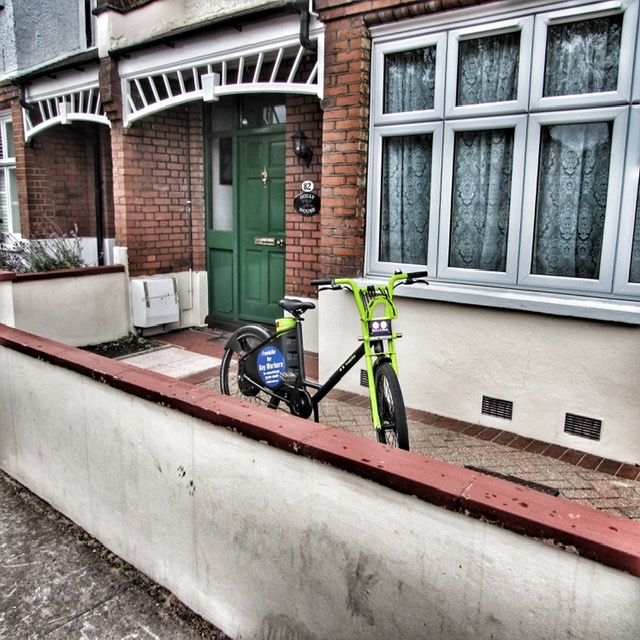
https://london.freebike.com/news.html
Yeah! Save lives.
Iz plan ...
lobster
Re: The Truth about Blacks vs Whites & George Floyd Protests.
Some good points that illustrate the underlying dynamics of a large portion of this unrest. I would just add that we should take sides. We must take sides or else we are enabling things as we are, as untenable as they are for BIPOC in America. And a solution requires radical structural change, so it's even more imperative that we work together to push for that change and guide it.
Jason
Re: Funny Stuff
During lock down at BSWA, supporters were encouraged to drop offerings at the front gate and Ajahn Brahm would come out and give blessings before they drive home.
Apparently he called it “Monk” Donalds drive thru!!
Hehe
 Bunks
Re: The Truth about Blacks vs Whites & George Floyd Protests.
Here's something I wrote somewhere elsewhere specifically for white people. It's not really meant for comments/discussion, but only for consideration (I won't address them at any rate).
The irony of the prophet is that they see futures and truths that the majority of us refuse to acknowledge and believe to our own detriment, yet they cannot do anything but preach them despite being ignored or reviled by the very world they're trying to help. They are compelled to do so by something inside of them they cannot ignore, by a love for their fellow brethren and a deep compassion for the suffering and oppression the poor and marginalized experience due to the existence of greed, hatred, and ignorance in the hearts of those who rule over them. With their words, they lay bare the flaws and sins of society and try to show us another path, one leading to humility and justice and reconciliation. And oftentimes, those words and their prescriptions are a challenge and a threat to the rich and powerful, who profit at the expense of the least among us; and their witnessing to the truth puts their lives in danger.
There are prophets everywhere in the world and in every walk of life; and if we could only learn to listen them, our world would be a different place. They tell us the difficult things we may not wish to hear but are necessary. They warn us of the consequences that we don't wish to face up to if we don't change our ways. And if we heeded their words more often, perhaps the 'moral arc of the universe' would be a little less long and bend even more towards justice than it historically does. But more often than not, it seems, prophets are only appreciated by society far into the future, when their words ring loud and true and their warnings have unfortunately all come to pass. Only then are their words recognized. I think one of those prophets was MLK Jr., who spoke out against the evils of racism, poverty, and war. And in that witnessing, he also spoke out against capitalism and those who criticized the ways oppressed people fought their oppression. In 1963, for example, MLK famously wrote:
First, I must confess that over the last few years I have been gravely disappointed with the white moderate. I have almost reached the regrettable conclusion that the Negro's great stumbling block in the stride toward freedom is not the White Citizen's Council-er or the Ku Klux Klanner, but the white moderate who is more devoted to 'order' than to justice; who prefers a negative peace which is the absence of tension to a positive peace which is the presence of justice; who constantly says 'I agree with you in the goal you seek, but I can't agree with your methods of direct action;' who paternalistically feels he can set the timetable for another man's freedom; who lives by the myth of time and who constantly advises the Negro to wait until a 'more convenient season.'
They were powerful words then, and unfortunately, they still carry a great deal of weight today. I've been thinking a lot about those words while reading things like our mayor's response to the protests, watching the mainstream news coverage, and contemplating the role white people have historically played in the oppression of black people; and the way I see it, you're either on the side of the black community or you're not. It's that simple. Black people in the US have literally suffered generations of oppression and racism in this country, from slavery to segregation and lynching to modern-day redlining, mass incarceration, and police violence. They have been patient enough for justice. Beyond patient. They have spent generations peacefully protesting and working within the system (and most still do). They have spent generations making their case for true equality and reparations for what they have had to endure. They have pleaded generation after generation for white society to see their plight, hear their cries, and to act. And for generations, those cries have mostly fallen on deaf ears or else have been answered by piecemeal reforms here and there, and often only after sustained pressure and civil unrest. Restorative justice has always remained a dream just out of reach.
That's why MLK said that the riot was the language of the unheard. Voices can only cry out for so long before they go hoarse and the generations of sadness, anger, and frustration start to boil over and become expressed in different ways, especially in reaction to watching yet another member of their community be killed—watching it over and over again on the news and social media and seeing how nobody stopped it and how nobody was held accountable, and listening to all the excuses for why his murder was justified or unavoidable. Can you imagine that level of sadness, anger, and frustration? And so just like Chicago in 1919, Harlem in 1964, Watts in 1965, Detroit in 1967, LA in 1992, Ferguson in 2014, Baltimore in 2015, etc., we have Minneapolis et al. in 2020.
Of course, seeing beyond our privilege and through the propaganda and fairytale narratives we've been told our whole lives about the American Dream is a difficult task. We essentially have to be deprogrammed. But the hard truth of the matter is, if you're on the side of the police and those who talk about order and the rule of law and not about the scourge of racism and the terror that the police are for black and other nonwhite individuals (as well as the poor, homeless, mentally ill, etc.), you're ultimately on the side of institutionalized racism, classism, and oppression. And as well-meaning as many may be, I think MLK's criticism of the 'white moderate' is equally as valid for white moderates (and moderates and centrists in general) who today say that they support the black community and believe black lives matter yet criticize their methods or language or cynicism towards politicians, the police, and white society itself. His words were directed squarely at those who were in opposition to anyone fighting for immediate justice for black people (and other marginalized groups) with various means of direct action, because their opposition, in the name of civility and order, ultimately helped to maintain things as they were, as untenable as they were.
And MLK's advice is just as valid today as it was in 1963: Don't fall for the myth of time and waiting for a "more convenient season." The time is always right for justice, whether it's justice for BIPOC, justice for the poor, justice for immigrants, justice for women, justice for the LGBTQ community, justice for those with physical or mental disabilities, or justice for the planet. And we shouldn't be afraid to pick a side, because as Howard Zinn used to say, "You can't be neutral on a moving train." Silence is complicity, even if it's inadvertent.
Nevertheless, it's easy to simply say that black lives matter, but now it's up to us to prove that they matter by doing what we can to defend and support those lives. And to do that, one of the things that must be done is to help force the radical restructuring of our world — materially, spiritually, and everything in between — while also standing in solidarity with everyone out in the streets right now. We have to help forge a future without racism. We created the problem, so it's definitely on us to help solve it.
Time after time after time, police engage protesters with violence time after time after time they provoke it with the killing of unarmed black men, women, and children. Our mayors are complicit. Our legislators are complicit. Our governors are complicit. Our courts are complicit. Corporations are complicit. And our federal government is complicit. Where do they get their money? Where do they get their weapons and tech? Where do they get their orders and immunity? So how can we expect all of these bricks in a larger systemic wall of inequality and violence to do what is right and give us justice when they've failed to do so for generations?
The police protect the socioeconomic order, an order that leaves many at the mercy of markets and predatory corporations and systemic injustice. They protect property, wealth, and white privilege. How many times have journalists reported on this? How many times has this been addressed in city councils? How many promises have we been given at podiums by our leaders that change is coming? So where are they? They're out in the streets right now. The change is coming with the power of everyday people rallying around a common cause, confronting the police and the system they protect. Change is coming because of our solidarity, our numbers, our direct actions, and our righteous anger at inequality, injustice, and oppression.
Jason