
Best Of
Re: Longest period of Meditation!
Longest period of Meditation!
All day and everyday, on and off the cushion ...In my living space, out on the deck, outside, on the street....It's all meditation, watching the mind at work rest and play...
"The most essential method which includes all other methods is to behold the Mind
The Mind is the root from which all things grow...If you can understand the Mind
Everything else is included"
~Bodhidharma~
Everyday is a magical mystical mind trip...
....it not as if one can go anywhere or do anything "without" the mind being "present"....
 Shoshin
Re: Devas: Roles in your practice
@seeker242 said:
@Kerome said:
so why should the belief in Devas in a cloudy realm persist against any notion of evidence?Because Buddhism is not a materialist religion and there's no reason for it to change to one.
I think Buddhism is different things to different people. Chinese or Tibetan Buddhism or Pureland seems to be a lot more colourful than say Japanese Zen, or even something new like Secular Buddhism. For me, it is one of the beauties of Buddhism that you can practice it as a very pragmatic, evidence-based belief.
anyway believing in spirits has significant downsides.
I don't find that to be the case at all!
There is a link between people being spiritual in their beliefs and a higher incidence of mental health issues, according to a study done in the UK. They haven't sorted out causality but it's interesting.
My own experience has been that believing in spirits stands in the way of understanding your own mind. If you have a certain experience in meditation and you chalk it up to playful spirits you may be missing significant opportunities for insight.
 Jeroen
Re: It hit me like a sledgehammer to the chest...
And by the way...?
Nice to see you at last!!
Don't be such a damn stranger! 

 federica
Re: Disappearing up the Nothingness
@lobster said:
Are you still full of it too?

So much so that Spiritual Laxatives are my #goals 
 Kundo
Re: It hit me like a sledgehammer to the chest...
I figured I'd update this almost 10 years later:
This is a picture of me and my ex-wife's 4-year old daughter. I took her out on the town for the day to give her mom some space to be with her newborn. We hung out and took the trains downtown, explored, shopped, and had a good time. She's a cool kid and we love hanging out with each other. She knows I'm her brothers' dad and thinks the whole thing is just funny.
The point is: her mom and I are friends now. We get along well and some of what made us like each other in the first place has returned to the roost. She has two kids with the guy she left me for (she's still with him), and I have a close relationship with her daughter. Our sons are 19 and 18 now, and we have watched them grow up and graduate high school and start their young adult lives together. We talk relatively often and I have a friendly relationship with her boyfriend as well.
These rifts can be healed. No matter how hurt you are, it can heal.
 Brian
Re: Devas: Roles in your practice
@vinlyn said:
I have never understood why so many Buddhists will deny the existence of God so vehemently, and then believe in all these other "spirits". I think there's a lot of confusion between actual Buddhism and culture, and the two should not mix.
There is certainly a lot of cultural baggage in Buddhism, though separating out the "essence" of Buddhadharma is not a straightforward matter IMO, particularly given the great diversity and plurality in Buddhism. One school's baggage might be central to the teachings of another school. Also some of the "baggage" results from Buddhism taking on aspects of other traditions like Taoism and Bon. It's a rather messy picture!

Re: Devas: Roles in your practice
It's pretty hard to remove culture entirely. I do agree with the general sentiment of your post, @vinlyn. But even the core of Buddhism was influenced by the culture of the time. But Buddhists should be investigating these attachments to culture just like everything else, but it's easy to see that looking into other countries from afar. When you are living within the culture, it's often hard to see what is culture and to separate it out. Our attachments to our "tribe" is one of the biggest ones we have, so we are quick to condemn others' without even being able to see our own.
For me, being a Tibetan practitioner, it has been explained by several teachers/monks that references aren't meant to be seen as actual, literal beings but rather manifestations of parts of our minds and ways to visualize them and find ways to work with them. The same has been explained as the various realms etc. It's not for everyone, but some people are very visual learners and not having a visual makes things very difficult. Myself, I am someone who learns best by being able to move and do, I need practical application to understand alot of things. Others can understand just by reading or hearing. Others need a visual, so I don't think that's harmful, as long as they understand that that is what it is. Visualization like that, for me, is more often a distraction than a help in understanding.
 karasti
Re: Devas: Roles in your practice
I always find it interesting to contemplate the boundaries of mental health and religious practice. What a Vietnamese villager calls an encounter with a demon voice might by a western psychiatrist be called a short psychotic break with auditory hallucinations. So certainly from that viewpoint, one would be wise not to associate with or try to learn from Devas, Spirits or Demons.
The result of trying to learn from them would be to create internally a kind of attitude of looking for "reflected wisdom", fragments of teaching which you recognise as wise but which may well be taken from something you have heard in the past which now come from the voices of what you think are Devas. The most one would get would be a kind of distorted dharma where your creative mind would be filling in many of the blanks to create something coherent.
There is a difficult problem associated with encountering 'external' entities such as Devas, Spirits and Demons, from a spiritual standpoint. Many well known masters have advocated that it is all in our minds... Bhodhidharma for example once said, "if you can know the mind, all else is included". So do Devas, Spirits and Demons exist, other than as fragments of our minds?
My experience is it is generally healthier to assume that such entities are a manifestation of our own mind and state, and to detach and let these things come and go, just like manifestations in meditation can do.
Jeroen
Buddha Dharma Helps Those Who.......
I have found that Buddhism is for the most part a hands on kinda spiritual approach, where one has to muck in and get their hands dirty in order to see results....
I guess in a sense The Buddha Dharma helps those who 'are prepared' to help themselves and Dharma practitioners also help those who help themselves by pointing the way (and often by leading by example )....
The Eightfold Path "Package"
1) Right/Complete Understanding/View
2) Right/Complete Thought/Intention
3) Right/Complete Speech
4) Right/Complete Action
5) Right/Complete Livelihood
6) Right/Complete EFFORT
7) Right/Complete Mindfulness
8) Right/Complete Concentration
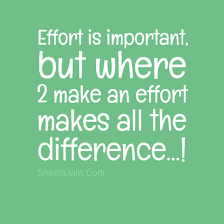
We tend to get out what we are 'prepared' to put in, which comes to the importance of "Right Effort" ...
"As recorded in the Pali Canon, the Buddha taught there are four aspects to Right Effort. Very simply --
1)The effort to prevent unwholesome qualities -- especially greed, anger and ignorance -- from arising.
2)The effort to extinguish unwholesome qualities that already have arisen.
3)The effort to cultivate skillful, or wholesome, qualities -- especially generosity, loving kindness, and wisdom (the opposites of greed, anger and ignorance) -- that have not yet arisen.
4)The effort to strengthen the wholesome qualities that have already arise
On some days one might feel that they just can't be bothered to do what they know must be done in order to achieve a positive/wholesome result...
What have you found motivates you to make the effort when it comes to Dharma practice ?

Shoshin
Re: Devas: Roles in your practice
@karasti said:...it has been explained by several teachers/monks that references aren't meant to be seen as actual, literal beings but rather manifestations of parts of our minds and ways to visualize them and find ways to work with them. The same has been explained as the various realms etc. ...
Bravo, @karasti, yes; I have always considered 'Beings' like Tara and Chenrezig to be extensions and manifestations of 'perfect qualities' we ourselves would like to, or seek to, develop.
Similarly, the Realms in the Afterlife, are representations of mental constructs we find ourselves in, on a daily basis. Sometimes, we may well hit the jackpot and 'reside' in all 6!
Hence the instructions of Watching the Mind.
At the moment of Death, what 'Frame of Mind' will YOU be in....?
federica