
Best Of
Re: My Dharma practice today
Did my last goodliness from yesterday
https://universeodon.com/invite/J8ZvPdef
I liked in particular @Jeffrey effort. But all good.
Today:
- My new printer is definitely my Buddhist Master. I nearly threw it out with the impediments. Decided to persevere

- Had a very simple almost Japenese style luncheon. That too was my Master.
- My God! They Be everywhere... I knew IT.
- Meditated on the meaning of Death. That was good for a laff.
Must be time for a void coffee. Void of milk that is. And Void of caffeine (decaff only for lobsters


 lobster
Re: The way things seem and the way things are
@pegembara said:
Things appear to be beautiful and enjoyable or not. That is what the mind generally focussed on. These are 'signs' (nimitta) that the mind picks up.The long blonde or dark hair looks good on the head but if they happen to fall on one's food or if left unkempt would evoke a different set of feelings.
Beauty is in the eyes of the beholder.
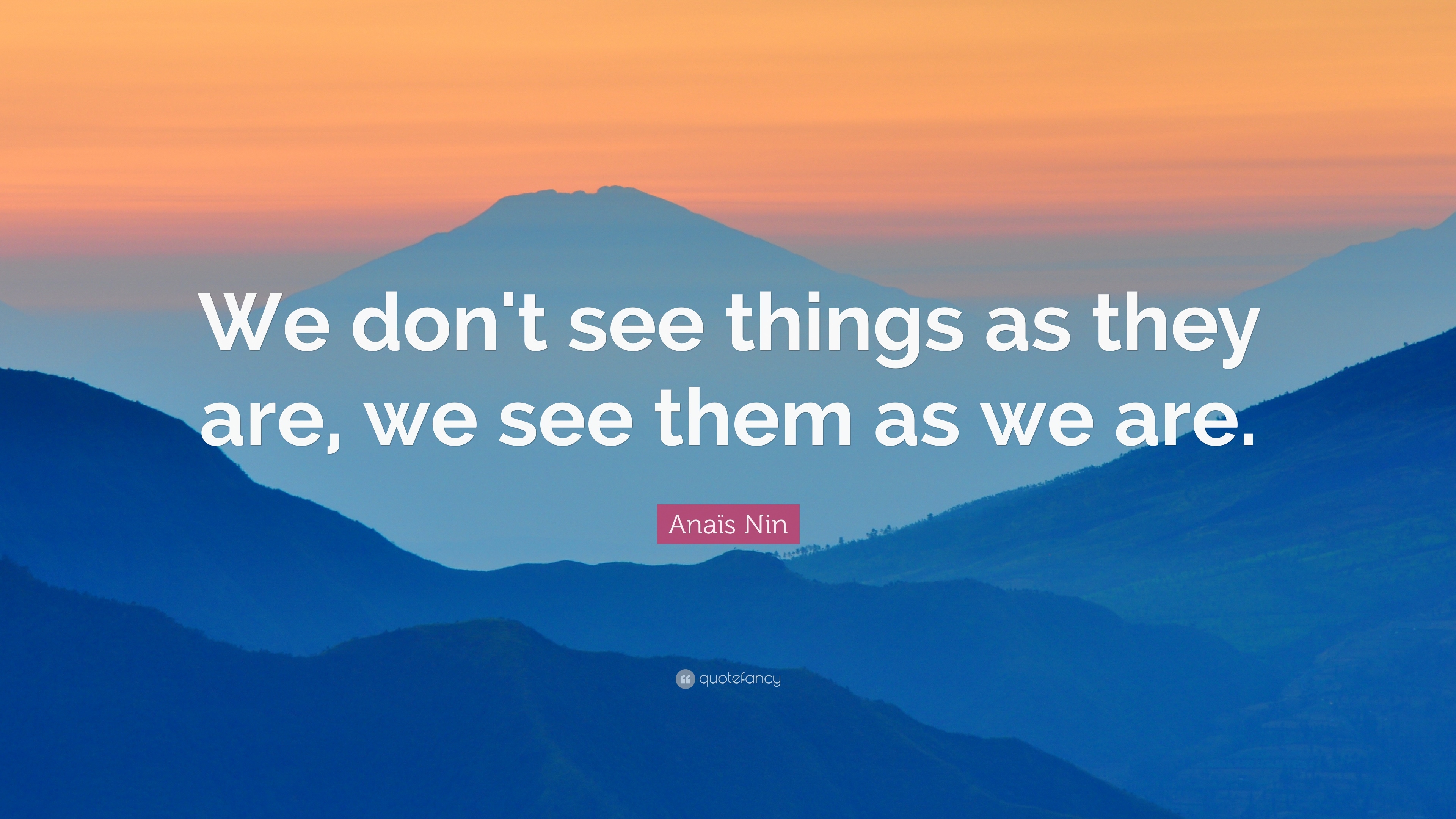
'...we see things as we are'.
I am repeatedly wowed by what I call the (public transport) 'tram test'.
Depending on my state of mind, I will think/see/believe the random people commuting with me in a totally different light.
Eg.
If I am depressed, I will see everyone as sad and find 'confirmation' of how difficult and sad life is.
If I am happy, I will see everyone as happy, and find 'confirmation' of how fun life is.
If I am in a work-mindset, I will see the people as traveling to work, commited to work.
Etc.
 marcitko
Re: Buddha and the unconscious
I am 95% sure that in one of his podcasts, Ajahn Sonna, abott of a Canadian Theravada Forrest Monastery, answers this very question and says the Buddha does not consider there is any 'unseen' unconcious beyond the concious workings od the mind (thoughts) and heart (feelings).
Even so, as @Shoshin1 has so eloquently stated, the Buddha clearly does take into account our various difficult-to-see conditionings, which we might be unaware of.
So maybe the difference is that western psychology posits a can-never-unearth unconcious, while the Buddha posits a can-unearth but with difficulty, practice and training unconconcious.
But I very well might be wrong on both counts.
marcitko
Re: Buddha and the unconscious
@Tavs said:
Sounds like there is no official census on the matter
If useful, we are the 'official'/'unofficial' consensus and 'it makes sense to me'
For example Yogacara always seems like intellectual waffle to me. I am too stoopid to engage in or with... Suits some in formal indoctrination curriculum's...
lobster
Re: Some delusions that come from meditation
My reaction is that changing the wording from 'delusions that arise from meditation' to 'delusions that may arise from meditation' makes the statement true.
marcitko
Re: Ploggers of the world...unite!
Over the years I've lost count of the amount of rubbish I've picked up from the beach when out walking or on my morning jolk...
At times I see others also picking up rubbish, but for the most part, many beach walkers (locals and visitors) are so engrossed in conversation (either with another person or lost in thought) that they walk right passed the rubbish...
No doubt there are some who think along the lines of, "Well it's not my rubbish, why should I pick it up.... let someone else pick it up" ....
I guess when it comes to keeping the beach/environment clean, it's a case of lead by example....
 Shoshin1
Re: The way things seem and the way things are
@lobster said:
g?Is your mind padlocked maybe rather than open?
The mind set that I aim for is a sort of open skepticism. So rather than a padlock I'd say I have a filter that needs to be gotten past, which is opposed to an open sieve that lets in everything.
So to be more specific, I have a perspective but am willing to look at things differently. To then change my mind I'd want evidence and compelling arguments rather than a claim or statement. Just acknowledging or understanding that other perspectives exist doesn't mean I adopt them wholeheartedly, often its more like there are bits and pieces that expand my view or move me a bit one way or another. Maybe a simpler way to state it would be that listening and understanding isn't the same as agreeing or believing.
I feel like in the past I've been too open and believed in all kinds of stuff that later on turned out to be false.
 person
Re: Buddha and the unconscious
I did a search for Buddhism and the unconscious and plenty of stuff came up, I didn't look deeply, but one summary of the page did mention the alaya like @Jeffrey pointed out.
person
Re: Buddha and the unconscious
Did the Buddha, in his own terms, ever talk about the unconscious ?
Bearing in mind (pun intended) that the term “unconscious” is a modern psychological idea, one could say yes, the Buddha did speak about what we would now call the unconscious, because his understanding of the mind included every layer of mental activity, from what we’re clearly aware of to what lies deeply conditioned and unseen.
He may not have used the word “unconscious,” but he spoke of latent tendencies (anusaya) that stay hidden until they are stirred, mental formations (saṅkhāra) that shape how we think and act without our awareness, and ignorance (avijjā) as the root that keeps these patterns alive. In this way, the Buddha recognised both the seen and unseen workings of the mind, showing that liberation comes through understanding the whole of it, not just the surface.
Shoshin1
Re: Buddha and the unconscious
Did the Buddha? I don't know, but (some of his) descendants put together a theory of 8 consciousness and I would think the 8th, Alaya, sounds like subconscious but maybe not the same as modern psychologists conceive of it. I haven't looked into how these teachings started or if you could say that they came from or of "the Buddha".
 Jeffrey