
Best Of
Re: The don’t know mind
@Jeroen said:
@pegembara said:
“at the core it (the ego) is this compulsion to make everything into a problem to be solved.”I think there is a lot of truth in that. Games are a good answer to that, it’s an endless sequence of little non-stressful conundrums to be solved and acted out. But even if you go beyond that the mind has a certain restlessness, which means that you cannot just do nothing. For me the answer has been to read, which provides just enough busy-ness for the mind to not go crazy.
No wonder it is said that restlessness is one of the last fetters that one removes before full enlightenment or arahantship.
The Pali canon's Sutta Pitaka identifies ten "fetters of becoming":[3]
belief in a self (Pali: sakkāya-diṭṭhi)[4]
doubt or uncertainty, especially about the Buddha's awakeness (vicikicchā)[5]
attachment to rites and rituals (sīlabbata-parāmāsa)[6]
sensual desire (kāmacchando)[7]
ill will (vyāpādo or byāpādo)[8]
lust for material existence, lust for material rebirth (rūparāgo)[9]
lust for immaterial existence, lust for rebirth in a formless realm (arūparāgo)[10]
conceit (māna)[11][12]
restlessness (uddhacca)[13]
ignorance (avijjā)[14]

The don’t know mind
A friend suggested I take a look at this after I posted the Socrates quote “the only true wisdom is knowing that you know nothing”. There is a certain irony in attempting to fill up the nothing with more knowledge, but the Zen approach to the don’t-know mind means that after you reach that state of mind, you might see something.
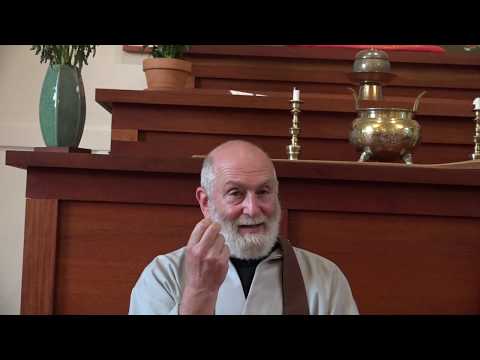
The don’t know mind is actually a state of stopping, because you have reached a point where the mind has given up. It can happen that you acknowledge that you have done everything possible to get a glimpse of enlightenment and your mind and knowledge have failed you. Then for a moment the mind ‘does not know’ how to proceed.
Of course there are things that can stand in the way, pride for one, or an unwillingness to be honest with oneself. The moment can be lost, like so many. But any moment can be an entry point to Zen.
 Jeroen
Re: Letting go of games
Hey Jeroen
A sincere Meditation practice can be an odd task for any mind, especially if our developed mentality has been the focal point of our identity.
We are, in a meditation practice, challenging the validity of the storyline of our own conditioning, and thereby threatening the very structure of our ego.
No wonder the twists and turns of our imaginary ego structure, which has provided a facade of stability against the background of life's underlying chaos, is slow to allow its own unraveling towards an impending uncertainty.
Often the greatest obstacle to finding a roots true source was always us, maintaining a greater value on our own mentality, than whatever process might challenge its fiefdom.
 how
how
Re: Ways to spend time
Perhaps that’s true @how… you think you’re busy with spiritual things, talking to spiritual friends and reading spiritual books, but look at it another way, and you’re interacting within a forum - on a screen - and you’re using an ebook reader - on a screen.
It put me in mind of a post I put on Medium, about the kinds of spiritual lives people can lead. For some people the best they can do is sing devotional songs, while other people learn the most from being in a forest listening to the silence. It is a question of knowing yourself and what suits you.
Jeroen
Re: The practice of stopping
A simple quick mental body scan can work wonders for both body and mind...
 Shoshin1
Re: The practice of stopping
@Shoshin1 said:
A simple quick mental body scan can work wonders for both body and mind...
Are you then not still doing things? Even if it’s only focussing and moving the awareness.
Anxiety is often an overactive deep mental state… some deeper part of the mind that is fretting. If you meditate and intentionally try to slow down, be gentle, calm, then in my experience much of it disappears.
My question currently is whether the same mindset can be applied also during activity.
Zen says many activities lend themselves to this. I believe it would be mostly repetitive activities which would be best, like cutting grass with a scythe.
Jeroen