
Best Of
Re: Is the Buddha an experimentalist?
Buddhism is a teaching of action, of application. Teachings without action are like trying to start a fire by describing the flame. Application, action, is needed to prove the teaching.
1. Does the teaching make sense?
2. Can it be rationally and universally applied - can it be tested?
3. Does the practice (application) render positive results?
One might say,
"As I have been practicing, I have noticed my environment is better, people are
friendlier."
However, as the body bends, so must the shadow follow - As one's environment is a reflection of oneself, (the shadow) it is the practitioner (the body) who has changed. His or her environment reflect that change.
As I am a slow writer and the hours grow late, I must stop (or pause) here.
Peace to all
 Lionduck
Re: Giving Up?
@Avisitor said:
If that were true, you are not the body, not the thoughts, not the emotions then what are you? Just some "that" which looks out of the eyes? I believe that whatever looks thru the eyes is part of the body. And this body is part of something bigger. Not the other way around. You are not inside this body. Your body is inside of you.
@Jeroen said:
What evidence do you have of this? The Buddha even says there is nothing at all, no-self, no soul. So why think that there is something bigger?
Nisargadatta once said, you cannot be anything that you observe, because all those things are the object of observation and you are the subject. Can an eye observe itself? So all the things you observe through any sense are ‘other’. It is an exclusive process, you can only say what you are not.
But that is part of the mystery of existence, that we experience it through the body and think we have a freedom of choice, while in fact we are part of the giant whole of the cosmos, shaped by our past experiences to do just certain things in the present in the way that the whole ordains.
It can be said that we are nothing other than consciousness, that through us the universe observes itself. That even our mind is a mechanism in the brain which reflects itself in consciousness, because we can observe our thoughts.
According to Osho just witnessing, so awareness without choices or judgments, leads to observing reality without the veils of the mind. We are not really what we think we are, and a real investigation of what is true is part of the spiritual journey which leads one within.
 Jeroen
Re: Is the Buddha an experimentalist?
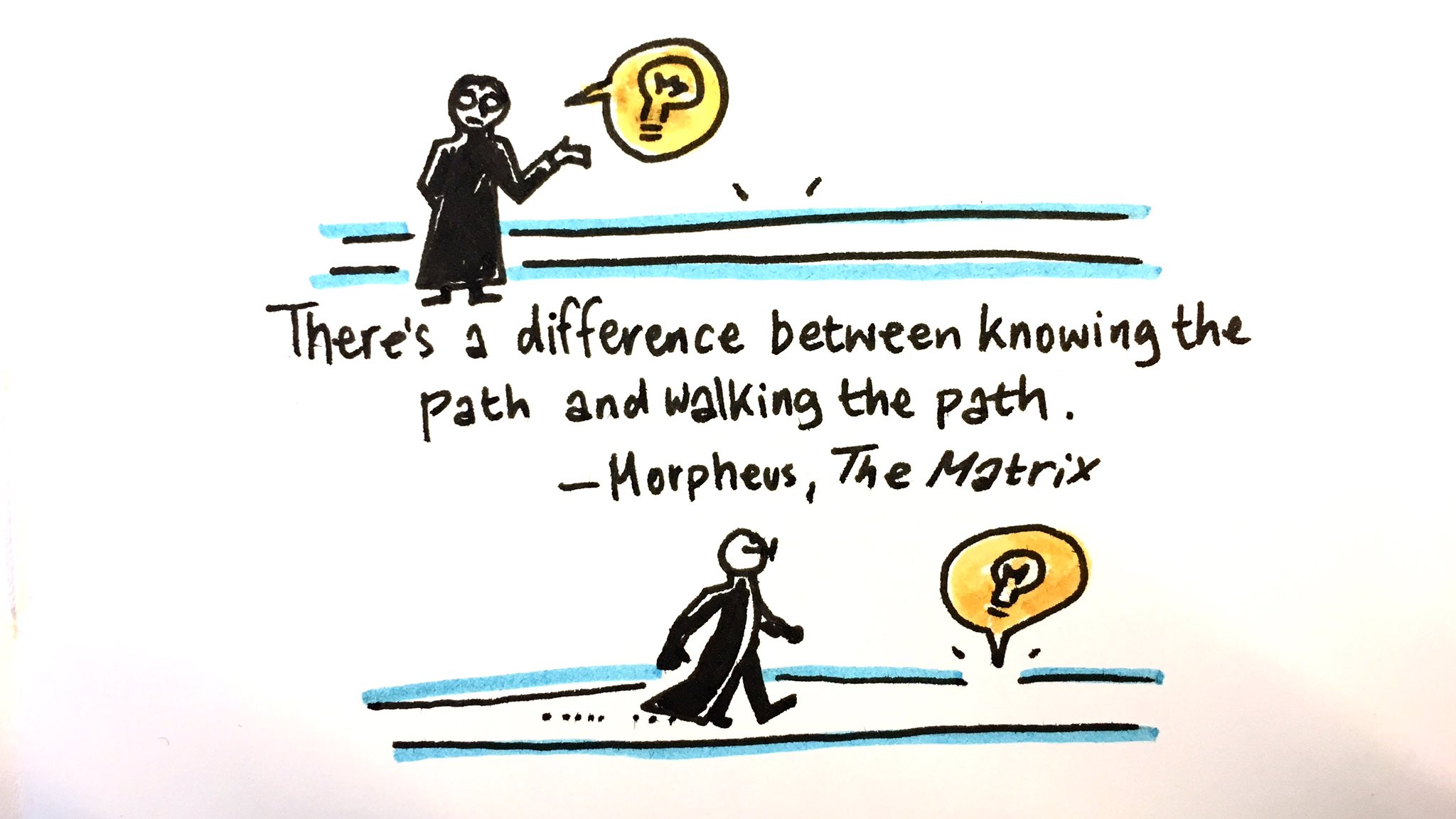
Additionally everyone has different dispositions and are at different places on the path. Absent a truly wise, qualified teacher to direct us step by step experimentation is the way.
The best medicine is that which is customized to the individual. Trying to strictly follow the written teaching might not be that fruitful.
 person

Re: No Buddhist Quotes
“What is the path of virtue? No religion has been able to provide it -- not even the criterion by which it can be judged.
As far as I am concerned, I say to live joyously, contented, fulfilled, sharing your love, your silence, your peace, letting your life become such a beautiful dance that not only you feel blessed but you can bless the whole world -- that is the only authentic path. Life is itself the criterion; everything else is non-essential.”
— Osho
Jeroen