
Best Of
Bringing light into the world
I know I wasn’t going to spend too much time on spiritual topics, but I found myself watching a number of wonderful near-death experience reports, and I thought to myself, these are almost spiritual in nature. They talk about the hereafter, the nature of what we are, our purpose here on Earth, it’s almost like a complete life philosophy. And you can see the people who have had these experiences have been genuinely transformed by it, their reactions give it away, it’s like they know something and have had their lives changed by it.
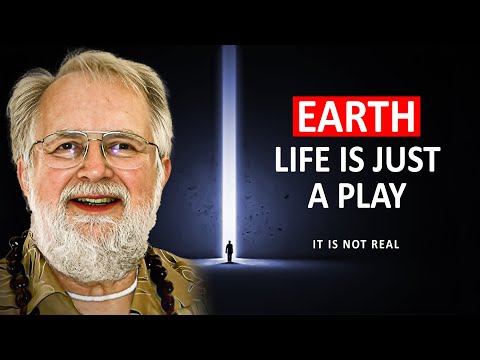
This man says, our purpose in life is to know joy. So to help ourselves and others we should teach them about joy. This is not always easy, life’s ups and downs teach us first about pleasure and pain, and only later do we find out about joy. When you’re young, life is about chasing happiness, and when you’re older, life is about appreciating joy.
For me, joy is to be found in the real world, not a virtual one. It is about nature, it is about family, it is about meditation. It is about caring for people, about good food, about sharing. In a way, all the things that isolate us make it more difficult for us to find our joy, and modern life with its houses and its cars is great at isolating.
So if we all pay a little more attention to giving others joy, we can succeed in bringing a little more light into the world.
 Jeroen
Re: All Things Apple (was MacBook Air, but things evolve...)
There are certain aspects of Apple’s business which I like and admire.
- The commitment to product quality, good design, privacy and the environment
- The philosophy of making things “just work”, and requiring user input only when necessary
- The ecosystem of cloud-connected services, which are simple and easy to use
- The iPhone and the Mac for me are the pinnacle of Apple’s achievement
And then there are things which I am not so fond of.
- Their attitude of charging premium prices for products
- The sometimes egregious charging for upgrades
- The obsoleting of old products through a lack of software updates
I’ve never been very fond of the wearables like the AirPods, the Apple Watch and so on, and I’m slowly getting a feeling that I will add the Vision lineup to that list. I just think it is a shame to spend your time in a virtual world all the time with screens and a computer plastered to your face.
Jeroen
Re: No Buddhist Quotes
"With or without religion, you would have good people doing good things and evil people doing evil things. But for good people to do evil things, that takes religion"
~Steven Weinberg~
 Shoshin1
Re: Buddhist quotes
“The proliferating mind tries to avoid this truth, saying, “that’s good” or “this is beautiful,” but if there is Buddho in the mind it can no longer deceive us, because we know the mind as it is. The mind can no longer create deluded mental states, because there is the clear awareness that all mental states are unstable, imperfect, and a source of suffering to one who clings to them.”
— Ajahn Chah
Jeroen
Re: The Other Elephant In The Room
The Lions roar link with the different view points, was an interesting read....thanks @lobster
All the view points revolve around politics and societal issues, more often than not from Buddhist perspectives . highlighting the interconnectedness of individuals and societies, emphasising the need for a Dharmatic (just made that word up) and dramatic approaches to political and social challenges., and the limitations of conventional politics, (which for the most part is prone to corruption) which is in urgent need of major overhaul/revamp, and the importance of individual and collective action in creating positive change.
In other words 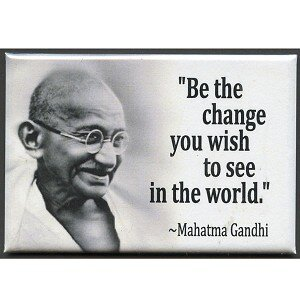
Shoshin1
ELLA WHEELER WILCOX. "WORTH WHILE"
ELLA WHEELER WILCOX.
April 12th, 1910.
WORTH WHILE
It is easy enough to be pleasant
When life flows by like a song,
But the man worth while is the one who will smile
When everything goes dead wrong.
For the test of the heart is trouble,
And it always comes with the years,
And the smile that is worth the praises of earth
Is the smile that shines through tears.
It is easy enough to be prudent
When nothing tempts you to stray,
When without or within no voice of sin
Is luring your soul away;
But it's only a negative virtue
Until it is tried by fire,
And the life that is worth the honour on earth
Is the one that resists desire.
By the cynic, the sad, the fallen,
Who had no strength for the strife,
The world's highway is cumbered to-day -
They make up the sum of life;
But the virtue that conquers passion,
And the sorrow that hides in a smile -
It is these that are worth the homage on earth,
For we find them but once in a while.
Shoshin1
Re: The Other Elephant In The Room
https://en.wikipedia.org/wiki/Homeland_for_the_Jewish_people
meanwhile ... what have Buddhists been up to?
In Tibet the improvements in health care, transport, education and opportunities for the former serfs of Lamas are largely ignored by (Guess who?)
In Sri Lanka the Buddhist supported government has tried to 'reeducate', kill, undermine its considerable Hindu population.
You know about these and maybe other politicised Buddhist actions?
... or maybe we should just "blah blah blah", as Greta Thunberg might say ...
Where else are the elephants taking up room?
https://www.lionsroar.com/eight-views-on-the-practice-of-politics/
 lobster
Re: The Other Elephant In The Room
I would say that there are those in the West who are living in very similar, or the same versions, where their countries mainstream government controlled news broadcasts, feed them the same mind poison when it comes to what is happening in Gaza...
The following is quite obvious .....
Propaganda: Governments may use mass media to disseminate information or messages that serve their interests. This can involve selective reporting, misinformation, or biased framing of events.
Censorship: Controlling the flow of information by restricting or suppressing certain content can be a powerful tool for governments. This can include censorship of media, the internet, or social media platforms.
Surveillance: Governments may engage in extensive surveillance of their citizens, monitoring communication, online activities, and movements. This can have a chilling effect on dissent and limit freedom of expression.
Nationalism and Patriotism: Appeals to national pride and patriotism can be used to create a sense of unity and discourage dissent. Leaders may use symbols, rhetoric, or events to foster a strong sense of national identity.
Diversionary Tactics: Governments may divert attention from internal issues or controversies by creating external conflicts or crises. This can shift public focus away from domestic problems and unite the population against a common external threat.
State-sponsored Disinformation: Some governments engage in spreading false information to manipulate public opinion, both domestically and internationally. This can be done through social media, news outlets, or other communication channels.
Use of State-Owned Media: Governments may control or heavily influence media outlets to ensure favorable coverage and suppress dissenting voices.
Restrictions on Activism and Protests: Governments may enact laws or use force to suppress political activism, protests, or dissenting voices, limiting the ability of citizens to express their grievances.
It would seem much of the above is already happening now ...
....
Shoshin1
Re: The Other Elephant In The Room
The mainstream media news here is also censored where those reporting on Gaza use the same loaded words as CNN, and no doubt many other Western mainstream media outlets....
I found the quote from Politic and the English Language by George Orwell (around the 52 minutes mark in the Real News Network video), quite interesting...
According to George Orwell , political language is often used to defend actions that are hard to justify. To make these actions sound better, politicians use vague and misleading language. For instance, bombing defenseless villages and forcing people out of their homes is called "pacification," taking away farmers' land and displacing them is termed "transfer of population" or "rectification of frontiers," and imprisoning or killing people without a fair trial is referred to as the "elimination of unreliable elements." Such language is used to talk about unpleasant things without creating strong mental images that might provoke opposition or criticism.
Shoshin1
