
Best Of
Re: From the non-dual book pile…
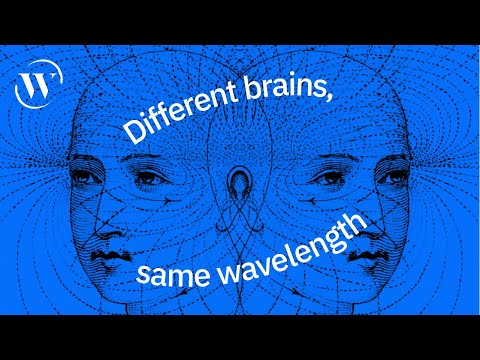
This channel usually sticks closer to verified science, there is some research offered though regarding a universal consciousness. The speaker is the Columbia psychologist and spirituality researcher Lisa Miller.
 person
Re: Space - the final frontier
K2-18b has just been detected by the space web telescope as probably reading molecules of Dimethyl Sulfide readings in its atmosphere, that on earth, are only created through the existence of life. These results are pretty tentative and might take a year for corroboration but are the best scientific evidence yet for the possibility of life existing somewhere other than on earth.
 how
how
Re: No Buddhist Quotes
“Your heart is the light of this world. Don’t cover it with your mind.”
— Mooji
“Your urge to control life controls you.”
— Mooji
“Pay attention to that which sees the mind.”
— Mooji
 Jeroen
Re: No Buddhist Quotes
Life is not my business,
life is my breath, my joy and being.
When you believe you are a person,
you feel like life is something you have,
so you try to protect and
control it like a business.
When the Truth is known,
you gladly cease interfering,
knowing and observing
that life takes perfect care of life.
It is a perfect spontaneity.
A formless witness is filled
with unimaginable joy
in this perceiving.
One is timelessly here
as the Unchanging.
~ Mooji
 Jeffrey
Re: Letting go of games
@FleaMarket said:
It's so bold they wear their lives on their sleeves like that for the world to see. They play a character in each season but they also play themselves and their relationships with each other and that's such a revealing position to be in. I really envy their ability to just be out there like that for everyone to watch.
Yes, it’s something that you learn with the acting part of playing D&D, that you reveal more of yourself and you play with that. There is also a certain amount of buffoonery involved, you learn to make fun of yourself after a while. Starting out as someone with a rather introverted personality, this can make you more able to express yourself, if you see other people around you do it.
Jeroen
Re: Letting go of games
@person said:
The designers of 5th edition purposefully made it so parties don't have to be balanced and fit the MMORPG template of tank, healer, dps. People don't often want to be pigeon holed like that. Laura Bailey's character Jester in season 2 rarely cast healing spells, it was an ongoing joke that she was a cleric that never healed. Clerics (and other healing classes) have lots of other tools to help a party out in their bags.
It’s true that with Guiding Bolt and Spirit Guardians Clerics can do pretty fair damage, and with spell slots you’re not really penalised for preparing both healing and damage and utility spells. Certainly BG3 shows that to pretty good effect.
But you can kind of see that without an MMORPG threat-style mechanism the whole idea of a tank doesn’t really work. It’s relatively easy for the whole party to maintain similar armour classes and so similar damage avoidance, which means you don’t really get glass cannons in the same way that you did in the old-style D&D, and so there is no need for monsters to focus their attacks.
Of course that does depend on the distribution of magic items in the game, which is something that the Dungeon Master controls. So in a way how important this is, and the need to spend actions on taunts like the Bear’s Goading Roar, is kinda up to him. The other thing that was clear from BG3 was the difference stealth makes for Wizards, hiding and staying unseen has become easier for non-rogues.
Jeroen
Re: The Medical Model of Mental Illness
Hmm overpopulation, climate change and biosphere denuding may catch up with us before the majority of the human population lives permanently in comfort, I suspect.
Jeroen
Re: The Medical Model of Mental Illness
The thing is, there are undeniably traumatic experiences, such as the suicide of a loved one. I don’t think you want to build a society that treats those kind of experiences as something to be learnt from. And every society that takes the stance “learn from it, toughen up” also inevitably has its casualties among the more sensitive people.
At the moment the social pendulum seems to have swung towards acknowledging the sensitive souls and seeing what we need to do to accommodate them. That is a good thing — society coming to terms with the sensitivity of its members. It will take some time and effort to find a good middle way, a position that encompasses both encouraging resiliency and allowing for sensitivity.
Jeroen
Re: No Buddhist Quotes
“You can do what you want, but you can’t direct your wants.”
— Schopenhauer
Jeroen
Re: The Medical Model of Mental Illness
Seeing the video set me on a path and another good piece I came across is this one from the Atlantic.
I WAS WRONG ABOUT TRIGGER WARNINGS
Has the national obsession with trauma done real damage to teen girls?By Jill Filipovic
My own doubts about all of this came, ironically, from reporting on trauma. I’ve interviewed women around the world about the worst things human beings do to one another. I started to notice a concerning dissonance between what researchers understand about trauma and resilience, and the ways in which the concepts were being wielded in progressive institutions. And I began to question my own role in all of it.
Feminist writers were trying to make our little corner of the internet a gentler place, while also giving appropriate recognition to appallingly common female experiences that had been pushed into the shadows. To some extent, those efforts worked. But as the mental health of adolescent girls and college students crumbles, and as activist organizations, including feminist ones, find themselves repeatedly embroiled in internecine debates over power and language, a question nags: In giving greater weight to claims of individual hurt and victimization, have we inadvertently raised a generation that has fewer tools to manage hardship and transform adversity into agency?
...Applying the language of trauma to an event changes the way we process it. That may be a good thing, allowing a person to face a moment that truly cleaved their life into a before and an after, and to seek help and begin healing. Or it may amplify feelings of helplessness and hopelessness, elevating those feelings above a sense of competence and control.
“We have this saying in the mental-health world: ‘Perception is reality,’ ” Jain said. “So if someone is adamant that they felt something was traumatizing, that is their reality, and there’s probably going to be mental-health consequences of that.”
Martin Seligman, the director of the Positive Psychology Center at the University of Pennsylvania, has spent the past 50 years researching resilience. One study he co-authored looked at the U.S. Army, to see if there was a way to predict PTSD. Unsurprisingly, he and his fellow researchers found a link to the severity of the combat to which soldiers were exposed. But the preexisting disposition that soldiers brought to their battlefield experiences also mattered. “If you’re a catastrophizer, in the worst 10 or 20 percent, you’re more than three times as likely to come down with PTSD if you face severe combat,” Seligman told me. “And this is true at every level of severity of combat—the percentage goes down, but it’s still about twice as high, even with mild combat or no obvious combat.”
In other words, a person’s sense of themselves as either capable of persevering through hardship or unable to manage it can be self-fulfilling. “To the extent we overcome and cope with the adversities and traumas in our life, we develop more mastery, more resilience, more ability to fend off bad events in the future,” Seligman told me. “But conversely, to the extent that we have an ideology or a belief that when traumatic events occur, we are the helpless victims of them—that feeds on itself.”
Seligman also found that some soldiers who experienced severe trauma could not only survive, but actually turn their suffering into a source of strength. “About as many people who showed PTSD showed something called post-traumatic growth, which means they have an awful time during the event, but a year later they’re stronger physically and psychologically than they were to begin with,” he said. But that empowering message has yet to take hold in society.
...Most of the experts I spoke with were careful to distinguish between an individual student asking a professor for a specific accommodation to help them manage a past trauma, and a cultural inclination to avoid challenging or upsetting situations entirely. Thriving requires working through discomfort and hardship. But creating the conditions where that kind of resilience is possible is as much a collective responsibility as an individual one.
If we want to replace our culture of trauma with a culture of resilience, we’ll have to relearn how to support one another—something we’ve lost as our society has moved toward viewing “wellness” as an individual pursuit, a state of mind accessed via self-work. Retreating inward, and tying our identities to all of the ways in which we’ve been hurt, may actually make our inner worlds harder places to inhabit.
“If everything is traumatic and we have no capacity to cope with these moments, what does that say about our capacity to cope when something more extreme happens?” Ungar said. “Resilience is partly about putting in place the resources for the next stressor.” Those resources have to be both internal and external. Social change is necessary if we want to improve well-being, but social change becomes possible only if our movements are made up of people who believe that the adversities they have faced are surmountable, that injustice does not have to be permanent, that the world can change for the better, and that they have the ability to make that change...
Sorry if I pasted a lot of the article, it was hard to find an essence without taking it out of context. The article has more in the way of solutions and nuance.
person