
Best Of
Re: "Walk For Peace" monks in the US from Texas to Washing D.C.
These Monks, in their walk have faced both hardship and praise. They have been welcomed and demonized. They have crossed many hundreds of miles.
Still, their message of hope and peace endures.
 Lionduck
Re: Can the mind be conditioned into enlightenment?
Yes and no. One can certainly plant the seeds for the blossoming of awakening. Every action, arising out of our intentions, helps to condition future habits, experiences, and insights. So while one can’t condition what’s unconditioned, one can condition their approach to it and the possibility of or openness to its realization. Basically, per the simile of the raft, our intentions and actions are the raft which lead us to the island of the unconditioned—our actions don’t condition or create the island, but they can help lead us there.
 Jason
Jason
Re: On the topic of becoming more conscious
While there are different methods of meditation, the term "Monkey Mind" arises.
That is the random thoughts that seem to be constantly flitting through our consciousness. Regardless of type or method, for some, slipping into the meditative state seems like stepping into another room or sliding into a pool - effortless.
For others, that pesky monkey "Just won't stop jumping andchattering away". Clearing one's mind does not necessarily shutting up the monkey. The more we try, the more the active monkey. Instead, we simply allow the monkey to be a monkey. But, we remove the focus on the monkey. Of course, methods vary. Foe example, some use various mudras (movements) in preperation, other sit and mentally brush away the mental cobwebs. The point is to change the focus from the monkey mind (the lesser mind) to the deeper mind, the greater mind. Once the monkey ceases to have our attention, it fades into the background. As this happens, we find, we have slipped into the pool, we have walked through the doorway into the next room.
I personally have my Mandala which acts as my "Object of veneration for the contemplation of the Mind" or, more simply, the mirror allowing me to focus my mind, enter, and deepen my meditative state. I use a mantra, which enables the purpose of my meditation. The monkey mind, though still frenetically jumping and chattering, fades into the background and ceases to affect my meditation.Thus I am able to draw out the Buddha Nature draw from the Ninth Consciousness, awaken the the Buddha, the Bodhisattva that is within myself.
Peace to all
Lionduck
Re: Can the mind be conditioned into enlightenment?
@David said:
So I think it takes conditioning to wake up but it has to be conditioning conducive to waking up. Often times, that means first of all to take our conditioning in our own hands which is mindfulness and the art of skillful means.

As we listen to our clarity, others comprehension, wisdom sauces and sources so we start to taste the flavour of The Middle Way to have a banana unpeeling the Nibbana experience. So in a sense we are removing the conditioning.
https://www.accesstoinsight.org/lib/authors/thanissaro/nibbana.html
 lobster
Re: On the topic of becoming more conscious
My view is that they are like tools. They have different purposes and uses. Also, having difficulty or lack of a good experience the first time trying it out isn't a very good metric of somethings validity, perhaps you weren't really doing it properly. Nearly all of these techniques take practice and familiarity.
I think its fair to take the testimony of generations of life long practitioners of these techniques as being useful as a good metric.
To the point about comparing meditation, or certain aspects of meditation, to life events. I think that makes sense and have heard similar things said, like with the concept of flow. But a meditation practice has the intention of taking these things and familiarizing our minds with them so they become more naturally occurring.
 person
Re: The Plant Medicine Path
@lobster said:
Thought this interview might be of interest...https://www.theguardian.com/books/2026/feb/08/michael-pollan-psychedelics-consciousness
Good point, he is saying stuff in this line. I happened to watch this interview with him this morning.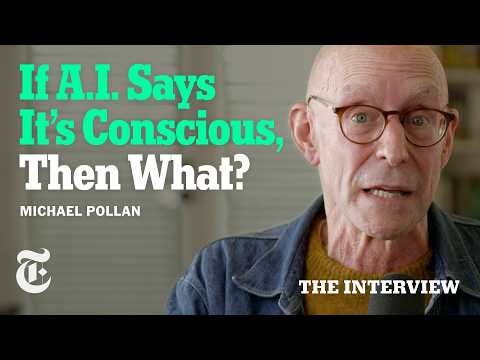
person
Re: On the topic of becoming more conscious
On the topic of becoming more conscious
I'm reminded of this:
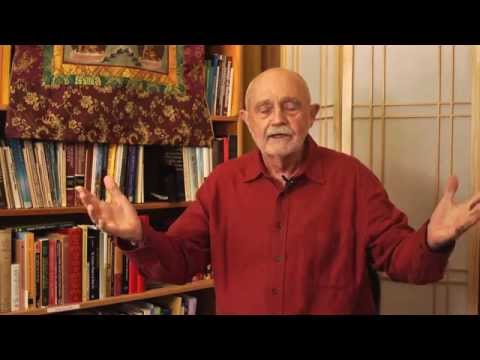
 Shoshin1
Re: Community
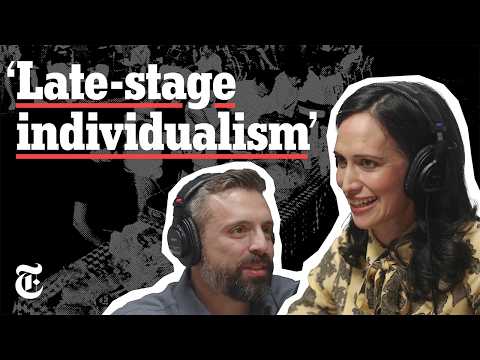
This feels like a good addition to the thread. They talk about the need for connection for a happy life and some practical ideas for going about it in our lives. Its not a simplistic "individualism bad, collectivism good" type conversation. Somewhere around the 30 minute mark the guest talks about her experience living in both worlds being lonely in an individualistic culture means isolation from community/family, while being lonely in a collectivist culture means not being seen within your community/family because of the need to fit in. I wish I could remember how she described the balance between them that she thinks is the ideal to strive for.
person
Re: Eight Simple Zenish Habits
Interesting topic. In the way of this video, which lifts eight good things about Japanese culture into view, you could probably also find a number of good things about Dutch culture. Similarly, a given culture also has a shadow side, which becomes clear while living a number of decades as part of it.
Whether adopting a culture’s good properties is a good way towards learning to be a better person, or even a more mindful or more Buddhist person, is another matter. You don’t experience the level of conditioning of growing up in a culture, the immersion of experiencing a childhood within it. You likely acquire a certain surface-level impression.
 Jeroen