
Best Of
Re: Gabor Maté and Ayahuasca
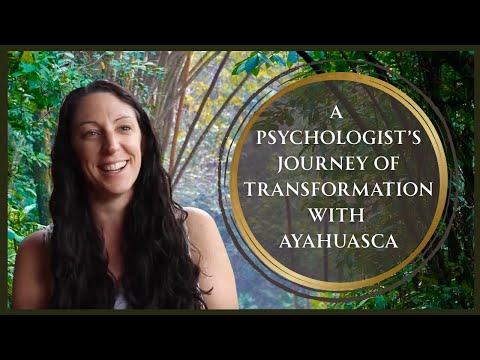
I found this lady’s ayahuasca testimonial very beautiful. Maybe I’ll go do this at some point.
 Jeroen
Re: The Giving Tree Revisted
@zorro said:
@Jeffrey said:
Yeah you can imagine an alternate story where the boy in youth provides to the tree the joy of having a boy climb the tree. And then as the boy develops more capabilities he takes care of the tree making sure it is healthy and caring for the land that the tree is in.That would be nice, but I think the bottom line is that the tree was always happy and the boy was always unhappy. From the tree's point of view, her behavior made her happy, even when she was reduced to being nothing but a stump for the boy to sit on. So how could the scenario be improved for her by the boy being more considerate and treating her better? The improvement would be for the boy, in hopefully feeling better because he was behaving better.
My understanding of the argument made in the video is that the happiness the tree feels is a sort of cognitive dissonance or false consciousness. That giving to someone who doesn't reciprocate and only takes to the point of personal destruction is an unhealthy place to be, and its conditioning that causes the tree to not value its own health.
I think I would say that by protecting its own vitality the tree would be able to continue giving in a regenerative way and ultimately would be of more benefit in the long term. In terms of modern relationship advice the tree needed to draw better boundaries and learn to say no, to find another child to let play in its branches and eat its fruit. One that would also water and prune it. It would still have the opportunity to feel happy at giving.
 person
Re: The Giving Tree Revisted
Yeah you can imagine an alternate story where the boy in youth provides to the tree the joy of having a boy climb the tree. And then as the boy develops more capabilities he takes care of the tree making sure it is healthy and caring for the land that the tree is in.
 Jeffrey
Re: Just for fun: the random, useless announcements thread!
Did you know that looking at newborn baby pictures is very soothing? It makes me happy…
Jeroen
Re: Letting go of games
I think that meditation is an experiential illumination that shows that.....
any attachment that is addressed, without simply substituting that said attachment for another attachment, is in itself a movement along the path towards suffering's cessation.
 how
how
Re: The Giving Tree Revisted
I don't think it is unhealthy to give without expecting or wanting anything in return. In this relationship the boy is the unhealthy one, because he constantly takes and doesn't consider the health or happiness of the one who is giving.
 zorro
zorro
Re: Letting go of games
I think that letting go of something requires practice. Letting go of thought is the best practice, because thought precedes pretty much everything.
If you want to stop gaming, and your heart is in it, then just stop. There's nothing really wrong with gaming, and there's no need to make it into some sort of epic struggle out of it. Just let it go. It won't bring you any closer to enlightenment, really, but it's good practice :-).

Re: Gabor Maté and Ayahuasca
@person
The description provided, I mean the dichotomy between the forms that someone can engage with a traumatic experiences reveal the vast variety of differences amongst humankind regarding how to respond to stress and suffering. Unfortunately, the "negative" route is quite common and popular...
It seems people get stuck there. Some in their victimhood, some in resentment; others simply live in denial and end up twirling around in a maelstorm of abuse (this I have seen with trauma bonding, depression, and substance abuse).
This is why showing the resolution and success of the other route is important: these stories serve as a reminder of the potential lying out ahead. Unfortunately, some traumas are eally complex and you cannot even understand that something as basic as ordering your room and washing yourself is a positive start.
May all beings attain freedom!😿❤️
 Kotishka
Re: Accentuate the Positive or Eliminate the Negative?
I read something just now in that relating to the Buddhist path (specifically the bodhisattva path) it is like the sun and clouds and to relate to the sun you also relate to the clouds. I thought of this thread and perhaps clouds are the negative and to relate to the positive sun we also relate to the negative clouds.
Jeffrey
Re: Gabor Maté and Ayahuasca
@person said:
I look at it like this, take two people who experience the same painful experience. One says to themselves, this is so bad what happened to me, I'm hurt and damaged, I'm set back from where I should be. The other says to themselves, that sucks, what can I learn from this, how can I use this experience to better myself and the world. This language is loaded as its been weaponized for the culture war, but is your mindset one of a victim or a victor?
To me this is a typical viewpoint of someone who has no lived experience of trauma, and it sounds rather disrespectful. You don’t get to make a choice about how to live with the experience, instead it just happens to you. Its main feature is that it overwhelms reason and your defences, taking up residence in the hindbrain only to emerge again as lifelong anxiety or sudden bouts of crying and shaking or crippling post-traumatic stress disorder.
Low levels of trauma can be cured just by gaining insight into what happened to you and what you told yourself, and this is very much worth doing. This is work Gabor Maté has been involved in for many years, amongst addicts and the severely ill. I think that if you consider his work a “lingering in pain” then you are taking a wrong turn.
The book makes a good case that a trauma-focussed view is exactly what Western society needs right now, there is a lot more trauma around than people are willing to acknowledge. If you read the book you’ll soon notice it in the Indigenous people, the prison population, the black people (and everyone who has suffered racism), the lhbtq population as well as many ordinary people who had difficult parents.
As the book notes, the root of healing is wholeness, and that is the goal. Trauma is often a divisive experience, where memories get tucked away in hidden corners because they’re just too painful, and the self ends up being divided. Trauma healing is about looking unafraid and with compassion into those dark corners.
Jeroen