
Best Of
Re: There is no purpose, only love
So it seems that my spiritual journey is not yet over. I found a trove of Advaita Vedanta books on the internet, a big pile of pdf’s and I couldn’t resist reading through some of them. Among the books were some of Tony Parsons’ volumes and after trying a few other authors I decided to try him next.
Tony Parsons teaching has been called uncompromising. He had an experience of unity in which his ‘I’ disappeared, and since then he has been speaking from nonduality, the oneness of all that is. He holds that since there is only That Which Is, the body and mind are part of this, and so there is no such thing as separateness or free will. That the doer is running on a predetermined track and the I is an illusion.
But he also says that the thing that moves us is love, that death, life, desire and fear are all about love. It made sense to me, I found it a powerful insight because it suddenly became clear that a lot of the things I desired and feared were about love or losing love. I feared being a cripple because I would no longer be loveable or capable of looking after myself. I desired having more money because I thought it would make me more loveable.
Behind this is an image of what we see as what we would like to love, and what we would have to be in order to be loveable. This is formed by what we tell ourselves, what our lives lead us to conclude. In a way your lovers form your image of the ideal man, of what they respect and find attractive in a partner.
You try to conform to that, until you no longer can. It’s a form of giving.
 Jeroen
Re: Stages of Samatha
I guess the ox herding teachings might be Chan's equivalent descriptions of your elephant/rabbit & monkey progressions along the path toward suffering's cessation.
https://terebess.hu/english/oxherd5.html is one description of them.
 how
Re: Stages of Samatha
@Jeroen said:
Well, my experience of samatha was that it was restful for short periods but not an agent of change within.
I have sat formally in Serene Reflection Meditation, at least twice a day, for the last 50 years.
In that time period I have met a wide range of practitioners from those who have stuck to just one meditative form, to those who have tried a plethora of alternative forms.
What they almost all seem to eventually discover, is that the true obstacles to their spiritual journeys turned out to really be about themselves, not the forms of practice that they were involved with.
Whatever fosters
compassion, love and wisdom
from what otherwise might be be
greed, hatred and delusion
is enough.
Only the ego, the selfish self or an identity's storyline, says there should be something more.
how
Re: No Buddhist Quotes
“Let's see if we can determine what the problem really is. What we will reveal is a belief that things are not all going well. And when we look at this to find out the reason for it, we will discover that you identify with death. You identify with something that doesn't stay, that doesn't have a long life. You fell in love with time. You have fallen in love with objects, with ideas that are in the service of what passes by. This is how problems arise. This is how confusion has crept into your Being.”
— Mooji
Jeroen
Re: Stages of Samatha
@Jeroen said:
“Insanity is doing the same thing over and over again and expecting a different result.”
— Albert Einstein
I'm not sure how that applies.....
Evaluating one’s progress is not a bad thing to do.
If you insist on looking at this in terms of good/bad, then I have to say it's neither good nor bad. Nothing bad, will result, yes, but nothing good can result, either.
I’m generally not in favour of spiritual practices which tell one just to keep repeating something for ever.
It's not "forever". Enlightenment allows you to leave that raft behind

Re: Stages of Samatha
@Jeroen said:
I certainly admire your persistence @IdleChater … 20 years of one practice is not something I have been able to manage, I get thoughts of progress and then I tend to evaluate and change direction every few years at least.
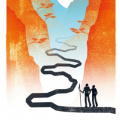
And that's a trap. Contemplating progress in your practice is a huge distraction. It's akin to watching grass grow, but slower. Do the practice for the sake of the practice. Make the practice a goal in and of itself. Samadhi doesn't happen overnight. The path illustrated in the Thanka, represents a lifetime, or more, of practice. So don't think of progress.
And the thought of samatha as a complete practice is interesting too.
Interesting? How so?
Re: Just for fun: the random, useless announcements thread!
@Kotishka said:
First month in my new flat. I have some more space for meditation practice, but at what cost (rent $$$$)Hahaha
Yeah I know what you mean… I got a cheap rented flat when I was first living on my own with a steady job and ended up staying there for 11 years, but I should really have bought something back then. Houses just keep getting more expensive, and a mortgage although it looks like a big responsibility is one of only a few possibilities for a really good investment.
Jeroen
Re: Buddhist quotes
Much of our planning is like waiting to swim in a dry ravine.
Many of our activities are like housekeeping in a dream.
Delirious with fever, one does not recognise the fever.
Paltrul Rinpoche
 Bunks
Re: Letting go of games
It’s certainly true that back in the days when I played Dungeons and Dragons with school and Uni buddies in the late 80’s and early 90’s it was very much a male nerdy pastime… it would go together with an interest in computers and technology, and a lot of the young guys who played were rather socially awkward, as was I, I just happened to be better at hiding it than most.
I don’t think that’s entirely true anymore though. YouTube shows like Critical Role are helping to repopularise the game, and it seems to be becoming a totally acceptable hobby, slanted a bit towards gamers and actors. Last time I played was in Amsterdam at a little mini convention a few years ago, and there was a good mixed crowd.
If you do want to open a thread on social anxiety @person I will certainly have a few posts to contribute, for me this has been an important limitation in my life which as little as 15 years ago I was still working actively to overcome. Now that I’m past 50 years of age it is no longer as urgent, but for me being social is like a muscle which atrophies with disuse, and if too much time passes without a lot of social activity I feel it becoming more of an effort.
Jeroen
Re: Letting go of games
@FleaMarket said:
@person said:
My experience so far has been that people understand that its part of the game. The games I've been in have been pretty non judgmental spaces with other people who would like to do the same. You're playing with others who are on board, not a bunch of unaware normies.I think those who can find such a group are very fortunate. To be both among and also one of those on board. Have you watched much of Critical Role @person? I'd be interested in your take on their dynamic. Even professionals such as them, I'm not sure it's always understood to be part of the game.
I'll echo @Jeroen 's post, that people who play table top games, board and RPG, are on the more socially awkward side of the spectrum and tend to be pretty supportive and open. Though there are certainly awkward people there who don't get it, but they seem to be in the minority.
I listen to the podcast version while working usually. I listened to all of campaign 2 and am pretty much up to date on campaign 3. Regarding their dynamic, they're long time friends so there is plenty of good will built up, and my understanding of the acting/improv world is that in the process of experimentation and spontaneity sometimes lines are crossed, but its accepted that that can happen. I don't see much of it among them though.
Regarding your anxiety in general. Its usually better to take small steps and acclimate gradually, rather than just imagining yourself jumping right in and acting super outgoing. I've spent a lot of time gradually working my way out of social anxiety, probably worth a thread in itself, and have plenty more work to do. I can say that the standard go to strategy of hiding out and protecting oneself doesn't work in the long run and usually makes things worse, it reinforces to the brain that socializing is dangerous.
 person