
Best Of
Re: Just for fun: the random, useless announcements thread!
Here on the island @Jeroen most islanders are on tank water, so for the most part when it rains heavily they are happy...
@Kotishka said:
Ah...so true. When I become overweighed by worry and this semi-poisonous taste of "excelling to become the best" I like to stare at the blue yonder / ocean. Suddenly, all those worries vanish....
Sadly @Kotishka for many of those people who can't see the water for their tears, their mind has become charmed by its own thoughts and they are lost in the mind's projection of either unpleasant past events or what could happen in the future...
And as Sadhguru would say..."Both are imagination....There is no fear in the NOW"...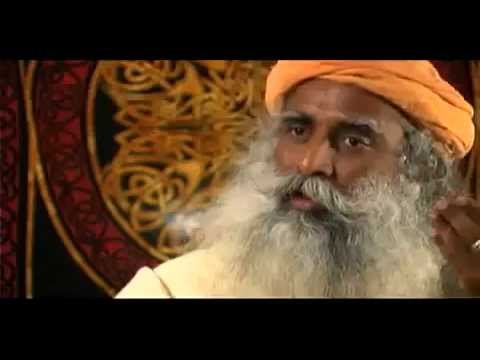
 Shoshin1
Re: Covid Cabin
Maybe 5 % of folks here still wear masks and Covid stories are happening everywhere around us. Mostly they are describing basic flu like symptoms.
 how
how
Re: What tradition (if any) do you follow?
Do you consider yourself Buddhist?
Yes
If yes, what tradition(s) do you primarily follow?
I am following the teachings of Thich Nhat Hanh and Plum Village so I guess this is mainly from a Mahayana perspective, that draws elements from Zen and Theravada.
 Nugai
Nugai
Re: What tradition (if any) do you follow?
- Yes
- N/A
- A sort of "pick and mix" of East Asian Mahayana but Soto-Zen and Pureland are the perspectives are the ones I focus the most on. I try and avoid labelling myself (and things in general) too much though as this is something Im prone to if not careful.

Re: what is your story?
I guess because we follow by example, it makes sense that we try to identify with the charactors and their plights. The "moral to the story" makes it all the easier to want them to win.
I think if we finally see how we've been conditioned, it makes it easier to change the conditioned response to something more skillful. The less we act strictly according to how we've been conditioned, the more we can consciously decide how to play the game.
I have a sneaky feeling that we are all living a Jataka Tale.
We love our stories.

Re: Buddhist quotes
ENTRUSTING OUR LIVES TO AMITABHA by Dharma Master Jingzong
Amitabha Buddha’s supremely compassionate summons is for us to entrust our lives to him
It is also a solemn instruction
Amitabha intends fully to saturate our lives and replace them with his own life so he asks us to entrust ourselves to him
It’s like an ocean calling out to drop of water
When a tiny drop merges into the ocean it is immediately suffused with all oceanic life
As we ordinary beings entrust our lives to Amitabha our hearts are promptly immersed in his life which covers the entire Dharma realm
We know from the wording alone “entrust our lives” that we can attain Buddhahood simply by reciting Namo Amitabha Buddha
No more doctrinal proof is needed
So long as we entrust ourselves to Amitabha and become one with him how can we fail to achieve Buddhahood?
Amitabha wishes thoroughly to change our fate which is samsaric, distorted, defiled and impure so he calls upon us to entrust our lives
This can be compared to the maintenance of vehicles
One must drive his car into the garage for upkeep
Amitabha does not apply other methods or materials to refurbish us
He uses his own self to fulfill and replace us, his pure and enlightened Buddha body
“Entrusting my life” means that I abandon my ego and put “myself” into the hands of Amitabha for disposal as he sees fit
It means that my ego dies and the Buddha lives
Only when the ego is dead can space be vacated for Amitabha to come alive in the domain that belonged to me
But the ego is cunning indeed
When I say “I entrust my life” and surrender myself to Amitabha my ego easily finds a substitute (virtue and meritorious deeds) and sneaks back stealthily
My ego is fully aware that it will die in the hands of Amitabha so it disguises itself and produces plausible (but incorrect) arguments to make use of goodness and merit to evade its destiny
The ploy always works and the ego muddles through every time
Some Buddhists vow daily, even all life long, to entrust themselves but never really do
We each entrust our lives to Amitabha one time
Once we do so, entrustment is accomplished and lasts forever
We must entrust entirety, not a fraction of our lives
And it must be done by “me”, in person
There is no substitute
Since nothing in this world is more precious than life, no virtue or meritorious deed can surpass the entrusting of lives
I may have no shred of virtue but I entrust myself to Amitabha Buddha
I acquire everything he possesses
A person’s positive actions, however great, can never be sufficient if he does not entrust his life to Amitabha
All of Dharma learning and practice is no more than entrusting our lives to Amitabha
 Bunks
Bunks
Re: Discipline in the spiritual life
At some point I relaxed and slipped into thinking about practice instead of practicing throughout the day.
Until the delusion and ignorance are completely eradicated, I don't see myself being able to do without some discipline and schedule. Otherwise, and even with, I fall back into ignorance of thinking about practice instead of actually practicing. It's enough to be frustrated if I didn't know better. So I just laugh to myself and keep observing self to learn more.

Re: Discipline in the spiritual life
It might be the case of "not too tight, not too lose". The middle way might be best.
As someone who is quite undisciplined, I go through phases where I discipline myself and benefit very much. For me, there is no danger of getting too disciplined. As the best marathon runner in history Eliud Kipchoge said: "Only the self-disciplined ones are free. Otherwise you are ruled by your passions".
On the other hand, I have some friends for whom you might say that they are too self-disciplined in the sense that they are not comfortable with going with the flow and get all uptight and prickly as soon as things do not go according to plan and become a bit chaotic. Here, self-discipline could be a subtle neurosis too - trying to control everything.
So, the best way might be for each one of us to honestly determine where we fall on the self-discipline spectrum (too tight, just right, too lose) and correct the sails of our ship accordingly.
 marcitko