
Best Of
Re: Living the holy life
@Jeroen
To live the holy life is indeed a life style
To live simply but not isolated
To live with gratitude, compassion and empathy
Something quite simple yet often quite hard.
To be immersed in society, enveloped in the every day of humanity, living as an ordinary person while still maintaining the aspects of a holy life.
To know that you will feel anger, but to not be consumed by it.
To know you will have desires, some very strong yet not be led by them
Osho was correct. A religious life that is restrictive, one which is negative, is not a holy life. It is worse than a bad life for it misdirects and restricts, shutting out the light which is a life fulfilling, holy.
Peace to you
 Lionduck
Re: Is being empathic a good thing?
Trying not to be pedantic here but I thought..
Empathy is being able to experience what another being experiences. While it helps break down the boundaries one creates between self and others, using it only to see the good in others, hobbles it with the psychological limitations of our own belief systems.
Empathy distinguishes the difference between itself and sympathy when empathy allows one to truly slip into the shoes of another, beyond the realms of our own conditioning, unrestrained by what ever we might hope to find or not.
While sympathy and empathy are both valid skill sets within the path toward suffering's cessation, sympathy points out the potential for a shared commonality in others, while empathy offers the manifestation of it.
 how
Re: Living the holy life
Isn't a holy life one lived without excess, caring for others, helping others without seeking reward or fame or recognition?
It is not necessary to renounce society or possessions, rap oneself in a robe and carry a begging bowl. To live life with gratitude, without greed, without hate, caring for others, sharing even in little ways, encouraging other through your everyday words or deeds. That is all, in my opinion, needed to live a holy life.
Peaceto all
Lionduck
Re: Engaging with Freedom
@person said:
@taiyaki said:
OP, I've heard recently a teaching on two freedoms and how they are not the freedom offered by Dharma. There is freedom from and freedom to. Freedom from x, y, z. In a way a lot of what we do is try to attain freedom from oppression, from our traumas, from even suffering. Or freedom to x, y, z. Freedom to live a good life. Freedom to do whatever we want to. Dharma offers a freedom that isn't from or to.This teaching that was impressed upon me really shocked me because pretty much everything I do is well for those two modes of freedom. And even my dharma practice is about getting freedom from suffering and freedom to live a fuller life. But freedom in the dharma is something else entirely.
And thus I am presented with two things. My spiritual materialism and something so radical that my conventional mind cannot make sense of it.
This is really interesting, I hadn't heard it framed in that way before. What does it mean? Are you able to expand, or have a link to reference?
it's a private teaching. but I think to put shortly the teachings of dharma in a way don't really align with well normal, conventional drives. It's something else entirely. I mean certainly we want our dharma and our conventional drives to align. And at times they certainly do. But the freedom offered is unconditional. And it arrives when we end the delusion of self. We have a self, hence all our drives deal with freedom to do things (desire) and freedom from things (aversion). But when there is no self, then there is just freedom.
 taiyaki
Re: How do you unite a heart and a mind?
In Buddhist psychology, mind and heart are often described by one word- “citta.” This heart-mind has many dimensions. It contains and includes all our thoughts, our feelings and emotions, responses, intuition, temperament, and consciousness itself.
 Shoshin1
Re: How do you unite a heart and a mind?
Every day might give you a different answer to your question but the answer for me today is...
The adversarial nature of our ego/ selfish self/or identity, habitually appropriates much of what we feel & think for the regular building materials for its own storyline.
It is in the craving, rejecting or ignoring of these heart/mind inputs for the sake of this storyline, that our hearts and minds routinely experience being apart and separated from the rest of existence.
A Buddhist practice, when it leads one to transcend our habituated manipulations of all that we feel & think, and therefore removes the available building materials of the storyline, allows
the heart & mind to be experienced as being at one.
In truth though, the experience of the heart & mind as being two, was only ever the inertia of a delusion, that when dissipated, allow the underlying reality of their innate oneness to no longer be obscured.
so the 4NT & 8 FP is what it means and how it's done.
how
Re: Living the holy life
In terms of the renunciates, they let go of physical possessions as well as family, work and community — they wandered around owning nothing but their clothes and begging bowl, having left home, family and so on behind.
Whether there is any hope of “living the holy life while attempting to conform to the societal mold”, I think we have to see for ourselves. It’s a question of what we can let go of.
You can choose not to buy a sailing boat, not to have a second home, not to go on holiday even. Those luxuries are the easiest targets for simplifying one’s life. Then there are more difficult ones, such as not having a family, a car, or your own home, but instead living as a caretaker or a hermit. These big things do tend to let you focus more and more on the inner world.
I think every person’s life offers its own possibilities for voluntary simplicity, and its best to start small.
 Jeroen
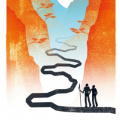
Living the holy life
There are these phrases you come across in the sutra’s, “the holy life has been lived” for example. If you read more widely you will see that in ancient India around the time of the Buddha it was a thing, that certain people would renounce, and would become wandering sannyasi. Mention of this goes back in the Veda’s to the second millennium BCE.
Saṃnyāsa in Sanskrit nyasa means purification, sannyasa means "Purification of Everything". It is a composite word of saṃ- which means "together, all", ni- which means "down" and āsa from the root as, meaning "to throw" or "to put". A literal translation of Sannyāsa is thus "to put down everything, all of it".
It is something that has somewhat gone out of fashion, in todays materialistic society very few people choose to give up work, to lay down all burdens. But those people who study the Buddha’s words and would learn from him do follow in the footsteps of those ancient renunciates.
So maybe it is a good idea to see what we can lay down today? Living a life of voluntary simplicity is perhaps as close as we can come to living the holy life as they did in the time of the Buddha.
Jeroen
Re: Hack Attack
I suppose you are what you eat. He has lived and continues to live in a world of spy vs spy. It's where his attention and time is spent. If you think people are watching you, you act in a way that reflects that. If you act in that way, people may pick up on that and act in response to that.
It's a good lesson in why practicing 4 Brahma Viharas produces good for you and good for others.

Re: The stories we tell ourselves
Yes @how I like that, “giving it space.”
Its about being kind isn’t it?
This tendency to take things personally and stew for hours just needs some TLC Spaciness and big hugs.
I actually used to hate my own limitations but I’m learning to accept them and maybe they may just fly off offa their own accord.
I’ll see.