
Best Of
Re: Engaging with Freedom
but there are things we haven’t done before which prove to us that our range is wider than we believe.
Indeed so - one path closes, another opens.
Instead we stay within our comfortable patterns of work, food, exercise, tv and sleep.
Chop wood, carry water.
few things as invigorating, liberating, as laying down some burden and constraint.
Or taking them up anew.
 Fosdick
Re: Engaging with Freedom
@Fosdick said:
Freedom is an illusion. We are always under constraints, and there are always more things we can't do than things we can. When we incur a new restraint, then we notice it and think, oh damn, we are no longer free, whereas we were actually not free in the first place. Yet sometimes a new restraint means at the same time we have acquired a new freedom, no?Freedom is relative, a conditioned state, always changing.
I’m not so sure about that. Certainly you can notice new constraints in your life, but generally there are few things as invigorating, liberating, as laying down some burden and constraint.
The other day I took off for a place in southern Germany with my father for a few days, this was carefully planned, the trains and the exact seats we would be sitting in were known weeks ahead of time as was the destination, an AirBnB appartment which was to function as our base for a weeks walking in the Schwarzwald. It was liberating in that it was a new style of holiday, a way of realising that it was easy to book a place to stay hundreds of miles away and just go.
Our understanding of our situation is such that we have an inkling of our limits, but there are things we haven’t done before which prove to us that our range is wider than we believe. I could ignore my duty of care to my mother and my stepfather, buy a car and take off for Eastern Europe tomorrow, for instance. All that limits me is my mind and my bank balance. Alternatively I could buy a plane ticket, head to South America to live among the tribespeople and learn about their religions.
 Jeroen
Re: Engaging with Freedom
Does freedom exist independent of something to be free of?
I see freedom as a destination, meaning discomfort at the current location.
Or freedom as an object is sought, given, taken, lost, purchased, thrown away, taken for granted, savored, traded, temporary, renounced..
What kind of freedom is desired?
"There is worldly freedom and there is unworldly freedom.."
sn36.31
If it's worldly freedom, material freedom, who foots the bill once we're free of it?
When I'm free to word-vomit, it's the poor souls who listen or read what I say that pay my bills for me.
When I'm free of the desire to word-vomit and maybe instead pay someone else's bills, a different freedom is found.
Easier said than done, sheesh..

Re: No Buddhist Quotes
“Everything is your guru: the rocks teach you silence, the trees teach you compassion, and the wind teaches you non-attachment.”
— H. W. L. Poonja
Jeroen
Re: Engaging with Freedom
Is freedom just the degree to which, one is not restricted by something?
Is a Buddha's freedom, just another word for equanimity?
 how
Engaging with Freedom
Lately I have been considering the goal of freedom. It seems worthwhile to pursue, to want to be free. But it is hard to be clear on what it means, and I wanted to share a few thoughts.
First of all it is good to have physical freedom, to not be constrained to a given room or house. There are ways one can get physically constrained, when young, when old and dement, when imprisoned for breaking the law, or kept on a mental ward. This is the obvious kind of freedom.
But one can also be emotionally constrained, by duties to look after family or partners. This may take up a certain portion of one’s time or may even be a full-time commitment. This is usually a limitation of freedom that one imposes on onesself.
Lastly there is a freedom of the mind. It is possible to be constrained by ignorance or habit, when it just does not occur to you that you could do something else than you are doing. The hardest walls to break are those you do not see. This can be a lack of imagination, or a lack of education.
“Keep the desire for freedom foremost in your mind. Good things will happen.”
— H. W. L. Poonja
Jeroen
Re: Engaging with Freedom
@Jeroen said:
@person said:
Relationship and connection with others are some of the best things life has to offer. I think it also kind of goes back to the distinction between happiness and meaning. I'm pretty sure in happiness studies parents often score lower than people without children, but having children gives people a lot of purpose and meaning in their lives.How do you feel this fits with Buddhist thought? The Buddhist ideal is a monk who has renounced and left the home, not creating a family or being a householder, all in pursuit of the end of suffering and the underlying happiness. In a way Buddhist goals replace the biological imperative to reproduce.
Sure, the pursuit of enlightenment works best when one is free from such constraints. The monastic life has many of its own constraints though, in the form of precepts or duties to maintain the monastery or serve the public.
Nature itself constrains us in many ways. I'm not free to swim to the bottom of the ocean if I wish. If you want to live in a state of nature you need to spend time gathering food and water, building shelter. In the modern world we engage in the constraint of work to overcome that natural constraint. At least most people do that, some are able to find a way to live off the efforts of others for sustenance (freegans, those on disability, etc.)
The Harvard economist Thomas Sowell had a book a good while back about the conflicting visions of the world that kind of even goes back to Hobbes vs Locke about the state of nature. In practice it isn't a binary and people usually exist somewhere along a spectrum between an unconstrained and a constrained view of human nature and the world.
If I get down to it and try to be honest, I suppose the only place I think we can ever be truly free is in our minds. And at some level I feel disregarding our obligations and duties to pursue or own ends is, to some degree, a selfish pursuit.
 person
Re: Engaging with Freedom
The greatest bonds on freedom are in the mind...and freedom itself is all in the mind...an unfettered mind...
"Freedom's just another word for nothing left to lose"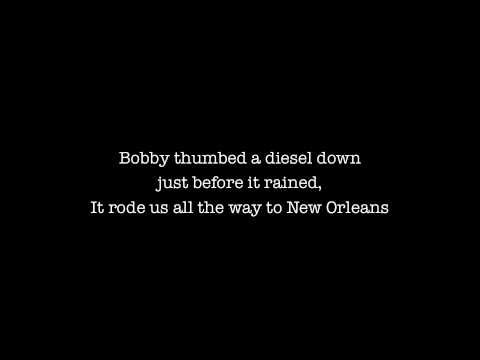
 Shoshin1

Re: Engaging with Freedom
Freedom is an illusion. We are always under constraints, and there are always more things we can't do than things we can. When we incur a new restraint, then we notice it and think, oh damn, we are no longer free, whereas we were actually not free in the first place. Yet sometimes a new restraint means at the same time we have acquired a new freedom, no?
Freedom is relative, a conditioned state, always changing.
Fosdick