
Best Of
Re: https://awakentheworld.com/
Watched the third movie. Not as clear as the second, but it was ok. The thing is, the mingling of the various teachings mean there is very little prescriptive that can be said, because as soon as you say “do this” you are moving along the path of a specific teacher.
The first movie talked a little about the perennial philosophy, and that is a good starting point, but to find a unified way that the various paths would like you to proceed is not easy.
 Jeroen
Re: https://awakentheworld.com/
The access to this kind of content can be a blessing and / or a curse. It can be very insightful, opening the path for someone, and at the same time very confusing.
Good dharma friends, enough research and a qualified teacher can cure it all, most of the times. There is also certain safety behind this. I recall that before, learning from centres or groups can sometimes be a bit restraining in the sense of getting scolded for "following the wrong teachings".
 Kotishka
Re: https://awakentheworld.com/
The second movie was better, I thought. I will watch the third as well.
As far as popular Buddhism vs the Buddhadharma is concerned, I try not to bring too many judgments, I think a little buddhism is better than no buddhism at all.
Jeroen
Re: https://awakentheworld.com/
I think movies like this very much serve the purpose of providing a swift eagle’s eye view of a lot of territory, useful for beginners to stir up some enthusiasm. Of course there are some dangers as well — having been introduced to the big picture, people new to this material may think “when does it happen to me?” And as @Kotishka says, not every tradition likes new members to be introduced like this.
Jeroen
Re: Buddhist quotes
Effort is more important than so-called success because effort is a real thing. What we call “success” is just the manifestation of our mind’s ability to categorize things. This is “success.” That is “failure.” Who says? You says. That’s all. Reality is what it is, beyond all concepts of success and failure.
Brad Warner, “Think Not Thinking”
 Jeffrey
Re: Covid Cabin
@Jeffrey said:
"Beneath the image of the bull in the center of the painting, there was a pentimento of a ship’s mast."Kind of a vocabulary word that makes me think of artists, attitude, and image.
It comes from the latin/Italian, 'Pentire' which means 'repent'. The artist 'regretted' having painted an image, and decides to use the canvas, to paint another picture, on top of the previous image, which then shows through faintly....
 federica
Re: https://awakentheworld.com/
It is long, sometimes tedious, but it goes through concepts common to several traditions and as it obviously does not go into every aspect in depth, it just passes by and the one who knows something recognises it... and moves on to another related topic.
My learning has been vast and is far from over, and what I cannot do is to imprison it in categories.
What is suffocating today is the popular Buddhism vs. the Buddhadharma.
Re: Just for fun: the random, useless announcements thread!
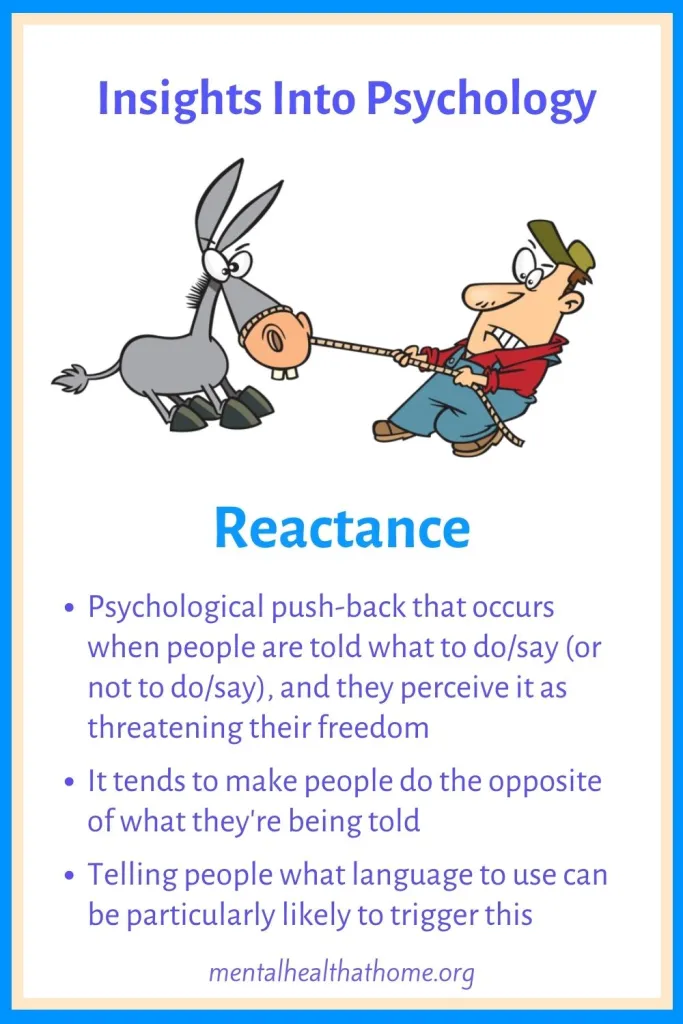
Yes. The main concept here is reactance. The more someone attacks/argue with you and tries to subdue something you believe (National Socialism), the more you will defend it and even intensify your view and conduct.
Also it applies for more mundane situations... for example (real life)
Person 1: Fuck, fuck, fuck.. why is it so late?
Person 2: Mind your language, please.
Person 1: Fuck * 10,000
Kotishka
Imagination Redux
We have talked a little about imagination before, see this thread:
https://newbuddhist.com/discussion/26987/imagination
But I think it is worth seeing if we can add more detail to this topic.
In a way I feel that being a highly imaginative person is a hindrance in spiritual development. Imagination gives shape to desire and fear, positing all kinds of what-if scenarios, and so amplifies their effects. Its flightiness is an opposite of equanimity, so as you develop equanimity you should find imagination decreases.
Jeroen