
Best Of
Re: From Buddhism to belief in God?
Adding my bit of ignorance to the mix:
I find Buddhism a meaningful practice and belief of interconnection. I am uplifted through my practice, and more a part of and in full appreciation of life and those I interact with. Each day I strive uplift or encourage one person, through my words or action. (Of course, being a common mortal, I do not always succeed) The path of Buddhism is not detachment from but connection with this mundane world. The challenge of Buddhism is to face the world, head on. It is to live, to use the winds of fortune and adversity to propel self and others ahead - to victoriously cross the sea of suffering - to recognize that it is not one of suffering but rather of challenge which enables us to grow. The practice of Buddhism (to me) is ultimately one of celebration and the emerging joy of life.
Peace to all
 Lionduck
Re: Karma brought into question. I struggle to accept karma. Please help?
I took the liberty of banning the member for an extraordinarily racist post. Feel free to comment and continue the discussion here, but be aware that the member is no longer able to participate.
 Jason
Re: Getting better "blog"
One step at a time @marcitko ...
This short Dharma talk about 10% Advantage might also be of help...
 Shoshin1
Re: Karma brought into question. I struggle to accept karma. Please help?
Kamma cannot be a refuge. Being good and expecting only good things to happen to you is a sure way to experience pain.
Asking why me is not the way of the Buddha.
"This is how he attends inappropriately: 'Was I in the past? Was I not in the past? What was I in the past? How was I in the past? Having been what, what was I in the past? Shall I be in the future? Shall I not be in the future? What shall I be in the future? How shall I be in the future? Having been what, what shall I be in the future?' Or else he is inwardly perplexed about the immediate present: 'Am I? Am I not? What am I? How am I? Where has this being come from? Where is it bound?'
"As he attends inappropriately in this way, one of six kinds of view arises in him: The view I have a self arises in him as true & established, or the view I have no self... or the view It is precisely by means of self that I perceive self... or the view It is precisely by means of self that I perceive not-self... or the view It is precisely by means of not-self that I perceive self arises in him as true & established, or else he has a view like this: This very self of mine — the knower that is sensitive here & there to the ripening of good & bad actions — is the self of mine that is constant, everlasting, eternal, not subject to change, and will stay just as it is for eternity. This is called a thicket of views, a wilderness of views, a contortion of views, a writhing of views, a fetter of views. Bound by a fetter of views, the uninstructed run-of-the-mill person is not freed from birth, aging, & death, from sorrow, lamentation, pain, distress, & despair. He is not freed, I tell you, from suffering & stress.
"The well-instructed disciple of the noble ones — who has regard for noble ones, is well-versed & disciplined in their Dhamma; who has regard for men of integrity, is well-versed & disciplined in their Dhamma — discerns what ideas are fit for attention and what ideas are unfit for attention. This being so, he does not attend to ideas unfit for attention and attends [instead] to ideas fit for attention.
https://www.accesstoinsight.org/tipitaka/mn/mn.002.than.html
"He attends appropriately, This is stress... This is the origination of stress... This is the cessation of stress... This is the way leading to the cessation of stress. As he attends appropriately in this way, three fetters are abandoned in him: identity-view, doubt, and grasping at precepts & practices. These are called the fermentations to be abandoned by seeing.
"There are these four unconjecturables that are not to be conjectured about, that would bring madness & vexation to anyone who conjectured about them. Which four?
"The Buddha-range of the Buddhas[1] is an unconjecturable that is not to be conjectured about, that would bring madness & vexation to anyone who conjectured about it.
"The jhana-range of a person in jhana...[2]
"The [precise working out of the] results of kamma...
https://www.accesstoinsight.org/tipitaka/an/an04/an04.077.than.html
Re: Karma brought into question. I struggle to accept karma. Please help?
Actions condition results. Sometimes those results are immediate. Sometimes they take time to bear fruit. Actions are like seeds that ripe when the conditions are right. Some seeds sprout fast. Some take more time. Some require certain conditions to grow, like the seeds of a sequoia that require the presence of fire. Some seeds are superseded by others. Some are never able to germinate. And some may not flower until after our passing. And some things that grow are pleasant, while other less so. That is what kamma is like.
If you strive only for the experience of power and pleasure, then those are the seeds you will water and likely grow. That doesn't mean they'll always lead to unpleasantness, but that also doesn't mean they won't lead to harm as well. You own both the pleasure and pain, and are responsible for the pleasure and pain you cause to others. The morality you construct around that is up to you. The Buddha recommends reflecting on that and choosing what will be for your long-term welfare and happiness. So try to choose well given the circumstances.
Jason
Re: Karma brought into question. I struggle to accept karma. Please help?
Every cause has its effect.
All gentleness or aggression does have an effect on the world around us.
The biggest difficulty in seeing this arises from a delusive belief that we are one solid existence, that is intrinsically apart from the rest of existence, that then expects Karma to reflect.
The questions of accepting karma's effects move from the intellectual to the experiential to the exact same degree that our practice eventually allows us to transcend our own identities fallacy of itself.
Don't worry about a timetable for this.
Simply cease from evil, do only good, and purify the heart/ mind, whenever you can.
The rest will take care of itself.
 how
Re: Getting better "blog"
Hello! @marcitko
from here we support you from a distance but constantly.
There will be ups and downs, but we trust that your true nature can restore the natural balance of life.
Re: Books that changed your life Redux
Lord of the Rings - sparked my love of reading, esp. fantasy
Dune series - loved the mix of religion, politics, philosophy, and it goes off the rails later on, started my interest in sci-fi
Food for the Heart - teachings of Ajahn Chah, which got me into Buddhism
Middle Length Discourses of the Buddha
Notes from Underground, The Brothers Karamazov, The Idiot, Demons - Dostoyevsky is my favourite writer and every book has an impact on me
A History of Western Philosophy - got me interested in philosophy
The Magic Mountain - a good philosophical novel
Meditations - transitioned my love of philosophy into an appreciation for civic engagement
A People's History of the United States - opened my eyes to the parts of history often overlooked, esp. from the POV of movements vs. 'great men' and from side of the oppressed vs. the victors
Eugene V. Debs: Citizen and Socialist - shaped my political consciousness, made me realize what my politics were
Gospel of Matthew - made me appreciate the story of Jesus and the radical themes underlying it
The Seven Storey Mountain, Sign of Jonas- sparked my interest in Christian monasticism
In the Pursuit of Happiness, The Cloud of Unknowing, The Pligrim's Way - sparked my interest in Christian contemplativism
Bad Feminist
Jason
Re: From Buddhism to belief in God?
From Buddhism to belief in God?
It's funny really ...for many in the god-centric West it was the other way round ..
From theism (a belief in a god) to non theistic ( Buddhist practice)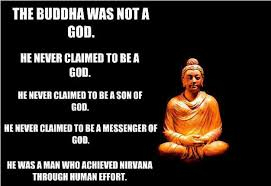
Shoshin1
Re: Dharma Warriors
I am more of a Dharma Worrier than Warrior I’m afraid.
Good luck on your quest.
Namo Amituofo 🙏🏻❤️
 Bunks