@Jeroen said:
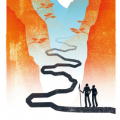
“A perfect man is a meeting of heaven and earth.”
— Taoist saying
"Keep your head in the clouds and feet on the ground"
"Open heart, strong back"
person
I think Judas drew the short straw. He's been vilified and painted as the bad guy, but he rejected the 30 pieces of silver in disgust, then went and hanged himself. And let's not forget that Christ's wing-man ('You are the rock on which I will build my church') Peter, denied 3 times that he even knew Jesus.
Judas tried to be honest and felt Jesus was over-stepping the mark, and confided in those running the show.... Jesus wasn't the only thorn in the side of the Roman - or Jewish - authorities, which is why he had to identify Jesus to those who came to arrest him. According to historical evidence, there were probably more than 3 crucifixions planned for that weekend - which was Passover - and several Jews met the same fate as Jesus, being dispatched more quickly than usual so that the Passover feast on Shabbat would not be sullied by the suffering of Jews. Poor Judas. Maligned and misunderstood.
And if he had carved the turkey, he would have been carving the breast - front - of the roast, not the back. So even that accusation is unfair.
You're all very welcome!
Signed, this weekend's resident wet blanket! 😆😆😆
federica
I came across this beautiful short documentary (37 mins) about the life story of a native woman from Peru who had a rough childhood, left to travel the world, lived in New York but found she got depressed, was given Ayahuasca by a friend and received powerful visions to return to the jungle and become a curandera. I very much enjoyed the story, great cinematography and an engaging sound track!
Jeroen
Socially engaged buddhism... I think this adaptation is necessary in our age. From the Wikipedia article you shared I stumbled upon this:
The Fourteen Precepts of Engaged Buddhism:
"Do not be idolatrous about or bound to any doctrine, theory, or ideology, even Buddhist ones. Buddhist systems of thought are guiding means; they are not absolute truth.
Do not think the knowledge you presently possess is changeless, absolute truth. Avoid being narrow-minded and bound to present views. Learn and practice nonattachment from views in order to be open to receive others’ viewpoints. Truth is found in life and not merely in conceptual knowledge. Be ready to learn throughout your entire life and to observe reality in yourself and in the world at all times.
Do not force others, including children, by any means whatsoever, to adopt your views, whether by authority, threat, money, propaganda, or even education. However, through compassionate dialogue, help others renounce fanaticism and narrowness.
Do not avoid contact with suffering or close your eyes before suffering. Do not lose awareness of the existence of suffering in the life of the world. Find ways to be with those who are suffering, including personal contact, visits, images, and sounds. By such means, awaken yourself and others to the reality of suffering in the world.
Do not accumulate wealth while millions are hungry. Do not take as the aim of your life Fame, profit, wealth, or sensual pleasure. Live simply and share time, energy, and material resources with those who are in need.
Do not maintain anger or hatred. Learn to penetrate and transform them when they are still seeds in your consciousness. As soon as they arise, turn your attention to your breath in order to see and understand the nature of your hatred.
Do not lose yourself in dispersion and in your surroundings. Practice mindful breathing to come back to what is happening in the present moment. Be in touch with what is wondrous, refreshing, and healing both inside and around you. Plant seeds of joy, peace, and understanding in yourself in order to facilitate the work of transformation in the depths of your consciousness.
Do not utter words that can create discord and cause the community to break. Make every effort to reconcile and resolve all conflicts, however small.
Do not say untruthful things for the sake of personal interest or to impress people. Do not utter words that cause division and hatred. Do not spread news that you do not know to be certain. Do not criticize or condemn things of which you are not sure. Always speak truthfully and constructively. Have the courage to speak out about situations of injustice, even when doing so may threaten your own safety.
Do not use the Buddhist community for personal gain or profit, or transform your community into a political party. A religious community, however, should take a clear stand against oppression and injustice and should strive to change the situation without engaging in partisan conflicts.
Do not live with a vocation that is harmful to humans and nature. Do not invest in companies that deprive others of their chance to live. Select a vocation that helps realize your ideal of compassion.
Do not kill. Do not let others kill. Find whatever means possible to protect life and prevent war.
Possess nothing that should belong to others. Respect the property of others, but prevent others from profiting from human suffering or the suffering of other species on Earth.
Do not mistreat your body. Learn to handle it with respect. Do not look on your body as only an instrument. Preserve vital energies (sexual, breath, spirit) for the realization of the Way. (For brothers and sisters who are not monks and nuns:) Sexual expression should not take place without love and commitment. In sexual relationships, be aware of future suffering that may be caused. To preserve the happiness of others, respect the rights and commitments of others. Be fully aware of the responsibility of bringing new lives into the world. Meditate on the world into which you are bringing new beings."
I have come upon a group called [decided not to share for obvious reasons] which is left-anarchist inclined. I was appalled to see how many members justified killing, like in he case of Luigi Mangione.
One constant argument I see derived from this perception of injustice is how greedy corporate executives and tyrants will not change because of compassionate dialogue. I do see their point but in the long run, does it actually change anything or does it perpetuate the cycle of violence in different forms or ways?
I think I will be reading Thich Nhat Hanh's Interbeing book (which is where the 14 precepts are from!) for some answers!
Kotishka
Listened to an interview with Amanda Knox today. She talked about how the investigator, in his book, said when he arrived at the scene he knew it wasn't something simple, but that there had to be some sort of plan or conspiracy to commit the crime. Even now he can't admit his knowledge hunch wasn't right.
There's an idea in psychology that has shown to be really profound. That the human mind has two modes of processing information, generally called system 1 and system 2. I can't remember which is which off the top of my head, but one is our deliberate conscious mind or slow system and the other is our fast intuitive processing. They both have positive and negative aspects. An example I've brought up before is the real world case of the firefighter up on the roof of a burning building. While there he had a bad feeling and ordered his men off the roof, shortly after it collapsed. Reflecting later he realized his feet were too warm. It wasn't some miraculous knowledge granted him by the universe, it was his own subconscious processing all of his years of experience. Another example in a talk I watched recently was of chess master Magnus Carlson, he says the majority of the time he doesn't have to think about the moves, he just knows what the right move is. Again, this isn't magic, its a result of his brain and all his years of study and play.
A downside of our intuitive system is that it can't filter out valid and invalid ideas. It takes all our biases and throws them in the mix. If you have any negative bias towards a group of people, even if consciously you understand and agree with all the reasons to be impartial your intuitive response will factor in those biases.
When I was in my early 20s I started noticing I would have feelings or impressions arise at times that later turned out to be true. I've since realized that there are a lot of feelings and impressions that aren't true, or packed with biases and wishful thinking. Now I think of it like I should listen to this voice as information rather than instruction, check its work and train it through knowledge and experience.
person
I forget who, but someone said that, for us there are only two absolutes.
We are born
We will die
It is the variables we create and expeience we have between that give us value in living.
I, for one feel that our purpose, or, if you prefer, a major purpose in life is to find joy in living, to share joy in living and help others to find joy (and their own individual purpose) in living. I do not mean joy in the carnival ride sense. Joy here is to appreciate life, warts and all, to live confidently, see the treasure in self and others as we are.