
Best Of
Re: Quotes - discussion
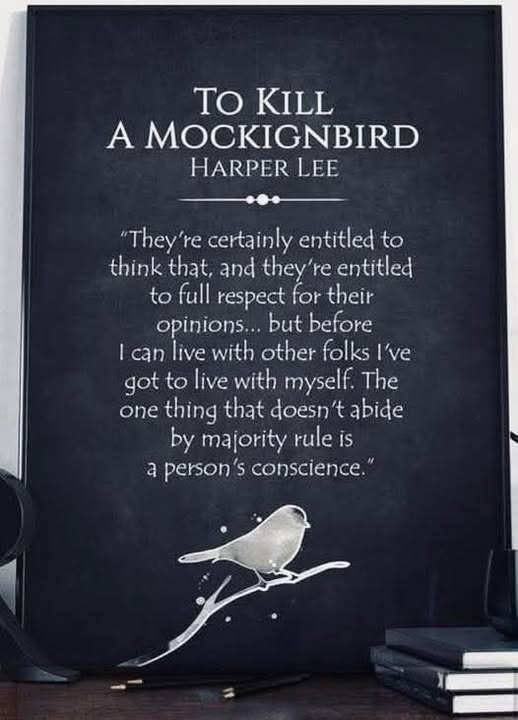
Steve Bannon is a bad influence for everyone, and most of all his readers! The rest of us can just ignore him, but if you’re a republican and you’ve drunk the conspiracy theorist cool-aid, you give this man free rein to poison your mind. It’s not healthy.
 Jeroen

Re: No Buddhist Quotes
When the power of love is greater than the love of power, the world will know peace.
~Wall Graffiti ~
 Shoshin1
Re: Daily meditation changes you
I feel a less impulsive and a calmer, better person in general. This does not mean I consider myself a Zen master that has dropped body and mind and can strive under all circumstances with the patience of a Saint..but I start to see benefits which make me reconsider carefully any diversion away from this lifestyle which Zen Buddhism implicitly has.
It's interesting you should mention this @Kotishka . Thus have I heard: the calmness you're experiencing is actually just a by-product of Dharma practice. It's not the ultimate goal, but it often serves as a meaningful incentive to continue with daily practice. 🙏🙏🙏
Shoshin1
Re: Just for fun: the random, useless announcements thread!
I can recall @how saying that sometimes he goes on retreat.
Shoshin1
Life events triggering a spiritual search
I’ve heard stories of people being called to start a spiritual search in their twenties or even in their teens. I was not one of those, even though my youth in the Osho communes had some very spiritual moments. For me, what happened was I struggled with a life changing physical illness at age 39, and I asked the universe, I will change my life anyway - if there is anything spiritual for me to experience, let me experience it.
You know the saying, be careful what you wish for? Not very long after, I had a vision on the edge of sleep. I was wrapped in a cocoon, together with many coloured swirling flecks of light, and I was approached by a dark black human figure with wings. It examined me closely. Later on waking I thought this was the Angel of Death, but now I am no longer sure of that.
This for me was the start of a spiritual journey. It began with an episode of voice hearing (or was it a shamanic illness), treatment in the mental health system, and a gradual return over years as I started listening to Osho again. One day I was listening to a lecture on the Dhammapadda, and I had a thought: instead of listening to Osho explain snippets of the Dhammapadda, why not go to the source and look at the original Buddhist text?
This was the start of a good six years of Buddhist study and practice. I feel it was very wholesome for me, it purified me in a way. It was a path back to silence and health. I would highly recommend it, to combine a course of study at a Western Buddhist temple with reading of the sutras and vipassana meditation. You get to keep good company and immerse the mind in the words of the Buddha.
During this period a lot of things started to drop away from me. Life long enthusiasms with science fiction and fantasy, computer games, even television and the news disappeared. Instead I meditated and spent time walking on the beach and in the dunes.
Eventually I started reading the works of other teachers, and I found that for me - and perhaps others like me - the search for enlightenment was not the sine qua non of the spiritual journey. I once asked a spirit on the edge of sleep about it, and was told, perhaps for you it happened very early in life. Perhaps it did, but I have no memory of such an event. In any case nonduality teachers may be right to say it is not a very huge occurrence, just a moment of ‘ah this’.
In any case, spirit voices and visions on the edge of sleep have stayed with me. It seems to lead me away from my mistakes towards the paths of wisdom, and for that I am grateful.
Jeroen
Re: Life events triggering a spiritual search
Hi I started meditating and reading about Buddhism with a faith component maybe 24 years ago? I was in graduate school studying chemistry and I started having a psychotic episode. I remember seeing thumb tacks on the bulletin board of the chemistry building. To me the thumb tacks were sending me messages by their formation. They would change and then I would reinterpret them. Quite a lot of variety to my mental changes but the thumb tacks were one occurrence that I still recall.
After I got my diagnosis my brain kind of shut down relatively and it was hard to even read a paragraph of my mail. As I got stronger again I sought out ways to cope with he shut down or depression. Meditation was one and I started buying spiritual or Buddhist books.
 Jeffrey