@Jeroen said:
@person said:
Relationship and connection with others are some of the best things life has to offer. I think it also kind of goes back to the distinction between happiness and meaning. I'm pretty sure in happiness studies parents often score lower than people without children, but having children gives people a lot of purpose and meaning in their lives.How do you feel this fits with Buddhist thought? The Buddhist ideal is a monk who has renounced and left the home, not creating a family or being a householder, all in pursuit of the end of suffering and the underlying happiness. In a way Buddhist goals replace the biological imperative to reproduce.
Sure, the pursuit of enlightenment works best when one is free from such constraints. The monastic life has many of its own constraints though, in the form of precepts or duties to maintain the monastery or serve the public.
Nature itself constrains us in many ways. I'm not free to swim to the bottom of the ocean if I wish. If you want to live in a state of nature you need to spend time gathering food and water, building shelter. In the modern world we engage in the constraint of work to overcome that natural constraint. At least most people do that, some are able to find a way to live off the efforts of others for sustenance (freegans, those on disability, etc.)
The Harvard economist Thomas Sowell had a book a good while back about the conflicting visions of the world that kind of even goes back to Hobbes vs Locke about the state of nature. In practice it isn't a binary and people usually exist somewhere along a spectrum between an unconstrained and a constrained view of human nature and the world.
If I get down to it and try to be honest, I suppose the only place I think we can ever be truly free is in our minds. And at some level I feel disregarding our obligations and duties to pursue or own ends is, to some degree, a selfish pursuit.
person
Brian
@person said:
@taiyaki said:
OP, I've heard recently a teaching on two freedoms and how they are not the freedom offered by Dharma. There is freedom from and freedom to. Freedom from x, y, z. In a way a lot of what we do is try to attain freedom from oppression, from our traumas, from even suffering. Or freedom to x, y, z. Freedom to live a good life. Freedom to do whatever we want to. Dharma offers a freedom that isn't from or to.This teaching that was impressed upon me really shocked me because pretty much everything I do is well for those two modes of freedom. And even my dharma practice is about getting freedom from suffering and freedom to live a fuller life. But freedom in the dharma is something else entirely.
And thus I am presented with two things. My spiritual materialism and something so radical that my conventional mind cannot make sense of it.
This is really interesting, I hadn't heard it framed in that way before. What does it mean? Are you able to expand, or have a link to reference?
it's a private teaching. but I think to put shortly the teachings of dharma in a way don't really align with well normal, conventional drives. It's something else entirely. I mean certainly we want our dharma and our conventional drives to align. And at times they certainly do. But the freedom offered is unconditional. And it arrives when we end the delusion of self. We have a self, hence all our drives deal with freedom to do things (desire) and freedom from things (aversion). But when there is no self, then there is just freedom.
taiyaki
A little joke…
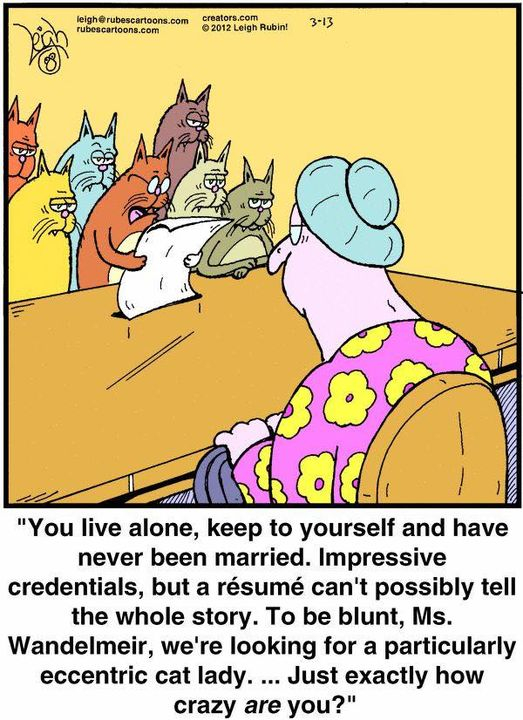
Two older women were sitting in a cafe, talking about their adult children. “I hear your youngest son is living at home again,” said one to the other. “Yes”, said the other, “he spends all day meditating.” “Whats that,” says the first. “I don’t know,” says the other, “but it beats doing nothing.”
Jeroen
Empathy can be a pro or a con depending on perspective. I see it as feeling through others and as good a tool as it is for understanding each other, it does have some cons. Imagine a surgeon trying to operate while empathizing with the patient. Would probably be better when presenting the bill (that joke isn't effective on us Canadians).