
Welcome home! Please contact lincoln@icrontic.com if you have any difficulty logging in or using the site. New registrations must be manually approved which may take several days. Can't log in? Try clearing your browser's cookies.
The space between self esteem and self compassion
 person
Don't believe everything you thinkThe liminal space Veteran
person
Don't believe everything you thinkThe liminal space Veteran
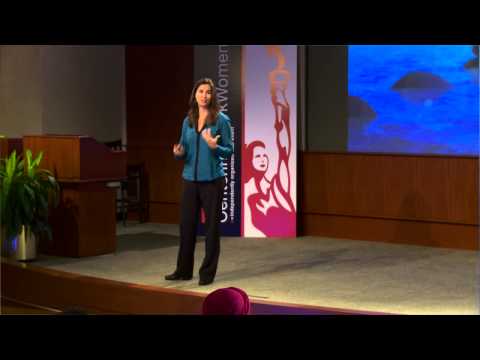
This is a TED talk by Dr. Kristen Neff. She talks about how having compassion for oneself is a much better strategy for confidence than self esteem which relies on comparing and being better than others.



9
Comments
May we Buddhists continue to spread the good word!,
May I practice more self-compassion.
What is my motivation?
How do I want to motivate others?
Seeing a pie chart labeled compassion still cracks me
up....lolololol
It wasn't a pie chart, it was a graph....labeled compassion. hehe
However I am better than pop psychology, better than neo dharma, better than a talking Ted. I am more than can be imagined . . . just like everyone else . . .
Be as kind to me as you deserve.
Because we are worth it
:clap:
I agree that the definition she gives of self esteem (feeling better than others) is not particularly useful. It's also not really 'buddhist' in my experience. But there is another type of self esteem that can arise, in my experience. That self esteem is the knowledge that whatever situation may arise, I will find a way through it. I will not let anything or anyone get the better of me. It a type of trust, but it feels comparable to self esteem to me.
But there can be another type of feeling similar to self esteem that is not based on beauty, looks or possessions or comparison with others. But come to think of it maybe it's more like self confidence. I guess the lines are blurry.
This old thread has been percolating up in my mind. I came of age during the time that self esteem was all the rage, so this teaching has been an ongoing thread in my life.
Reading through it, the thing I think I've come to appreciate more and more is the idea that self esteem involves the comparing mind while self compassion is free of that. Its like the difference between I'm good because others are lower and I'm good because I have intrinsic value. The latter also means others having strengths and skills that I don't have doesn't diminish my worth.
I also appreciate @Sabre 's comment about confidence and resilience in the face of hardship.
A good TED Talk' well done. It talks of Self-Esteem as a comparative to Compassion.
Just a thought:
As defined above, Compassion for self extends to compassion for others while self esteem is comparative to others and is thus unrelated to compassion.
On the other hand, self-esteem derived from compassion for self which thus enables and triggers compassion for others presents self esteem as a component of compassion for self. In that mode, self esteem becomes a non-comparative platform from which to extend compassion to and for others.
In this manner, viewing self esteem as separate from, and not a derivative eliminated their inter-connectivity. But, when self esteem, not dependent upon comparing one's worth to others, is seen as a derivative of compassion, it enables compassion to algorithmically enhance the positive impact of the thoughts and actions derived from of compassion.
Peace to all
That's a good distinction. She does use the words in a particular manner and it could easily be viewed from a different definition.
To my mind, self-esteem derived from comparison with others is of a lower level, is weaker, and fleeting. Not to be highly reccomended. But also not the only option.
The higher, more powerful, and more stable version is comparing oneself to oneself in the past (results based) or seeing whether we're consistently implementing whatever process we believe it is best for us to implement (process based).
During a long phase of intense running a couple of years ago, I vividly remember the following:
At the beginning, whenever I would overtake someone I would think: 'What a sucker, look at me go!' Whenever I would be overtaken, I would think: 'Woe is me, I suck!'. This was the comparing self-esteem.
I kept noticing and noticing such thoughts in a neutral manner and knew they were banal and of a low level.
As a result of the noticing, over time, this type of thinking totally went away. I realized I was 'racing' only against myself. That it was about the effort, process, and consistency, not the running tempo.
As a result, I came to see all runners the same, as having the same worth, as being part of the same tribe. As long as they were putting in the same effort at the track, the 200kg 'fatso' huffing and puffing while briskly walking and the ultra-marathoner were the same to me. Different speeds and histories, yes. But now that they were putting in the same effort, same in terms of value and respect.
To this day, I cheer on all runners in my mind, and am sometimes even a bit nuts and cheer them on out loud! 😃
Since I previously did a lot of smoking and drinking, very little sport, and was fat and unhealthy, the sporting progress gave me lots of positive self-esteem, with very little or no negative side effects.
Like with other things, maybe it's about the 'level' of the thing we're deriving our self esteem from. It can go from the very gross and banal, all the way to the very subtle and noble.
Ditto with what I said to @Lionduck how the terms are defined can be moved around.
I think the context she, and myself, are coming from is there was a big self esteem movement in the 80s and 90s that was well intentioned but made some missteps that had unintended consequences that people in my generation may have taken on.
I'll just link Google's summary of the pitfalls:
I think most of these problems with the self esteem movement are addressed in your reframing around comparing oneself to one's past self or commitment to the process rather than other people, or perhaps society in general.
I find it hard to say which comes first, high self-esteem or high accomplishment. My time growing up in the Dutch Vrije Schools (Rudolph Steiner) stressed the uniqueness of the individual, and the search for talent in all its forms. Later time spent in the commune schools gave me freedom and let me take initiative. So you could say by the time I arrived at my later schooling I was well prepared to do well, having a positive self-image and a willingness to knuckle down and do the work.
When you’re young you don’t tend to have the long-range view that applied effort for years tends to instil, and you’re more reliant on others to help form your self-image. But even then you can focus on praising people’s virtues and good qualities rather than just telling them how “special” they are.