Welcome home! Please contact lincoln@icrontic.com if you have any difficulty logging in or using the site. New registrations must be manually approved which may take several days. Can't log in? Try clearing your browser's cookies.
Funny, I just saw a click bait headline about this. Trying to remember, it was something like "Probe takes pictures of strange metal object in orbit". Like the headline was hinting at it being a UFO or something. 🤣
@Lionduck the OP (that's me! ) was fully aware that as Buddhists and seekers we would not necessarily consider Space to be the final frontier. But the OP decided to go with the Star Trek thing anyway
In other news, professional and amateur astronomers are waiting for a star in the Corona Borealis constellation (the "Northern Crown") to dramatically increase in magnitude (brightness) sometime this year. Currently, T Corona Borealis (the star) is not visible with the naked eye, but once it bursts, it should be clearly visible and bright for weeks if not months. Corona Borealis (the constellation) is easily seen during the evening in summer time due to its striking shape, even if all of its stars are a bit dim so probably not visible from cities.
A nice project for anyone interested to follow along and witness this spectacle would be to sketch (with pencil and paper) or photograph (with any photo thingy that has a "B" setting and can thus do exposures of say 20 seconds) the Corona Borealis constellation first now and then again when the star goes nova. The "extra" star is the star that went nova.
How to find the dim Corona Borealis constellation?
Everyone knows how to find the Big Dipper. Starting from the Big Dipper, we first go "Arc to Arcturus" - which is finding the brightest star in the constellation Bootes.
Once we know where Arcturus is, and the general orientation of the constellation Bootes, then we easily find the constellation Corona Borealis because it looks like a semicircle/crown of equally bright but dim stars.
Happy hunting!
1
JeroenNot all those who wander are lostNetherlandsVeteran
Local newspaper writing about an upcoming supernova category 1a -extremely rare- which will be visible from Earth. Of course in 23,000 years. The stars are located 150 light years away from us so no amargeddon yet.
"They occur, the research center adds, when a white dwarf exceeds the Chandrasekhar limit—the maximum it can withstand without collapsing under its own gravity—triggering a gigantic nuclear explosion equivalent to more than a quadrillion nuclear bombs.
Many years ago, it was predicted that the merger of two white dwarfs, whose total mass exceeded this stability limit, could be the origin of most Type 1a supernovae, but this is the first time astronomers have found a system that will clearly end as a Type 1a supernova."
I have searched Chandrasekkhar's limit and it is fascinating what Physics is finding out from our world. What an age to live in! All this knowledge is so vast!
2
personDon't believe everything you thinkThe liminal spaceVeteran
edited April 2025
3
JeroenNot all those who wander are lostNetherlandsVeteran
Captured by Japan's Akatsuki spacecraft, this is the clearest image of Venus ever taken. The stunning details reveal the planet's thick atmosphere, swirling clouds, and intense weather patterns. Akatsuki's advanced instruments allow us to see Venus like never before, offering a glimpse into the planet's mysterious and hostile environment. This image represents a major milestone in our exploration of Venus and the solar system.
Found this interesting. Apparently there is evidence that Mars in the first billion years of the solar systems life had a dense atmosphere with a lot of CO2 and liquid water…
1
JeroenNot all those who wander are lostNetherlandsVeteran
The Trump administration is looking at budget cuts, and some of the things on the chopping block are the SLS rocket, the Artemis missions beyond Artemis III, the Orion spacecraft and the Lunar Gateway program. So basically all the big and expensive missions to the Moon. The article goes into some depth about the future of the US national space programme.
I can't seem to re-find a good source, and am too lazy to dedicate more time to it... From what I've read about the NASA budget cuts, they are more drastic in the realm of non-manned programs than manned missions. Regarding actual science, probes and telescopes are the main thing, while manned spaceflight is more of a vanity project.
I guess that if you're serious about cutting state spending, the NASA budget is on the table, fine. However, personally, I would cut it the other way around, slash the manned spaceflight program, keep the probes and telescopes that do most of the actual science.
Just my view.
3
JeroenNot all those who wander are lostNetherlandsVeteran
I agree! Putting men on the Moon or on Mars is ultimately not worthwhile.
0
personDon't believe everything you thinkThe liminal spaceVeteran
edited May 2025
I think I'm with @marcitko, if you have to pick one keep the unmanned stuff. I do think manned missions have value though. It is aspirational, and I think that sort of thing is important. Long term having a human presence beyond Earth provides resilience in the event of cosmic catastrophe, not something like pollution though. If we can engineer a suitable environment on Mars we can certainly maintain or engineer a suitable environment here on Earth far, far easier. From a science perspective a human on Mars can do as much science as a rover can in a year in just a few hours.
In exploring outward, Space may indeed be the Last Frontier.
Another view overall shows us that an equally great, if not greater frontier, is the inward frontier of the mind. It is expalined inremarkable detail yet remains a great, wonderous, wonderful, enticing mystery which can be said with equal truth, to be solved and as yet unsolvable. It is the beautiful paradox of life as we know it.
At any rate, enjoy the mysteries of the mind and the mysteries of Space. Both are great endeavors.
JeroenNot all those who wander are lostNetherlandsVeteran
I thought this was interesting…
1
personDon't believe everything you thinkThe liminal spaceVeteran
edited September 2025
A new Mars discovery of a sample with some chemistry that suggests the possibility of life. It'll take the return of the material to Earth to definitively confirm it. Perseverance has bottled it up for delivery but it'll be a while before the mission to get it, hopefully next decade.
0
JeroenNot all those who wander are lostNetherlandsVeteran
I found this article to be just wonderful, a reminder of what made the Gemini and Mercury programmes of early manned space flight launches so special.
I have been very enthusiastically following the news about the new ground-based Vera Rubin Telescope in Chile. From what I can tell, it has excited astronomers worldwide on par with the launch of Hubble or James Webb.
It has a mirror of 8.4 meters, which is like the largest ground-based telescopes, so nothing special. But it has a HUGE field of view, something like 500-1000x the field of view of other ground-based telescopes. So the idea is to image the whole sky visible from Chile every 3 days, by making many short exposures of 30 seconds, and to keep surveying the whole sky like that for 10 years.
The effect will be that everything that changes will be detected like never before: asteroids, interstellar objects (that we have only begun to detect), supernovae, novae, variable stars... It will also make the largest catalogue of galaxies and stars to date (10 billion of each).
I was already geeking out, but then I found out that the Director of Construction, and once the telescope is operational the Director of Science, is Željko Ivezić, a Croatian who went.. to my high-school! He's really great in terms of getting people excited but staying scientific and at explaining the science behind it in simple terms but without dumbing it down too much.
To be clear: Since it will be making many very short exposures, we should not expect "beautiful pictures", like eg. Hubble or Keck. However, after 10 years, since the images can be "stacked", it will be possible to have both "beautiful pictures" (stacked images of the region over 10 years) AND a "movie" of the whole sky (a time-series of a region of sky or the whole sky).
A few photos have already been unveiled and the actual survey should start in a few months.
Wow! Maybe you can get visit passes? Haha. It does sound like an experience to be able to witness the great above with such level of detail. Scientific and technological advances such as these are fascinating. Also, so you are telling that the telescope will act like a camera: compiling images to then be able to share a much more accurate and in depth map? Thanks for sharing. Good morning! And those photos look already fascinating.... (still haven't watched the video) Edit:video is fascinating, when it shows the lenses and the dimensions .... wow!
@Kotishka said: Also, so you are telling that the telescope will act like a camera: compiling images to then be able to share a much more accurate and in depth map?
Thank you for your enthusiasm
Yes: To be able to detect everything that changes in the sky over time, instead of making a long exposure of a region of sky, and then of a next one, and never or rarely revisiting them, the telescope will make very short (30 second) exposures every 3 days of each region of the sky and revisit the region every 3 days. Over time (10 years), these 30-second exposures can be "stacked" into ever more detailed images or even a "movie".
It's a very smart way of getting both the detailed long-exposures and being able to survey the sky frequently.
I loves science. Especially SF.
All my present knowledge of the futures comes from https://en.wikipedia.org/wiki/Alien:_Earth
Which I highly recommend for its thought provoking horror...
I had to hide behind the sofa for most of it
Which I feel is basically correct and likely.
But I for one won't see it happen and I suspect neither will the usual suspects...
0
JeroenNot all those who wander are lostNetherlandsVeteran
A video of images compiled from Webb, Hubble and Chandra. Beautiful, and sleep stimulating on this fine morning…
Thank you @Jeroen.
I thought the images were stunning, the music tasteful, and the descriptions precise and informative.
Maybe @lobster should give a little look, at least to the first minute of the video. There is an easter-egg! 😄
1
JeroenNot all those who wander are lostNetherlandsVeteran
@marcitko said:
Thank you @Jeroen.
I thought the images were stunning, the music tasteful, and the descriptions precise and informative.
Maybe @lobster should give a little look, at least to the first minute of the video. There is an easter-egg! 😄
Ah yes, the Lobster Nebula gets a mention. I intended just to see what you were referring to, but I ended up watching the whole video again — it’s that good.
1
JeroenNot all those who wander are lostNetherlandsVeteran
JeroenNot all those who wander are lostNetherlandsVeteran
edited November 2025
About Jupiters core, bizarre magnetic field, and data from the Juno mission.
0
JeroenNot all those who wander are lostNetherlandsVeteran
About LFBOTs, very short-lived huge explosions…
0
personDon't believe everything you thinkThe liminal spaceVeteran
Are the new discoveries, and uncertainty, in astronomy an indication that we just need more data (like the odd orbit of Uranus) or that we need whole new ideas (like the orbit of Mercury)?
0
personDon't believe everything you thinkThe liminal spaceVeteran
Going on a Florida vacation at the end of February. On the itinerary was a trip to Kennedy Space Center. I was hoping we'd get lucky and get to see a launch, its still up in the air whether a potential February launch will happen when I'm there. The exciting thing is that I just looked up what might launch, I was expecting a satellite or something boring, but if one happens it will be the Artemis II manned mission orbiting the moon! Fingers crossed.
3
personDon't believe everything you thinkThe liminal spaceVeteran
Unfortunately, the mission seems to have a launch window that needs to happen in the early part of the month, I assume to align it with the moon. That means if the early February launch gets delayed it would be early March or April rather than late February. 😢
Space is the as we look out.
But it is just so much glitter and paste if we do not also look inward
We are stardust, part of this immense universe. And, we, universes unto ourselves, are enabling the universe to explore itself.
0
federicaSeeker of the clear blue sky...Its better to remain silent and be thought a fool, than to speak out and remove all doubtModerator
What surprised me recently was to read that Australia is wider than the moon, by about 600km!
Interesting that that big rock circling our rock played and continues to play a part in the development/evolution of life on this rock. So, yes, Luna is so much more than just a big rock.
Also, the probes that have cleared the planets are still not out of our solar system. They have a ways to go just to get to the Ort Cloud...a long way to go.
Enjoyed the first two episodes of Star Trek: Starfleet Academy
But the trekkies did not. I found it really funny
... oops might be in the wrong thread. Ah well....
0
personDon't believe everything you thinkThe liminal spaceVeteran
Some fantastic images of the moon and Earth from the Artemis 2 mission.
1
JeroenNot all those who wander are lostNetherlandsVeteran
Wonderful! You can tell they took some great cameras with them this time.
0
personDon't believe everything you thinkThe liminal spaceVeteran

Comments
Fun story about the mishaps of Japan’s mission to Venus
https://arstechnica.com/space/2024/05/our-only-mission-at-venus-may-have-just-gone-dark/
China’s Chang’e probe is seemingly doing its job rather well. Welcome to space exploration.
https://www.extremetech.com/science/chinas-change-6-probe-lifts-off-from-far-side-of-moon-with-sample-and-returns
ooh. Hope it's cheese...
Awesome photographs of the Sun.
https://www.extremetech.com/science/incredible-photos-detail-suns-fuzzy-surface
Interesting piece on space debris at Ars Technica.
https://arstechnica.com/space/2024/08/there-are-2000-plus-dead-rockets-in-orbit-heres-a-rare-view-of-one-of-them/
Funny, I just saw a click bait headline about this. Trying to remember, it was something like "Probe takes pictures of strange metal object in orbit". Like the headline was hinting at it being a UFO or something. 🤣
Whenever I hear or read, "Space, the final frontier", I am always reminded that space goes outward and inward.
Also "Star Treck", but...oh well.
Peace to all
@Lionduck the OP (that's me! ) was fully aware that as Buddhists and seekers we would not necessarily consider Space to be the final frontier. But the OP decided to go with the Star Trek thing anyway
In other news, professional and amateur astronomers are waiting for a star in the Corona Borealis constellation (the "Northern Crown") to dramatically increase in magnitude (brightness) sometime this year. Currently, T Corona Borealis (the star) is not visible with the naked eye, but once it bursts, it should be clearly visible and bright for weeks if not months. Corona Borealis (the constellation) is easily seen during the evening in summer time due to its striking shape, even if all of its stars are a bit dim so probably not visible from cities.
A nice project for anyone interested to follow along and witness this spectacle would be to sketch (with pencil and paper) or photograph (with any photo thingy that has a "B" setting and can thus do exposures of say 20 seconds) the Corona Borealis constellation first now and then again when the star goes nova. The "extra" star is the star that went nova.
https://www.nasa.gov/centers-and-facilities/marshall/nasa-global-astronomers-await-rare-nova-explosion/
How to find the dim Corona Borealis constellation?
Everyone knows how to find the Big Dipper. Starting from the Big Dipper, we first go "Arc to Arcturus" - which is finding the brightest star in the constellation Bootes.
Once we know where Arcturus is, and the general orientation of the constellation Bootes, then we easily find the constellation Corona Borealis because it looks like a semicircle/crown of equally bright but dim stars.
Happy hunting!
All about Einstein rings — fascinating stuff!
https://www.extremetech.com/science/euclid-telescope-spots-rare-einstein-ring-in-nearby-galaxy
https://www.lavozdelanzarote.com/actualidad/mas-noticias/descubiertas-par-estrellas-condenadas-explotar-como-supernova-solo-150-anos-luz_234048_102.html
Local newspaper writing about an upcoming supernova category 1a -extremely rare- which will be visible from Earth. Of course in 23,000 years. The stars are located 150 light years away from us so no amargeddon yet.
"They occur, the research center adds, when a white dwarf exceeds the Chandrasekhar limit—the maximum it can withstand without collapsing under its own gravity—triggering a gigantic nuclear explosion equivalent to more than a quadrillion nuclear bombs.
Many years ago, it was predicted that the merger of two white dwarfs, whose total mass exceeded this stability limit, could be the origin of most Type 1a supernovae, but this is the first time astronomers have found a system that will clearly end as a Type 1a supernova."
I have searched Chandrasekkhar's limit and it is fascinating what Physics is finding out from our world. What an age to live in! All this knowledge is so vast!
Captured by Japan's Akatsuki spacecraft, this is the clearest image of Venus ever taken. The stunning details reveal the planet's thick atmosphere, swirling clouds, and intense weather patterns. Akatsuki's advanced instruments allow us to see Venus like never before, offering a glimpse into the planet's mysterious and hostile environment. This image represents a major milestone in our exploration of Venus and the solar system.
Is it just me or do other members see the head of a sperm whale ?
https://arstechnica.com/science/2025/04/rover-finds-hints-of-an-ancient-martian-carbon-cycle/
Found this interesting. Apparently there is evidence that Mars in the first billion years of the solar systems life had a dense atmosphere with a lot of CO2 and liquid water…
https://arstechnica.com/science/2025/04/new-study-there-are-lots-of-icy-super-earths/
Interesting article about new techniques which are finding many cold rocky super-earths further away from their stars…
https://arstechnica.com/space/2025/05/if-congress-actually-cancels-the-sls-rocket-what-happens-next/
The Trump administration is looking at budget cuts, and some of the things on the chopping block are the SLS rocket, the Artemis missions beyond Artemis III, the Orion spacecraft and the Lunar Gateway program. So basically all the big and expensive missions to the Moon. The article goes into some depth about the future of the US national space programme.
I can't seem to re-find a good source, and am too lazy to dedicate more time to it... From what I've read about the NASA budget cuts, they are more drastic in the realm of non-manned programs than manned missions. Regarding actual science, probes and telescopes are the main thing, while manned spaceflight is more of a vanity project.
I guess that if you're serious about cutting state spending, the NASA budget is on the table, fine. However, personally, I would cut it the other way around, slash the manned spaceflight program, keep the probes and telescopes that do most of the actual science.
Just my view.
I agree! Putting men on the Moon or on Mars is ultimately not worthwhile.
I think I'm with @marcitko, if you have to pick one keep the unmanned stuff. I do think manned missions have value though. It is aspirational, and I think that sort of thing is important. Long term having a human presence beyond Earth provides resilience in the event of cosmic catastrophe, not something like pollution though. If we can engineer a suitable environment on Mars we can certainly maintain or engineer a suitable environment here on Earth far, far easier. From a science perspective a human on Mars can do as much science as a rover can in a year in just a few hours.
https://www.amacad.org/publication/future-human-spaceflight-objectives-and-policy-implications-global-context/section/5
https://www.space.com/humans-on-mars-better-science-machine
In exploring outward, Space may indeed be the Last Frontier.
Another view overall shows us that an equally great, if not greater frontier, is the inward frontier of the mind. It is expalined inremarkable detail yet remains a great, wonderous, wonderful, enticing mystery which can be said with equal truth, to be solved and as yet unsolvable. It is the beautiful paradox of life as we know it.
At any rate, enjoy the mysteries of the mind and the mysteries of Space. Both are great endeavors.
Peace to all
Gate gate paragate parasamgate, bodhi svaha
https://en.wikipedia.org/wiki/Heart_Sutra
Which means;
How many ears does Spock have? Three - a left ear, a right ear, and Space, the Final Front Ear (similar to the third aye Kaptain)
Gone. Goner. Most definitely beyond space, time and life extension...
More information on Trump’s proposed budget cuts for NASA.
https://arstechnica.com/space/2025/06/some-parts-of-trumps-proposed-budget-for-nasa-are-literally-draconian/
I thought this was interesting…
A new Mars discovery of a sample with some chemistry that suggests the possibility of life. It'll take the return of the material to Earth to definitively confirm it. Perseverance has bottled it up for delivery but it'll be a while before the mission to get it, hopefully next decade.
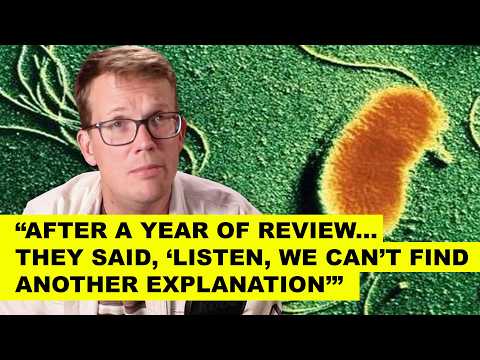
I found this article to be just wonderful, a reminder of what made the Gemini and Mercury programmes of early manned space flight launches so special.
https://arstechnica.com/space/2025/09/60-years-after-gemini-newly-processed-images-reveal-incredible-details/
I do miss the night sky of Lanzarote. Nothing compared to what I see (nothing) in the city centre here..!
I have been very enthusiastically following the news about the new ground-based Vera Rubin Telescope in Chile. From what I can tell, it has excited astronomers worldwide on par with the launch of Hubble or James Webb.
It has a mirror of 8.4 meters, which is like the largest ground-based telescopes, so nothing special. But it has a HUGE field of view, something like 500-1000x the field of view of other ground-based telescopes. So the idea is to image the whole sky visible from Chile every 3 days, by making many short exposures of 30 seconds, and to keep surveying the whole sky like that for 10 years.
The effect will be that everything that changes will be detected like never before: asteroids, interstellar objects (that we have only begun to detect), supernovae, novae, variable stars... It will also make the largest catalogue of galaxies and stars to date (10 billion of each).
I was already geeking out, but then I found out that the Director of Construction, and once the telescope is operational the Director of Science, is Željko Ivezić, a Croatian who went.. to my high-school! He's really great in terms of getting people excited but staying scientific and at explaining the science behind it in simple terms but without dumbing it down too much.
To be clear: Since it will be making many very short exposures, we should not expect "beautiful pictures", like eg. Hubble or Keck. However, after 10 years, since the images can be "stacked", it will be possible to have both "beautiful pictures" (stacked images of the region over 10 years) AND a "movie" of the whole sky (a time-series of a region of sky or the whole sky).
A few photos have already been unveiled and the actual survey should start in a few months.
First photos unveiling text:
https://www.universetoday.com/articles/the-first-pictures-from-vera-rubin-are-here
First photos unveiling press-conference:
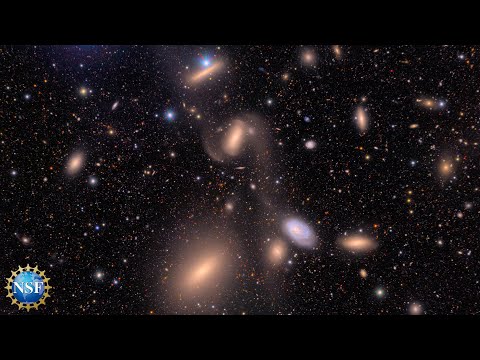
Wow! Maybe you can get visit passes? Haha. It does sound like an experience to be able to witness the great above with such level of detail. Scientific and technological advances such as these are fascinating. Also, so you are telling that the telescope will act like a camera: compiling images to then be able to share a much more accurate and in depth map? Thanks for sharing. Good morning! And those photos look already fascinating.... (still haven't watched the video) Edit:video is fascinating, when it shows the lenses and the dimensions .... wow!
Thank you for your enthusiasm
Yes: To be able to detect everything that changes in the sky over time, instead of making a long exposure of a region of sky, and then of a next one, and never or rarely revisiting them, the telescope will make very short (30 second) exposures every 3 days of each region of the sky and revisit the region every 3 days. Over time (10 years), these 30-second exposures can be "stacked" into ever more detailed images or even a "movie".
It's a very smart way of getting both the detailed long-exposures and being able to survey the sky frequently.
It is like a dance. It set a beat: 30,3,10
I loves science. Especially SF.

All my present knowledge of the futures comes from
https://en.wikipedia.org/wiki/Alien:_Earth
Which I highly recommend for its thought provoking horror...
I had to hide behind the sofa for most of it
Which I feel is basically correct and likely.
But I for one won't see it happen and I suspect neither will the usual suspects...
A video of images compiled from Webb, Hubble and Chandra. Beautiful, and sleep stimulating on this fine morning…
Thank you @Jeroen.
I thought the images were stunning, the music tasteful, and the descriptions precise and informative.
Maybe @lobster should give a little look, at least to the first minute of the video. There is an easter-egg! 😄
Ah yes, the Lobster Nebula gets a mention. I intended just to see what you were referring to, but I ended up watching the whole video again — it’s that good.
This was interesting.
New space telescope to look for more lobster nebula...
https://www.space.com/china-space-telescope-xuntian
We really are just star dust to dust, ashes to ashes...
https://www.nhm.ac.uk/discover/are-we-really-made-of-stardust.html
About Jupiters core, bizarre magnetic field, and data from the Juno mission.
About LFBOTs, very short-lived huge explosions…
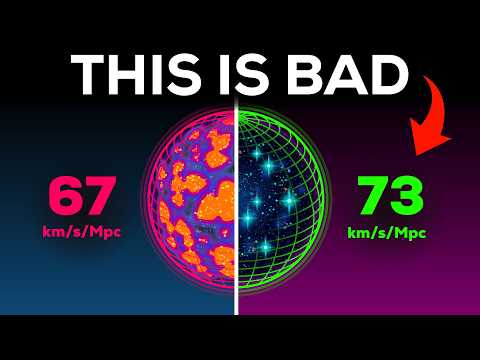
Are the new discoveries, and uncertainty, in astronomy an indication that we just need more data (like the odd orbit of Uranus) or that we need whole new ideas (like the orbit of Mercury)?
Going on a Florida vacation at the end of February. On the itinerary was a trip to Kennedy Space Center. I was hoping we'd get lucky and get to see a launch, its still up in the air whether a potential February launch will happen when I'm there. The exciting thing is that I just looked up what might launch, I was expecting a satellite or something boring, but if one happens it will be the Artemis II manned mission orbiting the moon! Fingers crossed.
Unfortunately, the mission seems to have a launch window that needs to happen in the early part of the month, I assume to align it with the moon. That means if the early February launch gets delayed it would be early March or April rather than late February. 😢
Space is the as we look out.
But it is just so much glitter and paste if we do not also look inward
We are stardust, part of this immense universe. And, we, universes unto ourselves, are enabling the universe to explore itself.
What surprised me recently was to read that Australia is wider than the moon, by about 600km!
Interesting that that big rock circling our rock played and continues to play a part in the development/evolution of life on this rock. So, yes, Luna is so much more than just a big rock.
Also, the probes that have cleared the planets are still not out of our solar system. They have a ways to go just to get to the Ort Cloud...a long way to go.
Enjoyed the first two episodes of Star Trek: Starfleet Academy
But the trekkies did not. I found it really funny
... oops might be in the wrong thread. Ah well....
Some fantastic images of the moon and Earth from the Artemis 2 mission.
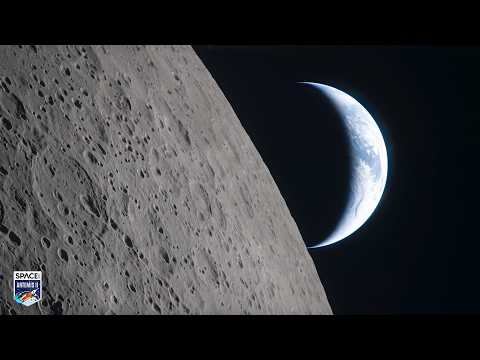
Wonderful! You can tell they took some great cameras with them this time.
A nice short demonstration of how far away Artemis 2 went to get to the moon.
https://www.youtube.com/shorts/_F-TrMUfEbQ
A longer reflection on some of the best images from Artemis.
Nightmare fuel -__-