
Howdy, Stranger!

It looks like you're new here. If you want to get involved, click one of these buttons!

Examples: Monday, today, last week, Mar 26, 3/26/04
Welcome home! Please contact lincoln@icrontic.com if you have any difficulty logging in or using the site. New registrations must be manually approved which may take several days. Can't log in? Try clearing your browser's cookies.

The Path of the Empath
personperson Don't believe everything you thinkThe liminal space Veteran
edited July 21 in Philosophy

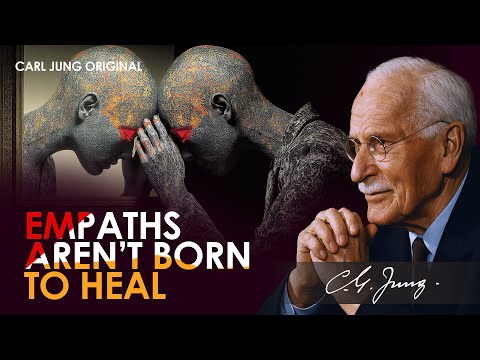
Not sure if others here share this trait of the "Empath" where you pretty much literally take on or absorb the emotions and energies of others and the world around you. This video of Carl Jung spoke pretty deeply to me, I could quote it endlessly, but I think the takeaway is that the purpose of the Empath is to be a silent mirror and reveal to the world and people the truths that have been buried or don't want to be seen.

Edit: So, this content is AI, apparently Jung never used the word empath, and unlike some others I've seen it doesn't say so in the video description. The message still resonates with me, I just think authenticity is important and an awareness of AI generated content is increasingly more important.
Comments

  • JeroenJeroen Not all those who wander are lost Netherlands Veteran

    Interesting… I used to have this trait pretty strongly when I was young, it was part of what made me introvert, I was too sensitive to the world. Now that I am older I am better at just being me, without being a sponge for what is around me.

    Some of this AI content is actually pretty good… I don’t like that they ‘steal’ a voice and a whole public persona, but some of what’s said has resonance.

  • personperson Don't believe everything you think The liminal space Veteran

    @Jeroen said:
    Interesting… I used to have this trait pretty strongly when I was young, it was part of what made me introvert, I was too sensitive to the world. Now that I am older I am better at just being me, without being a sponge for what is around me.

    I've certainly been able to find a more solid footing over the years, and been better able to distinguish what is mine and what is from the "outside". There is a strong connection between HSPs (Highly Sensitive People) and Empaths, but they aren't identical.

    I know for myself when I'm able to withdraw from the world I'm able to maintain my own energy and center. I'm wondering for you have you changed from this or is it more you've had the ability to control your environment better?


  • JeroenJeroen Not all those who wander are lost Netherlands Veteran

    I manage my own energy and my environment better, for about an hour or maybe two I am more able to stay unaffected, do my own thing. And then when I notice I am flagging I usually withdraw to my own space — I go home if I was at a friends for example. That does mean I rarely do whole-day outings anymore, but that’s fine by me.

    It’s interesting what you say about Empaths and HSP’s, this terminology was just becoming current when I last looked at it, but it wasn’t well defined.

  • personperson Don't believe everything you think The liminal space Veteran
    edited July 26

    AI Overview
    What's The Difference Between A Highly Sensitive Person And An Empath
    While both empaths and highly sensitive people (HSPs) experience heightened sensitivity, the core difference lies in how they process and react to emotions. Empaths intensely feel and absorb the emotions of others, even to the point of taking them on as their own, while HSPs are more generally sensitive to a wide range of stimuli, including their own and others' emotions, and are easily overwhelmed by overstimulation.
    Here's a more detailed breakdown:
    Highly Sensitive Person (HSP):
    Definition:
    HSPs have a more sensitive nervous system, leading to heightened awareness of subtle details and a greater reactivity to both internal and external stimuli.
    Characteristics:
    HSPs are easily overstimulated by sights, sounds, smells, and social interactions. They need more time to process information and tend to be more reflective and introverted.
    Example:
    A HSP might be easily overwhelmed by a crowded, noisy party and need frequent breaks to recharge in a quiet space.
    Empath:
    Definition:
    Empaths are highly attuned to the emotions of others and can experience those emotions as if they were their own.
    Characteristics:
    They are deeply affected by the emotional climate around them, can sense subtle shifts in mood and energy, and may struggle to separate their own feelings from those of others.
    Example:
    An empath might feel a sudden wave of sadness when they enter a room where someone is upset, even if they don't know the person's situation.
    Key Differences in a Table:
    Feature
    Highly Sensitive Person (HSP)
    Empath
    Focus of Sensitivity
    General sensory input and emotional responses
    Primarily focused on the emotions of others
    Emotional Absorption
    Not necessarily absorbing emotions of others
    Absorbs and feels the emotions of others
    Overwhelm
    Easily overwhelmed by external stimuli
    Can be overwhelmed by intense emotions, especially negative ones
    Intuition
    May be intuitive, but not necessarily to the same degree as an empath
    Often possess strong intuitive abilities and rely on gut feelings
    Boundary Setting
    May need to set boundaries to manage sensory overload
    May struggle with setting boundaries due to a strong desire to help others
    In essence: While both share traits of high sensitivity, empaths are more prone to absorbing and feeling the emotions of others, while HSPs are more generally sensitive to a wider range of stimuli and may not necessarily absorb emotions.

    and

    https://www.psychologytoday.com/us/blog/the-empaths-survival-guide/201706/the-differences-between-highly-sensitive-people-and-empaths#:~:text=Signs of being a highly,and empaths on the other.

  • personperson Don't believe everything you think The liminal space Veteran

    I think this is pretty related about introverted intuitives.
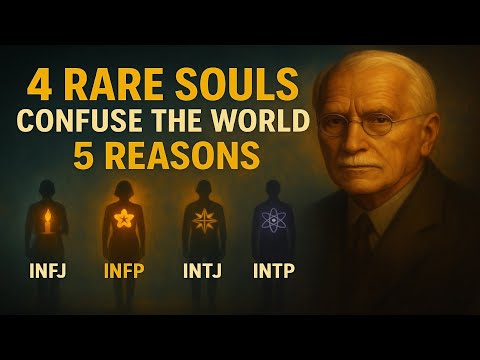
    The 5 things?
    They don't chase belonging
    They say less, but mean more
    They don't react immediately
    They connect dots
    Shift between silence and sudden depth

    Jeroenlobster
  • JeroenJeroen Not all those who wander are lost Netherlands Veteran

    Good video, @person.

  • lobsterlobster Crusty Veteran
    edited August 17

    Yep, Great video (and I didn't even watch it) :mrgreen:

    Edit: Watched

  • Shoshin1Shoshin1 Sentient Being Oceania Veteran

    I found the video leans on generalisations rather than evidence, with claims more inspirational than factual. When you catch yourself thinking “That’s so me”, perhaps we’re not so special after all. Some people are more intuitive than others, but it’s nothing special. Intuition isn’t a constant gift, it arrives unexpectedly, more as a feeling than a thought, without consciously knowing why. Science would say the same: intuition comes from the brain drawing on patterns and experiences outside our mundane awareness.

    personVastmindlobster
  • JeroenJeroen Not all those who wander are lost Netherlands Veteran

    The whole system of classification of Myers-Briggs is a series of generalisations… the video just takes a set of these types and says certain things about them, which might ring a bell for you or not.

    person
  • personperson Don't believe everything you think The liminal space Veteran

    @Shoshin1 said:

    I found the video leans on generalisations rather than evidence, with claims more inspirational than factual. When you catch yourself thinking “That’s so me”, perhaps we’re not so special after all. Some people are more intuitive than others, but it’s nothing special. Intuition isn’t a constant gift, it arrives unexpectedly, more as a feeling than a thought, without consciously knowing why. Science would say the same: intuition comes from the brain drawing on patterns and experiences outside our mundane awareness.

    Yeah, I've moved away from Myers-Briggs in general and towards the Big 5 in categorizing personality largely because of the science (or lack thereof) behind it. The Big 5 is what psychology researchers use.

    Regarding the Myers-Briggs intuition-sensing spectrum though, it is like introversion-extroversion in that people naturally lie somewhere on the continuum. And if you lean pretty far one way or the other the generalizations will speak more heavily to you or not.

    In Myers-Briggs, the Sensing (S) vs. Intuition (N) preference describes how individuals perceive and process information. Sensors focus on concrete, tangible details, the present, and practical applications, while intuitives are drawn to abstract concepts, patterns, and possibilities, often focusing on the future.

    lobster
  • lobsterlobster Crusty Veteran

    Also we have to remember many of us are on the madness spectrum, senility spectrum, plausible deniability spectrum and other classifications equally of only partial use.

    For example I am now becoming more Christian in my Buddhism. More accepting in my anarchic tendencies and not so much of an alternative to intuitive versus eternals ...

  • lobsterlobster Crusty Veteran

    Better find some Other Psychiatist...
    https://www.tiips.org/otherness-project/

  • JeroenJeroen Not all those who wander are lost Netherlands Veteran

    @lobster said:
    For example I am now becoming more Christian in my Buddhism.

    What form does this new-found Christianity take?

    I was reading along in a memoir of someone who had been a Catholic monk, and I came across a section where he detailed a discussion about Jesus. Apparently Jesus was a fairly ordinary man until his finding the kingdom of God during his baptism in the river Jordan by John the Baptist. And more he taught that other people too could find this kingdom of god… sounds a bit like enlightenment doesn’t it?

  • lobsterlobster Crusty Veteran

    kingdom of god… sounds a bit like enlightenment doesn’t it?

    Ah ha, you noticed the flaw in my conversion. No real need to convert:

    I am the LORD thy God aka I am the first of three jewels 
    No other gods before me aka nothing here but us Buddhas
    No graven images or likenesses aka no you can not have statues (maybe a tree)
    Not take the LORD's name in vain aka don't bad mouth the Sangha/Monks
    Remember the sabbath day aka Everyday is Buddha day
    Honour thy father and thy mother aka Mother dead, Father gave me an Eden Forest
    Thou shalt not kill aka same old
    Thou shalt not commit adultery aka adults only in Sangha
    Thou shalt not steal aka ...obviously
    Thou shalt not bear false witness aka unless Jehovas Witnesses
    Thou shalt not covet aka here is Nothing for you
    
Sign In or Register to comment.