
Welcome home! Please contact lincoln@icrontic.com if you have any difficulty logging in or using the site. New registrations must be manually approved which may take several days. Can't log in? Try clearing your browser's cookies.
God is Comfort Food For Mind
 IdleChater
USA Veteran
IdleChater
USA Veteran
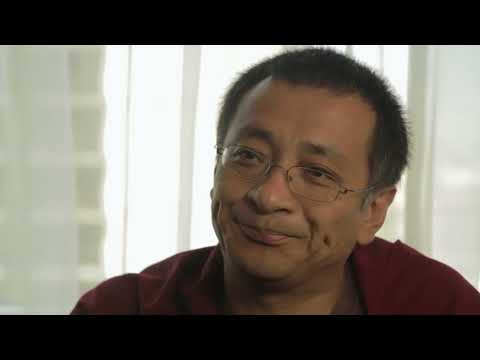
8 question with Dzogchen Ponlop Rinpoche



3
Comments
Mind is comfort food for God
Will I bother watching the video? Maybe. When I have a mind to...
https://mindowl.org/tonglen-meditation/
While I haven't viewed the video, the header caused me to reflect upon an encounter I had with some folks with a "God" Centered ideology.
I answered the door today to be met with a trio from the local megachurch. During our discussion, the inevitable question arose regarding my Buddhist faith vs their faith in "God". "What if you are wrong?" My response was, "What if you are wrong?", to which their immediate response was, "We're not!"
I was a practicing Christian and converted to Buddhism. I saw and experienced the effects of both belief systems.
The Evangelical Christians at my door expressed their absolutist view that only by accepting Christ and their God without reservation will one be "Forgiven" and be allowed to join their God in Heaven. According to them, failure to accept their God means one is condemned to Hell, no matter how many good deed or how good a person he or she is. Entrance to their "Heaven" relies only upon accepting their God and "His Son" as supreme and absolute. They condemned certain people as evil, automaticall condemed to the Christian Hell based upon their sexual orientation, or life style or "refusal to take faith".
Belief is based upon ab solute faith and absolute faith only - Blind Faith.
In my Buddhism, (simplified) faith arises from proof derived of study and action. Study to understand the concept - the theory and doctrine. Practice produces the proof from action. Faith is not blind; question, seek, learn, apply, grow.
We begin practice without committed faith. We have real world experiences. We study.
As we practice and study, our understanding and faith emerges and grows with actual proof derived from our own action and learning. The power comes not from an external hand reaching down but from within as we merge, as it were, with our environment, internal and external, the world, the universe, however one wishes to express it. We thus awaken to that which can be called Buddha from within. A perfunctery and incomplete statement for sure. But enough, I hope, to transmit the jist of it across to you.
I must add, Buddhism does not judge. One's sexual orientation, one's sex, cultural or ethnic background are not a basis for judgement of worth for any individual. And there is no "Guilt". There is, rather, causation - What one does, as a person for self and others.
Just to be clear, While I clearly believe Buddhism to be the better way, I am not putting forth, "Christianity (or aay other religious or phylisophical belief) Bad, Buddhism Good, My way or the highway." This is just a quick, if incomplete reflection based upon today's encounter.
Peace to all
And as most of us know, comfort food is not the healthiest thing for the mind to indulge in
Thanks everyone.
Watched it.
Very insightful.
Good questions well answered.
for the record im a gnostic christian buddhist, for me the buddha/christ nature is in us.
our nature override the power structure of blind men. through our gnosis our power is in us
christ or buddha taught us to see knowledge as empowerment that dont need the authority of the church that blind its followers. its really unenlighten men who teach fear and control by a blind god who we gnostic call the archons ruler of illusion. buddha christ taught us to see the illusion of emptyness in form. and be awake to the true source of it all, the barbello or the dharmakya who is not a man who should lie like these blind men of paulene gospel men rule and woman shut up attitude.
in gnostic christ/buddha all is equal in our inner search for truth and love.
A rabbi once taught a class I attended about God and theology. I appreciated their approach to theology and how people view and understand God—i.e., that our understanding and perspective of God can (and likely will) change over time; the importance of attempting to understand how other people may think or feel a certain way about God (or anything else) based on their own unique experiences and understanding; and how a big part of being Jewish is wrestling with God and those ideas. So when someone brings up that term, I think a good place to start is what do they personally understand that term to mean, what’s the important aspects about it to them and the reasons why. Because an immature approach to religion substitutes what you think about a given term or idea in place of what another truly thinks and feels. And more mature approach, however, starts with a dialogue about what it means to them and going from there. And this rabbi also made the point that it's ok to wrestle with these things and challenge them as long as it's done in a way that's respectful and not dismissive or cruel. So be careful not to define a term or idea for someone—let them define it and then tease out the implications in an actual dialogue rather than beat a straw person with your intellectual kendo stick.
I find the topic title interesting, because we have everything from Spinoza’s God (the whole of existence is God) to the 10.000 Hindu Gods (where being a God is like a job that a being may hold for a few thousand years). Just coming to an understanding of what the word God means to you is a tricky undertaking.
Timothy Leary eventually said about God (it took him five years of taking LSD before he was ok with saying the word “God”): “I feel very comfortable now in saying that I do talk to God and I listen to Him. He is a hipster, he is a musician, and he’s got a great beat going. You’ll never find him in an institution or in an American television stage set. He’s never legal! And he’s got a great sense of humour, too!”
Imagine that...
We talk to ourselves (inner and outer)
And call it respect.
Next!
https://thegoodreport.co.uk/atheism-and-scepticism/the-atheist-superiority-complex/