
Should a Buddhist own a gun ?
 Shoshin1
Sentient BeingOceania Veteran
Shoshin1
Sentient BeingOceania Veteran
I asked this question to AI and this was its reply:
That’s a thoughtful question, and one Buddhists have reflected on for centuries. The answer isn’t a simple yes or no but depends on how one understands and applies Buddhist teachings, especially the First Precept: to abstain from taking life.
Traditional Buddhist View: Owning a weapon, especially one designed to kill, is generally seen as contrary to cultivating non-violence (ahimsa) and compassion. The Buddha discouraged making or trading in weapons, and advised against professions connected with killing. From this standpoint, a gun would symbolise potential harm.
Practical/Modern View: Some Buddhists live in contexts where safety is a real concern. They may argue that owning a gun for protection does not necessarily mean an intent to kill—it could serve as a deterrent. But this is ethically tricky: the moment one uses it, the precept against harming is at risk of being broken.
Inner Reflection: Buddhism often asks: what is the motivation? If a gun is owned out of fear, anger, or desire for control, it strengthens unwholesome states of mind. If it is kept with the thought of protecting others, the owner must still weigh the karmic consequences of possibly harming.
Middle Way Response: Some Buddhist teachers suggest that the best approach is to cultivate alternative forms of protection—community, mindfulness, de-escalation skills—rather than relying on a tool made for killing.
So, what do you think?
Should a Buddhist own a gun ?
If you own a gun, why did you purchase one ?
I guess this mainly applies to people in the US, where for many, guns are part and parcel of daily life, but from a Buddhist perspective the question isn’t about rights or culture so much as whether owning a weapon nourishes fear or compassion.


Comments
I can say I don't own a gun. I feel like it would create a certain amount of violence in my mind contemplating its potential use.
I also don't feel comfortable with the notion of "should". People, and Buddhists, can do what they want with their lives. I might ask them to reflect on how owning or not impacts their mind and practice. We're not all in the same circumstances or mind set.
I hadn't reflected on this question in a while so I googled a bit and an old thread came up that I found interesting.
https://newbuddhist.com/discussion/24890/buddhists-and-guns/p1
My own attitude around guns in the US is that there should be more requirements for owning one, similar to driving licenses. To own one you need to pass a basic written test on safety, most gun deaths are accidental or suicide. To be able to carry one training courses with refreshers courses would be required.
I do not own one.
I agree with the ‘Traditional view’ and the ‘Inner reflection’ points in the OP.
Should we?? I dunno… but I agree with most of the points that Seeker242 made in the past thread.
Would I judge a self proclaimed Buddhist for having a gun? Yeah… a little. I know that brings its own self reflection.
Yes, a Buddhist can technically do whatever they want (and I know I often do), but the real question is whether those choices move us toward liberation and compassion, or deeper into suffering and entanglement.
Bearing in mind that guns were developed for the purpose of killing or maiming, their very existence sits uneasily alongside the Buddhist precept of avoiding harm.
Sounds like a loaded question to those of us living as Modern Nun Shinobi. Next we will have to be active vegan peaceniks, before even reading a book (if available) without being deported from our homes for being heretics.
As for AI, is that now compusory for Buddhist answers? Not in my armoury.

[image redacted by AI bot - or perhaps notbot]
https://www.adobe.com/uk/products/firefly/features/text-to-image.html
I think its similar to the question of political involvement. Does it move us toward liberation and compassion, or deeper into suffering and entanglement?
Most gun deaths are suicide. Accidental deaths make up only around 1%, and homicide accounts for about 34%.
We are involved in and with politics whether we like it or not. Even Buddhists, who seek peace and compassion, cannot escape the consequences of silence or inaction. Every choice, every word, shapes the world around us.
Some try to avoid their own discomfort by denying the injustice happening around them, or by claiming both sides are equally to blame, using that as a way to soothe their conscience.
I own 3 guns, passively acquired by gift or inheritance. Wouldn't care to generalize about whether I, or anyone else, should have them or not.
Apparently I never said that.
But how involved are we? Do we involve ourselves in a way that further entangles us or do we involve ourselves in a way that leads to greater freedom?
Just making the point that when you point the finger at someone else, there are three pointing back at you. Don't be so quick to judge.
I also know gun owners who are in favor of major changes to gun laws but own them because this is the state of things here and they feel they have a responsibility to their family. The motivation and feeling they have is one of care and responsibility.
Something worth reflecting on is sometimes its hard to have empathy and see things from another's perspective We tend to approach things we ourselves have little personal experience with as being similar to how we would feel.
My take on this: if you feel you have to speak, speak on peace, compassion, equanimity. Justice is not one of the brahmaviharas, for good reason — it stirs the passion, and does not lead to dispassion or letting go or happiness. The Bodhisattva’s path does not lead to greed or hate, and we can by our speaking lead others to that example.
I know we've had more than one thread on the topic of guns over the years so I went and looked for some more. This is another good one.
https://newbuddhist.com/discussion/23819/empathy-for-gun-owners/p1
I read my own response and find that my feelings really haven't changed much in the past 9 years.
Even if guns are unlikely to disappear, that does not make their presence harmless. Guns in homes make people far more likely to be killed or to die by suicide, and the “good guy with a gun” rarely stops mass shootings, often making situations worse.
The Second Amendment was written for a very different time, today, citizens cannot realistically defend against modern police or the military, but real people are being killed daily in preventable ways. Stronger licensing, background checks, safe storage, and limits on high-capacity weapons would save lives. Treating guns as inevitable ignores the human suffering they cause.
Again we need to agree to disagree.
Are you talking to me? I made those same points in my above statement.
I'd set that as a baseline for all discussions. No need to think or feel the same about things.
The question, "Should Buddhists own Guns?"
The question should rather be,"What attitude or mind set should Buddhists who own weapons have regarding their ownership and use of said weapons?"
True @Lionduck ...The problem lies in the fragility of the mind, so easily swayed by the defilements that come with being human, fear, anger, rage, hate, delusion and the rest.
Yes time to rest... Sorry could not resist. Shoot me!
I see it as, a gun has no purpose besides killing. Is it justified in Buddhist thought to possess one? If you want to be competent in self defence, why not go and learn martial arts?
[Source: Vinland Saga. Dialogue between Thors, a former warrior, and his son]
Thors: Do you want a sword Thorfinn? A sword is a tool to kill. Why do you need it? Whose life do you intend to take?
Thorfinn: Enemies...
Thors: Your enemies? Who are they?
Thors: Well, bad guys like Hafden..
Thors: Listen to me, my son: you don't have enemies. The truth is that nobody has them. Nobody in this entire world deserves to get hurt."
I would argue that martial arts isn't going to be much help for a middle aged man trying to defend his family in a home break in against several young men. Or a woman for that matter. To be able to successfully defend yourself or others against several people you'd have to be incredibly good at martial arts.
I don't want to try to say that owning a gun is justified as a Buddhist. I just feel like people are generally uncomfortable with guns and imagine that when people have one they go into some sort of Rambo fantasy or blood lust.
Buddhism doesn't justify media consumption, meat eating, driving through insects and a bunch of other things many Buddhist do all the time.
A while ago during a large family gathering my cousin who has been a hunter his whole life was showing people a modern musket loading gun he had. While he was doing it I felt totally comfortable. Later a cousin in law, who hadn't grown up with guns and I'm guessing got one to try to fit in with his married into family, did some target shooting with a handgun. While he was doing it I felt nervous. People who've owned guns their whole lives, know guns, how to use them safely and properly don't think about them like someone who has no familiarity.
I had a bad accident with a knife when I was younger. For a good time after knives, or just the thought of knives gave me anxiety and I'd imagine violent scenarios. Over time with use and Buddhist and psychological techniques I was able to overcome my inner defilements around knives. A Buddhist gun owner ought to be able to control their impulses better than the average human being.
The example you are bringing answers the question of why would someone need such a powerful item. It is justified under my view. But yes, impulse control, self-awareness, emotional intelligence should be stressed and taught to people that inevitably will be in touch with them. You mention hunters for example or in certain areas of the world where it is essential (I'm thinking of Fosdick living in Alaska. Don't know why I imagine harsh blizzards, a bear, having to venture through the forest..)
I would be worried though, as a Buddhist, if living in a an area where being armed for self defense purposes is common is good for my practice. Maybe the challenges of bearing a firearm for self-defenses, the risks of taking a life, even if it were for self-defense.
I will be in the minority who does own guns. That said, I've never bought a single one. They are all hunting guns that were handed down in my and my husband's families. We live in a very rural area, and I grew up hunting, fishing, foraging, and gardening to supplement our food and income. I don't remember the last time I hunted, so we just have them, locked up. If I ever needed one for self defense, I'd be in big trouble 😂
Growing up, they were tools like anything else and that is how we learned about them. pretty much every kid here takes gun safety training. When I was a kid (late 80s in this case) we took at as part of our schooling. We took our rifles to school, on the bus, and put them in our lockers until the end of the day where we went to the gun range in our school basement to learn safe gun handling. Crazy 🤯 But I am grateful for it, and I feel safer overall among rural people who don't treat guns like status symbols or fun toys or whatever people think of them otherwise.
I can also say I am grateful for the knowledge and skill. If I had to provide for my family, I would know how to do so and living in a rural area, it's a valuable thing to know. Despite being (partially) Buddhist, I do still eat meat. I often tell myself I should do better to connect with my food than to buy it from the store, but I haven't gotten there yet. Just can't bring myself to it.
@Karasti what happened? I thought you were pretty firmly a Buddhist a few years back? I do agree with you it’s not necessary to be strictly Buddhist to have had some benefit of the Buddha’s teachings though, all half-Buddhists, semi-Buddhists and aspiring-Buddhists are welcome here as far as I’m concerned…
Thanks for the reminder.
In the Tantric tradition, inside a Buddha statue I am aware of, was placed a safely and legally decommissioned rifle.
One of our local London Buddhist centres that I occasionaly visit, is a former high security court room and prison cells. Used to house and try IRA prisoners etc.
https://lotusguesthouse.lodgify.com/
Welcome to real world dhrama-dharma. Engage?
Should a Buddhist own a gun?
I think the answer is clear: No.
But a Buddhist should not do many things, so if one owns a gun, it's not the end of the world.
@Jeroen My beliefs have always been constantly evolving. I still firmly believe in the foundations of Buddhism. But I am also pretty pagan and the core of my beliefs is centered on the laws of nature, primarily. They work well together, for me. But for other people, they wouldn't. Ie, I know a lot of Official Buddhists who dislike Thay's teachings on interconnectedness with nature as "not Buddhist." I believe very strongly in that. So, it really depends on the details which is always where things get murky IMO 😂
@lobster thanks for the reminder, I will send a note about the moderator title, as that happened right before I took an extended internet break and I thought I had made clear I did not wish to be a moderator but apparently it is still there!
I think you’d make a great moderator @karasti, you always struck me as thoroughly practical and able to see the many sides of an argument.
A moderator who does not do anything?
I think that is my sort of moderator. Keep up the good work
Although I live in a country with an astounding number of firearms, I personally do not own a firearm.
Some people own firearms as collector's pieces. They will never be fired except in rare safe displays and absolutely not on a living being.
I know individuals who have firearms who only use them on approved ranges.
I must point out that, in certain situations, even martial arts are potentially fatal.
Again, it matters not the potential weapon, gun, bow, club, rock, hand or foot. What matters is not the potential choice of weaponry, it is the mind set of the individual.
a knife to an assassin is a deadly weapon while a knife to a sushi chef is an indispensable tool. Archers were the field artillery until modern weaponry took over the battlefields.
Now, we have bow hunters and, while bows an arrows can be lethal, competitive and recreation target shooting are the prevailing uses. In Japan, archery is stylized and meditative in nature. Their ritual of the archery is the point, the target is an afterthought.
I could go on with various examples, but these will suffice.
Again, as a Buddhist, it is intent and mindset that matters, not the specific weapon. With the proper intent and mindset, weapons become not-weapons. Tool of death and destruction become tools of mending, healing, teaching.
Peace to All
A large number of gun fatalities are accidents. Quite a few others are intentional by young people who don’t know any better. Others are due to gang violence.
Here in Europe, gun ownership laws are much stricter. Generally guns are forbidden, although some criminals still know ways to get around that. But for instance, there are no cops or private guards at schools. And because people generally don’t have guns, they don’t feel the need to defend themselves from them, and generally life is much safer. It’s something that Americans remark on when they walk around in cities in Europe, how much safer they feel.
Gun deaths are a relative rarity around here. Thankfully.
Thus have I heard and found to be true:
There is not much that one cannot justify if one puts one’s mind to it. If one enjoys doing something and is told that it is unethical, one will look for ways to make it seem more ethical, to give oneself, or those who share the same unethical practice, peace of mind.
So it is with those who own guns, for they tell themselves it is for sport, for safety, or for freedom, while overlooking that the weapon they cherish was made for the taking of sentient life. Then they start to say, but a knife kills, and so the justification continues, forgetting that knives were made to carve and create, while guns were made to destroy.
Then some might say, who am I to judge another who chooses to own a gun, all the while continuing to justify something unethical. Some people justify killing, but if those carrying out the killing are not liked by them, then that is a different story.
This no doubt will make some uncomfortable, but Buddhism and Dharma practice can make one feel uncomfortable when facing one’s own shortcomings, reminding us that the hardest truth to face is often the one about ourselves. And I’ve been there and done that on more than one occasion.
Ethics and judgmentalism aren't the same thing.
While ethics and judgmentalism are not strictly identical, they are often intertwined in practice. Ethical reasoning involves making judgments about right and wrong, and when applied rigidly or without empathy, it can easily slip into judgmentalism.
Distinguishing between principled critique and unkind condemnation is important, but insisting that ethics is entirely separate from being judgmental overlooks how moral standards are inevitably experienced and enforced in social contexts.
I invite you to examine who's ox is being gored. Imagine if someone with a different ethical frame than yours were trying to enforce their norms. Like if some Christians were scolding you about how rock and roll were a sin.
How moral standards are experienced and enforced in social contexts is some pleasant language for a type of control that makes me uncomfortable and I reject. It reminds me too much of the Christian moral majority that attempted to shame and marginalize the "evils" of rock and roll or dungeons and dragons let alone sexuality or worse.
In that consideration I accept and welcome Buddhist gun owners. Anyone that is know that @Shoshin1 view isn't universally shared here.
Hmmm nice try @person, however, I didn’t say it was a universally shared view.
We clearly differ in our world view. I do sometimes wonder whether your outlook might change if you were on the receiving end of gun violence.
You did sort of imply that it's the Buddhist view though.
I think I would say my objection is less about worldview in this case than it is approach. I don't think I'm over my skiis saying a Buddhist approach is spacious, open, accepting and non judgemental. I feel your attitude here is a bit more Catholic.
Earlier in the thread I posted my thoughts from an old gun thread and said my views were basically the same now. You then objected with most of the same points I had made. Which tells me it is something other than gun positions.
Let me use the frame of the 5 precepts. They are generally thought of as training guidelines rather than commandments. If someone talked about the use of intoxicants in the same way I'd speak up about that as well.
Perhaps, I'd hope my practice would help me to eventually heal any trauma.
Guns are made for (and quite effective at) killing. Obviously not within the Buddhist teachings. Obviously that is except to those who cultivate a blind spot, and guard it with a “don’t lecture me “ shield. You might come around to a more peaceful view, but I suspect you won’t achieve it in the current lifetime.
It is not true that guns have no purpose other than killing. Nonetheless, that's certainly why they were invented, and arguably remains their primary use. To not own weapons would seem to be a logical sub-precept, and was probably considered as such by Gautama, since his people, the Sakyas, followed his teachings and owned no weapons.
Shunryu Suzuki has said that we follow the precepts but are not bound by them. I would interpret this to mean that the precepts do not unburden us from the responsibility of making our own decisions. Life is complex, no generalization can be valid in every set of circumstances. But yes, I will concede that Buddhists should not own guns - that seems just as valid as any other generalization. Perhaps we shouldn't own fly swatters either.
I separate my political views from my Buddhist views. One works at the societal/cultural level and the other at the personal level. What works for one level may conflict with the other.
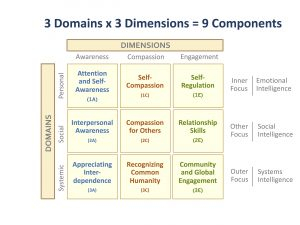
If you're trying to change society putting moral pressure on people can get them to change their behavior. If you're trying to help people walk a spiritual path, shame doesn't help, I would say its counter productive. People are each on their own path and in their own circumstance, they have to make their own choices about which steps to take, we're here to advise and support, not dictate. I think one can say in general that guns run counter to that path, but that is different from a sort of attempt at moral control. Not just that but I believe that people are adults and should be able to make their own decisions. I'm not king of them or the world, it isn't only up to me and what I want or think.
I don’t see any shaming going on. If someone feels ashamed, I think they need to apply the self reflection to that.
I think the teachings or their Teacher do the actual dictation/advising… We just having a round table here.
IMO…The question as in “should” means is it in our teachings? I intentionally said …errr…I dunno about the ‘should’ part..bec don’t let me tell you…read for yourself, by all means…you find out what your teachings/guidelines speak to you. I agreed with parts of the previous thread bec I think teachings were discussed.
If the OP was Should Buddhist own a fly swatter? No.
I think the intent is pretty obvious. I intend to kill a fly if one is bothering me. The teachings I have read, advise against that. Not bec I’ll be punished in hell, but bec of the state of mind it fosters or can lead to. Also, the consequences it could bring.
Do I feel shamed or ashamed or pressured by owning a fly swatter? No.
If I begin to feel shame…or the constant need to defend having one…it’s time to look inside and see what’s going on with those thoughts and decide if it’s time to let it go. Am I willing and able, at this time, to deal with the consequences/Karma of killing flies? Right now I am. Full stop.
I’m sure there are plenty of Buddhist that would judge me for having a swatter, and hell, even doing pest control, like I judge the Buddhist who have a gun. Par for the course.
Heh heh. Be comforted in this - if you kill one fly, squash one cockroach, none of the others will mourn or suffer because of it.
In the case of the dead roach, other roaches will feast on it. It is in their nature, gregarious and omnivorous. They are part of Mother Nature's recycling team.
I don’t think it’s really possible to separate the two. If one’s Buddhist values are based on compassion and the wish to relieve suffering, then they naturally influence how we see the world and respond to injustice. Our personal ethics can’t be neatly divided from the social and political realities around us, they’re part of the same practice.
I disagree. A quote I've used at other times, "your views may be compassionate, and the Buddha's views may be compassionate. But that doesn't mean your views are the Buddha's views." ~ Lama Jampa Thaye
Its like how the Christian right bring their views into politics and then flows back into their religion. Its a religious view that life begins at conception so they make the political effort to make that view law. They get entangled with the right's politics and thus a selfish, greedy mindset becomes their religious view on poverty.
Bringing your Buddhist values into the world I think is a good, I feel persuaded to put more effort into. But so many of the things the world does and the ways it looks at things aren't compatible with a Buddhist view. The Buddhist view on suffering says it comes from within, its a state of mind. You can't control or legislate that, only each individual can influence that themselves.
So while I think the US needs better gun control laws, I think that spiritual growth has to come from each individual's own reflection and understanding rather than some sort of moral coercion.
First, a scenario where you're a lone protector facing a roving gang bent on violence seems more rooted in movies than day-to-day Western life. A more common scenario is for a homeowner to shoot an "intruder" (sometimes simply a door-knocker) who presented no real threat because they panic and have a gun. Everyone wants to believe they are the hero of their story when they're mostly just contributing to dire statistics.
If a roving gang bent on violence enters your home forcibly with weapons and you draw a gun yourself, I don't think you're going to leave there alive, and my sense is the gun is diminishing your odds, not improving them. You'd be better off ringing your neighbor or police and chucking your phone at their head while you run.
A cursor grasp of self-defense via martial arts would quickly give you tools to free yourself from a physical encounter and run. If your goal is to win, agreed, martial arts is not a practical tool for that in a short timeframe, not least because your desire to win is precisely what's going to get you seriously injured or killed.
The most important thing that training in martial arts will teach you isn't how to "take down multiple attackers" (though I practice it), it's how to not panic, not be overwhelmed, make good decisions instinctively, and slowly find the difference between protecting family and protecting ego. In nearly any emergency, your most powerful weapon will be remembering to breathe before choosing a course of action.
I can think of several technicalities by which I could own or rent a gun without feeling like I was violating any tenets of Buddhism — I enjoy skeet shooting and target practice is fun (provided your target isn't encouraging violence) in a number of other contexts. I've shot black powder, traditional rifles, and high-power BB guns during my time in the Scouts and genuinely enjoyed all those experiences. That said, I do not pursue them, because I don't like them enough to tempt risks.
I guess I would say this: If you jump to buying a gun "for protection" and you haven't done any other work — whether that's community building, ego investigation, studying alternatives, or yes even trying martial arts — then no, it isn't terribly Buddhist, because you're prioritizing violence & ego uncritically. That said, I'm not much of a "rules" person about beliefs, so how much effort you must put into those things before moving forward is a question I respectfully return to sender for their own reflection based on the context they know best. 🙃
Thank you for the thorough reply, @linc, much respect for the thought you put into it.
While I know that a lot of Buddhists are vegetarian or vegan, I would recommend that anyone interested in the topic read books like "The Light Eaters" by Zoe Schlanger and tell me afterwards that plants aren't sentient - that is - being aware that they are alive and participating in life in ways we didn't previously comprehend. I see and experience it when spending time with plants and trees as well.
The newer science around plants has led me to believe that we can only be mindful and reverent about how, when, and why we take life to support our own. We can no longer defend being vegetarian/vegan as being less harmful because solely because they are lower on the sentient chain than we believe animals to be. That means that for any of us to survive, we are taking life. There is no way to avoid that.
I grew up hunting and fishing. As I mentioned before it supplements our family's food and kept us off welfare. As an animal lover from the time I was a small child, it wasn't the easiest part of life for me. But I would rather own my own karma, if needed, for taking the lives I take to sustain my own than to pass it off to someone else and pretend like it's not happening. I know so many people who are anti-hunting but who buy factory-farmed meat from the store. The disconnection is incredible to me. At least if I hunt or fish, I am owning that. And the animal lived a free life up to that point. I am not passing the buck onto the rancher or the butcher for my own survival.
Currently, we buy most of our meat locally from sustainable small, family-owned farms that we've visited. I just don't have it in me to hunt. But I think it's still, in a way, a "cowardly" way out of being accountable for my meat eating. Sometimes I would rather hunt and fish. I just don't have time. If I am going to eat meat, I'd rather be responsible for taking it and for the responsibility, reverence, and humility in doing so. I will never be a vegetarian. I do eat a lot of plants, and grow many fruits, veggies, and herbs. But I respect them no less. It's not really any easier for me to weed the garden than to kill a bug, knowing what I do now about plants.
I know this seems off topic 😂 but as a sometimes practicing Buddhist, I'd rather own the gun (or the garden shears) and own the responsibility to the lives I take to sustain myself than to pass it onto someone else. Animals or plants.
It's all connected @karasti
I understand the point about mindfulness and taking responsibility for the lives we take to survive. But awareness in plants is not the same as sentience. They react and communicate, yes, but there is no evidence they experience suffering. Choosing a plant-based diet is not about claiming moral superiority. For me, it is about lessening the suffering I cause. Animals, unlike plants, have nervous systems that allow them to feel pain and fear. That difference matters.
The newer science on plants shows that they are responsive and interconnected with their surroundings, able to sense light, water, and touch, and even send signals through roots and the air. But none of this means they experience suffering. Plants have no brain or nervous system, and their responses are biological, not experiential. Respect for life is essential, but we should not confuse reaction with suffering, nor equate taking plant life with taking the life of sentient beings.
So in a nutshell:
A plant is just that, which Mother Nature planted with nowhere else to go,
Except to be pulled up or picked and eaten, which is its natural flow.
They are not designed to run from danger, that’s why they are meant to stay,
And when ripe and ready, must be eaten or they will just decay.
Unlike a plant, Dharmic sentient beings are not rooted in the ground;
They are designed to flee from danger to a place that’s safe and sound.
So if it runs on the ground, swims in the sea, or with wings takes to the air,
For me it is not a food source; they know fear, and so I care.
For sentient beings once full of life, I feel it must be said,
To feast upon their body parts, one becomes a graveyard for their dead.
We are what we eat, some say, I’m definitely not a glut;
I like being fruit and vegetables, however, some say I'm just a nut!
@Shoshin1 An animal that lives a free life and is shot experiences almost no pain compared to factory farming, which was my main point overall. There are still people who think fish or bugs don't feel/register pain and suffering either, but we still err on the side of caution with them.
In any case, I'm just sharing my own thoughts on the matter. I am grateful I know how to hunt and fish because I know I can support my family beyond relying on the grocery store. I won't deny that the only real purpose of guns is to kill. I don't regret owning hunting rifles. That said, we all justify things we know aren't ideal. Owning cars, building a home instead of buying one, pulling weeds, killing bugs in the house, having pets for our own companionship, buying a new cell phone every year, eating to excess and so on. I just try to be honest about them with myself at least. There are a lot of them.
So you are saying the only purely nonviolent way of eating is by partaking only of fruits and nuts (and fruiting bodies such as mushrooms). This makes a kind of sense to me, those are the things which natures bounty has given…
It has a certain logic 😁
This is why I can't stomach AI. Much of the time, it's wrong with its answers. (It's still a work-in-progress as an online resource. Still in the design phase.) Other times, all it can do is pull up random relevant info, without doing any thinking or analysis to go with it. Of course it doesn't analyze; it's not human!
Anyway, whether or not a Buddhist "should" own a gun depends on what the Buddhist would want to use it for. I've always enjoyed target practice, with a bow and arrow, or a gun. It's a harmless hobby or pastime. AI, however, can only envision anyone owning one for the purpose of killing. I find that ridiculous.
Sorry, AI: YOU'RE FIRED!
Dear Friends of Sith, AI, Death-eaters and other lists,
I am on side with @Dakini
Binary arguments are not for Buddhas. As a part non-Buddhist preparing for Baby Jesus time (X-mas) I refuse to be swayed by arguments internal or infernal
Anyways. I am off to slay imaginary wrathful demons with St Micheal and her horde of other angles (oops Angels)