
Does reading about spirituality make any sense?
 Jeroen
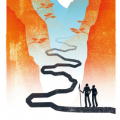
Not all those who wander are lostNetherlands Veteran
Jeroen
Not all those who wander are lostNetherlands Veteran
Lately I have been wondering whether reading about spirituality actually helps you in any way. Over the last fifteen years I have been reading almost exclusively about spirituality — I dropped almost all tv, the news, games, magazines and papers, fiction — and have covered many authors, from Osho to Thich Nhat Hanh to Sogyal Rinpoche to Tony Parsons. And while many things fell away in the beginning, over the last five years I don’t feel changed or closer to the further shore.
I feel a bit like the Swami in this story…
“A swami came to visit me. He was eighty years old and had quite a few followers. He came into satsang and said to me, please don’t talk to me about Yoga, I have read all the books and know all of that. So I said, that’s fine, I won’t talk about Yoga. But what about all the other things you’ve brought with you, all those other methods and techniques? Let me help you carry them outside, then you can come in again without them. So I helped him to the door, and he stood outside for maybe five minutes, turning this way and that. Then he came in and said, it’s amazing. Later one of his students came to me and asked, what have you done to the swami? He has rejected all dharma’s.”
— H. W. L. Poonja
I have said in the past that spiritual books help you keep a certain spiritual focus. That may be true in the beginning of your journey, but I am not so sure whether it is helpful once you’ve reached a certain ripeness.
It’s as if all the methods in the books don’t really help beyond a certain point, and lately I have just felt moved by the YouTube videos of Vladimir of the ‘Increasing Frequency’ channel. These are a kind of travel vlogs, very heartfelt, in which he visits tempels and pilgrimage places in the mountains of India and Nepal. In sympathy with him I have started taking cold showers first thing in the morning, and the first dip of my head under the cold stream gives me a kind of sense of not-being.
Maybe I will start paying more attention to that. “Enter Zen from there.”

Comments
I know of three examples of spiritual aspirants voraciously reading for decades, learning nothing, before starting meditating/contemplating/self-inquiring in earnest, and eventually finding what they were looking for.
1) Our very own but deceased @genkaku. Feel free to read the second post in the following thread.
https://newbuddhist.com/discussion/19752/please-cast-your-mind-back#Comment_366610
2) Bob Harwood (interviews available on Youtube) who read about Zen for 20 years trying to answer a long list of questions, learned nothing, then started meditating and had a kensho-type experience within 5 months. Over the next 15 years all his questions were answered.
3) Art Ticknor (not a Buddhist, interviews also available on Youtube) who also read for 20 years. When his teacher did not respond to a letter he sent he concluded: 'he's lost hope in me'. A 7 year depression ensued during which he closed all the books with the view that 'understanding won't get me there, but I don't know of any other method'. The depression ultimately lifted (by reading a paragraph from a book!) but he proceeded with earnest self-inquiry and eventually found what he was looking for.
So, for a certain type of aspirant, maybe the intellectual type, maybe voracious reading is a necessary phase. However, I've never heard of someone finding what they were looking for from books. Maybe sutra-monks like Bhikhu Bodhi are such examples?
Feel free to drop the books. No harm done. You would not be the first one. With a bit of time, some kind of action will take the place of the reading. IMHO, that is a more expedient way.
Yes, it makes sense, but only if the text is not overly intellectualised. (thinking too much about concepts instead of engaging with them directly.)
When the intellect ventures into where it does not belong, it becomes lost in its own confusion
Thus have I heard, and to a degree, experienced.
The foundations of the Buddhist path are the Four Noble Truths and the Eightfold Path.
It important not to over-intellectualise these teachings. When beginning to practise, it helps to approach them in a way that suits your personal understanding.
Over time, rough patches tend to smooth out, and a deeper experiential understanding naturally emerges.
Reading Dharma texts can help kick-start the practice, but eventually they are needed only occasionally, to help refine and clarify, while the heart of the practice is lived experience.
I think engaging with the words and speech of wise, compassionate people does have some influence on our minds.
However, teachings and words are the finger pointing to the moon and its important to engage in practice so they are able to actually get us to the destination.
There comes a time when you have to stop 'doing' and start 'being'.
I am not unfamiliar with meditation, but I find it triggering to meditate for long periods. So I just do short sessions… it seems likely that meditation is not the answer for me.
But in being there is at the root love, and feeling. That is what I am exploring.
Reading about spirituality does not produce sprituality.
Spirituality is NOT an intellectual, cognitive, nor verbal activity. It is an activity that arises from mindful awareness of THIS moment, Here and Now ... only. The purpose of meditation is to train our mind TO be mindful, but the insights come when we can recapture that mindfulness when NOT meditating.
But meditation is WORK and if reading about spirituality helps motivate you TO do your meditation, then reading about spirituality is helpful .. even though it doesn't do anything itself.
“Nirvana is beyond concepts.” Dzongsar Jamyang Khyentse, “What Makes You (Not) a Buddhist”
“There is nowhere to arrive except the present moment.” Thich Nhat Hanh
“To be enlightened is to be completely here and now, completely alert and available for the Present, because that is the only place you are ever going to BE in”. Alan Watts
Well said/quoted @FoibleFull
In one sense we are a book to be read.
When we read others helpful methods it reflects back on our possible flaws, understanding and range of passages and skillful means...
I was just coming to this realisation this morning. I had a dream, in which I was sitting in a fast Intercity train, and at a certain point I wanted to see the train from the outside. Then it was as if the viewpoint shifted to a stationary point outside the train, showing it rushing past on the tracks… later I returned to my dream body inside the train. So when I woke up, I realised I am not the dream body, and I recalled what it felt like to be in that stationary place watching the train. There was an amazing peace and a silence.
Phases of spirituality...
https://www.theguardian.com/commentisfree/2026/mar/09/parenting-teenager-exploring-spirituality-religion
Reading about spirituality is an intellectual pursuit. It is good to know about spirituality, but it only is an explanation of or description of spirituality.
It is comparable to reading about eating a cake, experiencing the taste and qualities of a cake. You can explore what goes into the cake, what the texture and flavor of the cake are. But only by taking a bite of the cake will you actually know how it tastes,the experience all the nuances. All else is hypothesis or theory.
No, there is nothing wrong in reading about spirituality. But the application, the witnessing of, the practice of, the living in spirituality comprise the avenue(s) to understand Spirituality.
Peace to all
Hmmm. It seems to me reading on the subject of spirituality is close to prayer, it has an aspirational quality.
I understand reading about spirituality as a complement to non-intellectual practices, such as meditation. I agree that reading alone, relying solely on verbal and intellectual expression, would be limiting. But I have read things that, paradoxically, have allowed me to see beyond the conceptual (even if only momentarily). I believe I have had as many, or even more, insights from reading than from meditating.
That is a pregnant phrase, @lobster. I took it to mean that spirituality as a path has phases, some of which may find reading spiritual books to be more useful than others. Certainly for a long time I found it was supporting my practice — particular favourites were Eckhart Tolle’s The Power of Now, and Osho’s Beyond Enlightenment — until one day I found I had had enough.
Now I am finding more joy in giving attention to my breathing, instead of reading. Is it a new phase?
Giving attention to breathing (sometimes called vipassana) is my current phase too. I find it very practical. The breath slows as the mind settles. In a kind of feedback loop. If the posture is good, time passes with less and less thought/arisings.
As I understand it more and more of life begins to be 'spiritual' or has a component or potential for unfolding.
Some experiences are just delusions of 'progress', to be aware of...
https://en.wikipedia.org/wiki/Makyō
I’m coming to think that when you search via books, eventually the search collapses under its own weight. Your mind just accumulates so many phrases of wisdom that no more will go in, and you need to go through a phase of slimming down, making room.
Not sure if this framing makes sense to you or not, but this is the way I think of it. Its like watering a plant, you can keep pouring water in but it needs time to soak in to the soil and be absorbed by the plant.
It is like watering a plant. We have to be fertile (ready). Everything is ready to improve the soul... sorry soil.
https://www.earthroverprogram.org/