
Best Of
Daoism book review
Digging Your Own Well: Daoism as a Practical Philosophy
Written by Cloudwalking Owl (Bill Hulet)….AKA…Bill, from Substack…..if you know, you know. 
So I ordered the paperback. It’s about 95 pages and the first 10 or so pages are his background and credentials, along with a few disclaimers concerning Chinese language and kind of a set up for why/how he presents and spells some things.
Then the good stuff starts. I found it very easy to read and very palatable. He gives practical stories and observations about applying Daoism in daily life and how to move and the different Dao meditations. I found him relatable.He connected some thoughts and concepts to Buddhist terms too, which made it easier for me, sprinkled with a few science examples also. I chuckled a few times too…extra points for being down to earth and what he calls ‘groovy’, hahaha.
I enjoyed the teachings on Hard vs Soft, and the universal problems with meditation as far as the delusions that can come from it. I think I’m going to apply the “Sitting and Forgetting” approach that he describes. The Daoist concept of doing without doing appealed to me as well.
From pg 29
There is something about Western society that encourages people to look at the world as being composed of “things”.
In significant ways, Daoism is different—-it teaches us to look at the world as a “process”.
Amen Brother Bill…I needed to hear that! Anyway, nice little read and I definitely took some things away from it and some things I’ll continue to think over.
 Vastmind
Re: Rebirth as an animal
The traditional view in Buddhism is that a human life offers the best conditions for enlightenment.
I basically agree with @Jeroen, the animal world is difficult and filled with suffering. A constant search for food, always on the lookout to not be food yourself. Being a human offers opportunities to change the way your mind operates, it allows for art and science and a relief from the vicissitudes and stress of an animalistic world.
If you're someone who suffers a lot from negative rumination I can see how the sort of ignorance of animals would be a kind of bliss though.
 person
Re: Buddhism and the Theatre *raises hand in a dramatic fashion*
I was just reading about meditative concentration from the 6 paramitas of Mahayana Buddhism. In the section about meditative concentration they talk about the virtue of a monastery compared to the householders life. A monastery was defined as 500 armspans away from a town (an earshot). I think that theatre could be spoken of as a negative if they are keeping someone away from having a very peaceful life where it's easy to reach meditative concentration. So the problem of theatre might be that it's one of the things in the householders life that keeps them away from a monastery life. I also read that even walking 7 footsteps (symbolic or literal?) towards a monastery was a very virtuous offering to the Buddhas, even more virtuous than making extensive offerings of food, drink, flowers, and so forth.
From my reading (translation of the Jewel Ornament of Liberation):
The Good Qualities of Solitude. Escaping from agitation and staying in monasteries for the sake of enlightenment and of sentient beings has many good qualities:
a) It is an excellent offering to all the Buddhas,
b) one will renounce samsara, will be free from the eight worldly concerns, and will not encourage the afflicting emotions
c) meditative concentration will arise
 Jeffrey
Re: The AI tsunami
I just watched this docu about companion AIs, it seems like quite a few people are vulnerable to this. It’s basically emotional manipulation as a business model.

 Jeroen



Re: The AI tsunami
Kurzgesagt is on the job. Pointing out how shoddy AI information can lead to the rot of information online through an iterative process of AI using previous imperfect AI slop to remove any bit of trust remaining online. As well as other negative social effects from current AI.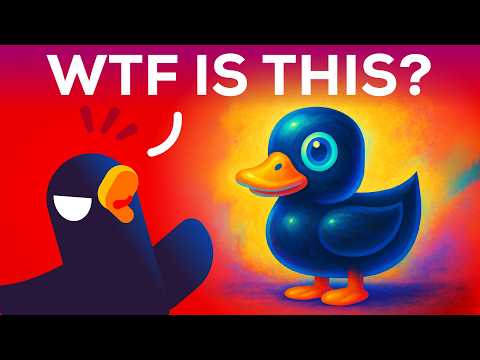
person