
Best Of
Re: Let Them
@Vastmind said:
‘ The phrase “Let them” was originally written by poet Cassie Phillips, whose work has not been credited in Robbins’ promotion of the theory. While Robbins has undoubtedly brought the idea to a larger audience, failing to acknowledge its original creator raises ethical concerns about intellectual property and fair recognition.Beyond this issue, there’s also an important conversation to be had about when “letting them” is helpful—and when it’s potentially harmful. While letting go is a powerful practice in many situations, it’s not a universal solution, especially in cases of abuse, neglect, or when boundaries need to be enforced.
Therapists often talk about locus of control, the idea that people fall somewhere on a spectrum between believing:
External control (“Everything happens to me.”)
Internal control (“I create my own outcomes.”)
Shifting toward an internal locus of control means understanding that you can’t always control others—but you can control how you respond. Instead of chasing validation, forcing relationships, or stressing over someone else’s actions, you shift your focus to what you can do.
When applied correctly, The Let Them Theory aligns with these healthy psychological shifts. But there are times when “letting them” is absolutely the wrong approach.‘
https://www.abraverspace.com/blog/the-problem-with-let-them-theory
That's good point about acknowledging her source, but Mel does also add Let Me, making a meaningful change in the idea. I think the larger point is resolved by including the second half of the phrase which is left out of the title and slips the mind. That of after Let Them, its Let Me. So in cases of abuse, etc. it isn't JUST Let Them, it also needs to be actions to take such as removing yourself, or speaking up, etc.
 person
Re: Let Them
‘ The phrase “Let them” was originally written by poet Cassie Phillips, whose work has not been credited in Robbins’ promotion of the theory. While Robbins has undoubtedly brought the idea to a larger audience, failing to acknowledge its original creator raises ethical concerns about intellectual property and fair recognition.
Beyond this issue, there’s also an important conversation to be had about when “letting them” is helpful—and when it’s potentially harmful. While letting go is a powerful practice in many situations, it’s not a universal solution, especially in cases of abuse, neglect, or when boundaries need to be enforced.
Therapists often talk about locus of control, the idea that people fall somewhere on a spectrum between believing:
External control (“Everything happens to me.”)
Internal control (“I create my own outcomes.”)
Shifting toward an internal locus of control means understanding that you can’t always control others—but you can control how you respond. Instead of chasing validation, forcing relationships, or stressing over someone else’s actions, you shift your focus to what you can do.
When applied correctly, The Let Them Theory aligns with these healthy psychological shifts. But there are times when “letting them” is absolutely the wrong approach.‘
https://www.abraverspace.com/blog/the-problem-with-let-them-theory
 Vastmind
Re: What do you think of modern movies?
@Jeroen said:
So I was thinking about a new Top 5, made of movies which are favourites of mine but which are actually uplifting, fun, insightful films
It’s actually interesting, I’m not the only one to have made this distinction, or something like it. The YouTube channel Like Stories of Old made a video essay about the 50 most life changing films, which I devoted a solid three hours to watching in it’s entirety, in the hope of picking up on a few films that I hadn’t seen yet which would move the needle.
While I don’t entirely agree with LSOO’s film list, the fact that he split up his list into ten chapters each with a theme I could get behind. The inclusion of the 10-hour documentary Shoah and then leaving out Schindler’s List, or not including Saving Private Ryan on the war films, or including Kingdom of Heaven but not Gladiator on goodness and virtue, I found a little strange.
Anyway here is the whole list…

 Jeroen
Re: Meditation and mental health
@Jeroen said:
@IdleChater said:
if you’re having mental health issues, take them to a doctor and not to a forum like this.With the proviso that a doctor will likely prescribe you pills, which will have side effects, etc.
There could easily be different treatment plans offered to or even accepted by the patient. Medication is one option of at least several that can be used with other methods/approaches. My experience has shown that different treatment plans work for different people. It’s important that a mental health care provider work with a patient to optimize results… that the patient is willing and comfortable with.
And yes, most things we ingest have side effects. That’s not a reason to avoid medications if/when they’re needed. It’s just called making an informed decision and weighing the risks with the need.
Yes, I do think everyone was trying to help. No harmful or ill intent in this community. I just prefer to go on the safer side and suggest a professional when it comes to mental health issues.
Thanks Ren for the section reference. I sure went and read it. I knew there was something on the books, just didn’t know where/what.
Vastmind
Re: Meditation and mental health
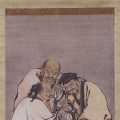
Jon Kabat-Zinn is a professor of medicine and teacher of Mindfulness Based Stress Reduction
 Jeffrey
Re: Meditation and mental health
I know a medical practitioner who practices what is supposed to be a hybrid of Cognitive Behavioural Therapy and mindfulness but in fact, what they do is actually far more therapy than mindfulness and I felt that they had no understanding of meditation. They also said that sometimes they "hate meditating."
 Tavs
Tavs
Re: Meditation and mental health
In terms of meditation and medical treatment from doctors, I'm trying to get a balance.
Tavs
Re: Meditation and mental health
@Tavs said:
RAIN exercise, I've not heard of that, what is it?
I was curious about that too. I found this: https://www.tarabrach.com/rain/
If nothing else, it seems like another flavor of guided meditation that one can add to their spice rack. 

Re: Meditation and mental health
In my experience I have found rest, beach walks, contemplation and Buddhist literature to be conducive to restoring mental health. I enjoyed sutra anthologies a lot in this space, as long as you keep in mind that not every goal the Buddha sets his monks needs to be a goal for you. Relaxation and rest should be the primary concern, letting the body and mind heal themselves.
Jeroen
Re: Meditation and mental health
@IdleChater said:
If you're having mental health issues, take them to a doctor and not a forum like this.
I think there's room for both things. Seemed to me that Tavs was reaching out with some curiosity about how his practice and mental health challenges were (or were not) related.