
Best Of
Re: I'm Thankful For...
Grateful for:
- Vegetarian lunch of nut and beetroot burgers with tomato sauce and cheesy pasta and a green salad
- Started watching a recommended gentle comedy 'Small Prophets' https://en.wikipedia.org/wiki/Small_Prophets
- Something to read up on https://pluralistic.net/
- All the great messages/insights on NewBuddhist

 lobster
Re: On the topic of becoming more conscious
While there are different methods of meditation, the term "Monkey Mind" arises.
That is the random thoughts that seem to be constantly flitting through our consciousness. Regardless of type or method, for some, slipping into the meditative state seems like stepping into another room or sliding into a pool - effortless.
For others, that pesky monkey "Just won't stop jumping andchattering away". Clearing one's mind does not necessarily shutting up the monkey. The more we try, the more the active monkey. Instead, we simply allow the monkey to be a monkey. But, we remove the focus on the monkey. Of course, methods vary. Foe example, some use various mudras (movements) in preperation, other sit and mentally brush away the mental cobwebs. The point is to change the focus from the monkey mind (the lesser mind) to the deeper mind, the greater mind. Once the monkey ceases to have our attention, it fades into the background. As this happens, we find, we have slipped into the pool, we have walked through the doorway into the next room.
I personally have my Mandala which acts as my "Object of veneration for the contemplation of the Mind" or, more simply, the mirror allowing me to focus my mind, enter, and deepen my meditative state. I use a mantra, which enables the purpose of my meditation. The monkey mind, though still frenetically jumping and chattering, fades into the background and ceases to affect my meditation.Thus I am able to draw out the Buddha Nature draw from the Ninth Consciousness, awaken the the Buddha, the Bodhisattva that is within myself.
Peace to all
 Lionduck
Re: On the topic of becoming more conscious
@Jeroen said:
@QuangKsanti do you think awareness or consciousness can increase? My experience is that my awareness of the physical world just is there immediately after waking, at full clarity, and that it doesn’t increase or decrease. My ability to apprehend it varies with how I focus my attention, which is the capacity to shift my focus from one sense to another.
I still catch myself chasing thoughts that take me away from the present moment and have to bring myself back. But as I think the Buddha said somewhere - if we catch ourself drifting away 10 000 times, we bring ourself back 10 000 times.
When I have my attention in my muscles, as in when I am doing something strenuous, I am less aware of my surroundings, and that is why staring or straining to hear something also decreases my awareness. It leads to a certain sharpening of one sense, but less of a situational awareness.
Yes, I can see how that could happen. It's like trying to catch a ball but focusing on how my arm is extending instead of just catching the ball. I don't think I switch it up like that unless I'm doing a body scan during sitting meditation practice.
Say, I am hitting a nail with a hammer. If I pay too much attention to either one, I take attention away from the other but if I just pay attention to the task at hand, I just hammer the nail. Paying attention to nothing in particular helps me pay attention to everything. Then I can act from mindfulness and not be taken away from what I am doing right now.
As a programmer I was quite aware of flow states in problem solving, but I’m not sure if I would call those moments of greater awareness, more of a different kind of awareness.
I’ve found something new in meditation, I no longer get so impatient or am so aware of time passing. It used to be so that ten minutes was a long time, that I was sharply aware of every instant passing, but I seem to have found ways to be more flexible there.
Well, that's good but that also comes from a steady practice.
Re: On the topic of becoming more conscious
@Jeroen said:
I came across a piece of writing which said something along the lines of, “if someone does not wish to meditate, he is likely reacting against some association with Eastern religion and instead you should encourage him by using other words, such as awareness, alertness, consciousness.”This made me think, if awareness and alertness are key components of meditation, what happens when you focus? Is that also a meditative experience? For example, when you watch a really good movie, or when you are in a life-threatening situation climbing a mountain, or in an accident? You will likely be familiar with one or more of these.
Or even catching a ball or painting a picture. Athletes and artists call it being in the zone. We aren't fantasizing about the future or lamenting the past, we are exactly what we are doing right now.
I recognized a different kind of thought while I was washing the dishes the other day. It was present moment thought. Washing dishes mind. It wasn't about what I will have or what I did have for dinner, it was simply "Chunk needs scrubbing". I had to stop what I was doing for a moment and appreciate the fleeting feeling that arose at the recognition. If, at that moment, someone had asked me "What is the Buddha?" I would have said "Chunk needs scrubbing".
We call it meditation practice for a reason, but what are we practicing for? Meditation practice could also be called life practice for those looking to live a meditative life. Whatever we are doing right now, if we find ourselves thinking about anything other than what we are doing right now, we just bring ourselves back to the present moment. Just like when we do sitting meditation and bring ourself back to the breath.
Knowing that my consciousness could change, I decided to do a little experiment. I sat facing a wall, and just tried to sharpen my consciousness. I sat looking at the wall, but quickly found myself devolving into staring in an effort to “push” consciousness along. That led to less awareness, not more. So I decided to focus on my hearing, but I found I became less conscious of sight if I did that, and again became less aware, and rather sleepy. After a little more experimentation I found that in avoiding staring and in avoiding the dulling of the senses some good things happen.
Are these kind of techniques — of manipulating awareness and alertness — actually useful?
I guess it would depend on the person. For myself, when I am not trying a new experiment like yours, I sit with my eyes open just enough that my eye lashes aren't triggering any muscle twitches around the eyes and look down at a 45° angle bout two feet in front of me. Then I focus on nothing in particular. When I focus on nothing in particular, I find I am more aware of everything.
Re: On the topic of becoming more conscious
On the topic of becoming more conscious
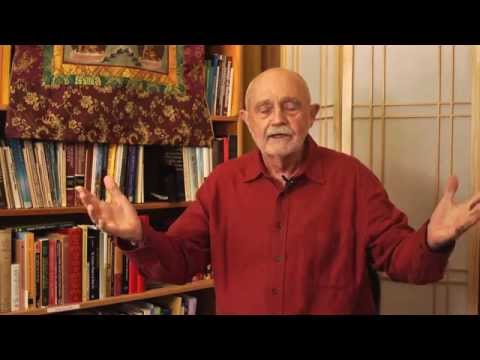
I'm reminded of this:
 Shoshin1
Re: Just for fun: the random, useless announcements thread!
Decide to have a break and go skinny dipping 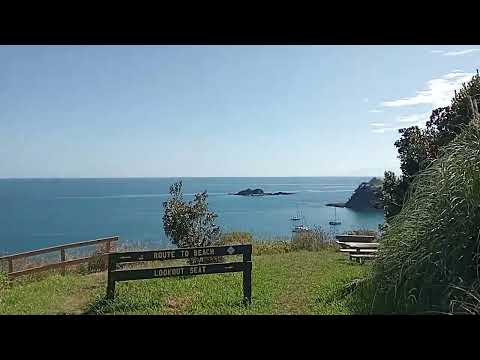
Shoshin1
Re: "Walk For Peace" monks in the US from Texas to Washing D.C.
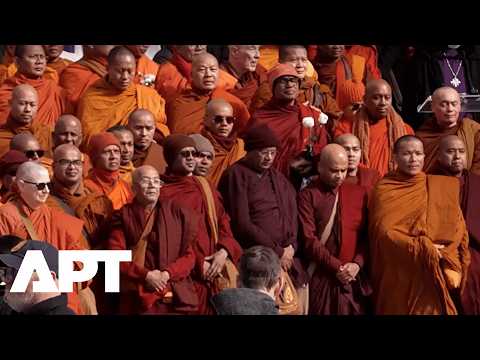
These Monks, in their walk have faced both hardship and praise. They have been welcomed and demonized. They have crossed many hundreds of miles.
Still, their message of hope and peace endures.
Lionduck
Re: "Walk For Peace" monks in the US from Texas to Washing D.C.
The Walk for Peace monks have reached Alexandria (Day 107). They are inviting everyone to join them—either in person or online—when they arrive in Washington, D.C., and to participate in a group meditation on ** Wednesday, February 11 (Day 109): @ 4:30–7:30 PM: Meditation Session with Venerable Bhikkhu Pannakara at George Washington University Smith Center** It will be live from
their facebook.
Below is their website and facebook:
https://dhammacetiya.com/
https://www.facebook.com/walkforpeaceusa
live map:
https://dhammacetiya.com/walk-for-peace/live-map/
https://www.google.com/maps/d/viewer?mid=1WDMDOholPxRUjCSK3mbX5NdMuQKWYtc&ll=38.80586221687361,-77.04694259624407&z=17
Extracted their facebook 3 days scheduli in D.C.
https://www.facebook.com/walkforpeaceusa/posts/pfbid0AeymqSKczj7wT88AMszd7fuKFqDKRZ7d1eSmHduWkeaKgoLqHAH6B9fNnWxvKm7yl
🙏 Join Us in Washington, D.C. and Maryland | Feb 10–12, 2026
We are deeply honored to invite everyone to join us in Washington, D.C. and Maryland as we approach the final destination of this 2,300-mile Walk for Peace. After more than 108 days and countless steps through many states, we will arrive in our nation's capital with hearts full of gratitude. We warmly welcome all who wish to be part of these final, sacred moments of our journey.
📅 Confirmed Schedule (Updated on February 8, 2026. All times listed are in EST):
Monday, February 9 (Day 107):
Night Rest Stop: Marymount University (Private Event)Tuesday, February 10 (Day 108):
- 7:00 AM: Walk begins
- 9:30–10:45 AM: Public Event at Bender Arena
- Lunch stop: National United Methodist Church (Invitees only)
- 1:00–2:30 PM: Interfaith Ceremony at Washington National Cathedral
- 2:30 PM: Unity Walk on Embassy Row
- Night Stop: George Washington University (Private Event)
- Wednesday, February 11 (Day 109):
- 9:30 AM: Walk to Peace Monument / Capitol Hill begins
- Lunch stop: St. Mark’s Capitol Hill Church (Invitees only)
- 1:30 PM: Walk to Lincoln Memorial begins
- 2:30–4:00 PM: Peace Gathering and Concluding Ceremony at Lincoln Memorial
- 4:30–7:30 PM: Meditation Session with Venerable Bhikkhu Pannakara at George Washington University Smith Center
- Thursday, February 12 (Day 110):
- 9:00 AM: Walk for Peace continues in Maryland (The walk starts from Navy-Marine Corps Memorial Stadium)
- 10:00–10:45 AM: Peace Gathering at the steps of the Maryland State Capitol
- 12:30 PM: Departure for Fort Worth, TX
📌 We also cordially invite all venerable monks and nuns from all traditions to join us on this path of peace. If you are able to join, please visit our website to sign up so we may prepare for your arrival.
🎥 We will have live streams on our Facebook page for most of the events listed above so that everyone can join us in spirit from anywhere.
🗺️We will also provide daily updates on our walking route. Please check the Live Map pinned at the top of our page to track the journey in near real-time. We still post nightly updates every day for the following day on our Facebook page and our website. We encourage you to stay tuned to both platforms to ensure you have the most current information. The website link is pinned at the top of our page or in the comment section below this post.
We look forward to welcoming you with open hearts. Your presence would be a blessing and a gift to us all.
May you and all beings be well, happy and at peace.
May we all be peaceful, may we all be happy, and may we all be well.
🙏🙏🙏Amituofo🙏🙏🙏
 NMADDP