
Best Of
Re: New Pope on her way...
@marcitko said:
My first reaction was shock: personally, I'd stay away from that pile of embers (an American Pope at the time of Trump). EDIT: But I must stay open-minded and not judge a man by his country of origin, even at this time.
I've had a bad feeling about this post ever since I posted it. It goes against my values and the truth as I perceive it - that people should not be judged by any social group they supposedly come from.
So, I wash my mouth with soap and take back this post.
At this time, I don't have a better formulation/view and I'm still concerned about Trump thinking he has "his" Pope.
 marcitko
Re: What documentary are you watching?
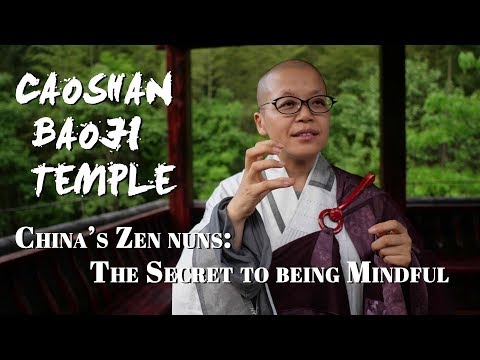
It makes me consider. What are the differences between Ch'an and Zen?
 Kotishka
Re: Martial Arts and Buddhism - Is it acceptable?
She likes it still but as she has a learning disability, the other kids "get" things easier than she does and she wants to wait for a couple of years and try again.
All that will matter is which of them is still practicing in a year, in 5 years, in 10 years.
My teacher has severe dyslexia and can barely read a word. He has cerebral palsy and used crutches when he started martial arts. Today he’s one of the beat martial artists in the world and holds black belts in multiple arts.
There are 5 ways to become a great martial artist, as he says. You have to do all of them. There are no shortcuts. First is patience. Second is perseverance. Third is to practice hard. Fourth is to practice exactly what you want to perform. Fifth, meditation.
“Learn fast” is conspicuously absent.
 Linc
Linc
Re: Kindness is Contagious
@Jeroen said:
What would it take to make a long-lasting difference to this man’s life?
Applying pressure on the government by whatever non-violent means possible, to invest more in lifting people out of poverty and supporting mental health services, is crucial. Real change often comes from persistent public pressure.
Yes, giving to worthy charities is important, but that alone is just a band-aid on a festering wound. Our taxes should be used to support the many, not to enrich a privileged few at the expense of those struggling to get by.
 Shoshin1
Re: Kindness is Contagious
These where helpful for understanding, thanks.
What comes to mind was represented in the show The Good Place, there was a philosopher character that could never make up his mind and that's what led him to end up there.
At the same time I think of the story of the person helping butterflies escape from their cocoons. He was acting out of a feeling of kindness but was causing harm through his lack of understanding.
I remember fairly clearly thinking, (though not exactly when, maybe in my late teens early 20s) saying the helpful, true thing was the kinder thing even if it caused discomfort in the moment. Since, I've tried learning how to do it more diplomatically. I guess I still think that is basically right, but maybe there is something to rethink?
Another example from my work life. A decade or more ago I realized people I would work for most of the time wouldn't tell me if they weren't completely happy with some of my work. I think the average home owner isn't as assertive, or disagreeable, in this sense as a boss who is more selected for and required to point out problems. So I wasn't aware of and able to correct mistakes I was making and improve my work. I started asking for and seeking out criticisms and flaws. I generally don't like it, though most people are able to be nice about it. And even when its unpleasant or causes me to have to redo something at my expense it leads me to be better at what I do. I feel like this is a kinder thing than being told pleasantries that make me feel good. Though I guess it depends, often its nice when people let go of small things. It probably comes down again to a middle way.
Joseph Goldstein talks about a practice of his where if he has a thought of generosity he does it no matter his subsequent thoughts. I think I remember him saying it almost always works out well. Though he is a serious Buddhist of 50 years so I'm sure his wisdom is pretty developed.
I’m reminded of a Buddhist friend who was visiting her daughter in Canada. One winter’s day, she saw a notice calling for volunteers at a local soup kitchen. The kitchen was understaffed and needed help, especially during the cold months when demand was high. She took down the contact details, planning to reach out once she got home.
But when she returned, she began to overthink. She asked herself why she wanted to help: Was it because I genuinely feel called to help others? Or is it just to appease my ego? To be able to say, “Hey everybody, look at me...I’m helping those in need. I’m such a kind and compassionate person." In the end, she went with the latter, and the soup kitchen missed out on much-needed help.
This is no doubt some of my own hang up. I have a few weeks of food and supplies in case of an emergency. Some of it perishable enough, like soup cans, to need to be refreshed. So I donate it yearly to a food shelf. The first year while doing it I had those "do gooder", "what a good boy am I", "I'm better than the hoi poloi" feelings and I had a very strong negative reaction to it, not sure if it fully qualifies as revulsion or disgust, but for what ever reason it really doesn't agree with me. I continue to do it and I've been able to manage my attitude to make it more of a "no big deal" sort of thing, but they still arise.
In the end, I think I do plenty of kind things in my life and the people around me generally think of me as a kind person. Maybe its all relative and I live amongst harder people in general?
 person
Re: Kindness is Contagious
@Jeroen said:
For me a key question in thinking about kindness is, is it beneficial? You see a homeless man and give him 10 dollars, is he going to buy a bottle of cheap vodka or a sandwich? Even if you go with him and buy him a sandwich, have you truly done anything to move the needle? What would it take to make a long-lasting difference to this man’s life?
I had a policy for a time to give when encountering someone begging. There aren't enough homeless where I live to become a burden. Since though I've wondered the same thing you mention and have instead started recording on my phone encounters and giving the same amount to charities that serve the homeless.
person
Re: Kindness is Contagious
@person said:
@lobster said:
Being kind is a wonderful direction @Shoshin1
It does not make us a doormat (though in a sense that is the ideal)
Rather it is the capacity to recognise that our contrary and opposing nature is harming no one but ourselves.And yes, I find picnic tours of the hell realms have no element of fear for the truly brave, empowered, human...
Remove the blindfold and imagine a list of people and wrathfuls that are the enemies of good as we perceive it. Now hug them horribles.
That is the essence of Tantra.
https://buddhaweekly.com/tantric-wrathful-deities-the-psychology-and-extraordinary-power-of-enlightened-beings-in-their-fearsome-form/For some reason the idea of wrathful forms brought to mind the saying the emperor has no clothes. I asked AI if it was kind and it said no, but it also said it may sometimes be more appropriate. Then I'm wondering what IS kindness exactly? Is it fundamentally sweet and gentle? Is it kinder to let a friend walk around with spinach in their teeth or kinder to tell them even though in the moment it causes them embarrassment? Can telling someone they have spinach in their teeth be done kindly or cruelly? Can not telling them be more about our comfort than our friend's? What kind of hierarchy of values exists? Kindness, honesty, integrity, beauty, patience, equality, discipline, justice, courage, creativity, balance.
I'd say kindness is a feeling of warmth, friendliness, and closeness towards the other from which kind actions/words then naturally emanate.
In your example, being kind or unkind is not directly related to commenting or not commenting on the spinach issue. It is the "field" from which the comment emanates that is kind or unkind, not the exact wording/statement.
The other will pretty much always know from which "field" the comment comes.
The same applies to humour. The same statement, depending on the "field" from which it comes, can be either deeply offensive or hilarious to all involved.
Just my POV.
marcitko
Re: What documentary are you watching?
@Shoshin1 said:
Arab states refusing to permanently absorb Palestinians isn’t proof of hypocrisy; it reflects a painful truth shared by many Palestinians themselves, that exile cannot become permanent, no matter how unbearable home has become.
I just compare the fate of the Palestinian diaspora with say the Turkish minority who came to live in the Netherlands. The Turkish people who came here learnt the language, integrated with the organs of state, started businesses, became part of society. That is what it means to integrate with a country. The Palestinians were denied that, meaning that a lot of the young people had nowhere to go. It has created a huge problem for the whole Middle East.
 Jeroen
Re: Kindness is Contagious
@lobster said:
Being kind is a wonderful direction @Shoshin1
It does not make us a doormat (though in a sense that is the ideal)
Rather it is the capacity to recognise that our contrary and opposing nature is harming no one but ourselves.And yes, I find picnic tours of the hell realms have no element of fear for the truly brave, empowered, human...
Remove the blindfold and imagine a list of people and wrathfuls that are the enemies of good as we perceive it. Now hug them horribles.
That is the essence of Tantra.
https://buddhaweekly.com/tantric-wrathful-deities-the-psychology-and-extraordinary-power-of-enlightened-beings-in-their-fearsome-form/
For some reason the idea of wrathful forms brought to mind the saying the emperor has no clothes. I asked AI if it was kind and it said no, but it also said it may sometimes be more appropriate. Then I'm wondering what IS kindness exactly? Is it fundamentally sweet and gentle? Is it kinder to let a friend walk around with spinach in their teeth or kinder to tell them even though in the moment it causes them embarrassment? Can telling someone they have spinach in their teeth be done kindly or cruelly? Can not telling them be more about our comfort than our friend's? What kind of hierarchy of values exists? Kindness, honesty, integrity, beauty, patience, equality, discipline, justice, courage, creativity, balance.
person