
Best Of
Re: Understanding "not two"
Zen maintains a stance of “not one” and “not two,” that is “a positionless position,” where “not two” means negating the dualistic stance that divides the whole into two parts, while “not one” means negating the nondualistic stance occurring when the Zen practitioner dwells in the whole as one, while suspending judgment in meditation. The free, bilateral movement between “not one” and “not two” characterizes Zen’s achievement of a personhood with a third perspective that cannot, however, be confined to either dualism or non-dualism, neither “not one” nor “not two”.
 Shoshin


Re: Just for fun: the random, useless announcements thread!
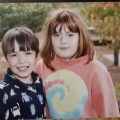
Managing to look grumpy while picnicing on a sunny day surrounded by Garry Oaks and a wild native population of 
Camas Lilies
 how
Re: Asubha Meditation
I have heard that on one occasion the Blessed One was staying near Vesali in the Great Wood, at the Gabled Hall. Now on that occasion the Blessed One, with many lines of reasoning, was giving the monks a talk on the unattractiveness [of the body], was speaking in praise of [the perception of] unattractiveness, was speaking in praise of the development of [the perception of] unattractiveness. Then the Blessed One addressed the monks: "Monks, I wish to go into seclusion for half a month. I am not to be approached by anyone at all except for the one who brings almsfood."
"As you say, lord," the monks responded to him. And no one approached the Blessed One except for the one who brought almsfood.
Then the monks — [thinking,] "The Blessed One, with many lines of reasoning, has given a talk on the unattractiveness [of the body], has spoken in praise of [the perception of] unattractiveness, has spoken in praise of the development of [the perception of] unattractiveness" — remained committed to the development of [the perception of] unattractiveness in many modes & manners. They — ashamed, repelled, & disgusted with this body — sought for an assassin. In one day, ten monks took the knife. In one day, twenty monks took the knife. In one day, thirty monks took the knife.
Vesali Sutta
https://www.accesstoinsight.org/tipitaka/sn/sn54/sn54.009.than.html
After this Amanda requested that the Buddha give the monks an alternative teaching. The Buddha agreed and offered guidance on the mindfulness of breathing.
I think what this sutta suggests is that “perception of the unattractiveness of the body” is a practice, a pragmatic method, not a statement that asserts definitively: the body is unattractive. This is worth bearing in mind in our current social environment of widespread eating disorders and other examples of poor relationships with the body.
It’s a balance, like all things. Asubha was taught as an antidote to greed and lust, as @Bunks has said, but not everybody requires this precise antidote, and like all practices it’s not to be clung to once its usefulness has been exhausted.
Re: New to Buddhism
Welcome. Nice to meet you, and thank you for choosing us.
I personally came to Buddhism after having been raised a Roman Catholic, and have been treading this path for over 20 years. no regrets, no looking back.
My 2 cents?
Never be afraid to ask questions.
We might have heard them 100 times. You've only thought of it once.
We will be happy to help, if we can, in any way we can.
However, you will receive a variety of responses, and not all of them will be of the same opinion, so in some cases, it will be largely up to you to go with what resonates.
Don't run. Walk.
Your only race is with yourself, and you'll be the only one beating yourself up. It's tempting to believe you have to know it all and know it now.
Trust me, it will never happen.
Forget choosing a Tradition, for now.
Read everything and anything you can. Although I lean mostly towards Theravada, I embrace certain elements of Mahayana. And that's ok. (You may not even know what they are. If you don't - Don't worry. You'll pick it up.)
All knowledge is good knowledge, even if you end up leaving it aside.
I am bound to have forgotten something.
I'll add more if I think of anything....
 federica

Re: Covid Cabin
@Kerome said:
I am feeling for our American friends who are still in the middle of things.
Thanks, but I think the numbers are that if you take out the New York City area the rest of the US is about on par with much of the rest of the world.
I'm also kind of feeling in general that this isn't something we can altogether avoid. Flatten the curve didn't mean prevent people from catching this forever, it meant slowing the spread so hospitals weren't overloaded and to buy time to build capacity, develop treatments, etc. Just as many people catch the virus with a flattened curve, just over a longer period of time and hopefully with better outcomes.
Unless we keep the world shut down for two years while governments print money to keep people afloat until a vaccine arrives I kind of think we're stuck with herd immunity to get past this.
It seems like the risk for most healthy adults isn't near as bad as initially thought and is about on par with the flu. That doesn't mean it IS the flu though, only 3-11% of people get the flu each year whereas ~70% of people need to have gotten it for herd immunity. Do the math and that's a lot of total people, 5 billion or so worldwide, at a 1% fatality is like 50 million dead in a few years. Most will be elderly but some percentage will be ordinary, healthy individuals.
The total numbers sound catastrophic, but historically speaking isn't out of the ordinary. Most people probably won't have anyone really close to them die and will probably only personally know 1 or 2.
I'm not saying money, money, money matters more than people's lives, I'm just saying that I don't think the pandemic can be avoided without devastating financial costs. Economic depressions also cost lives, economies provide more than nice cars and stacks of cash, they provide food, medicine and purpose for many.
I don't know that I'm right, it just seems to me like the general feeling is that we can avoid the tragedy of this and I don't think we really can. In that light I think facing the reality of the situation will allow for a better outcome than not.
“In light of the high recovery rate of C19 and its predictable dangers to vulnerable populations, it becomes difficult to sustain the rhetoric that elimination is the greater good that warrants diverting a large share of society’s resources… The strictest measures, if ongoing, will only protect the vulnerable now.
But given that most societies have limited resources, this prioritization will impose costs on the lives and livelihoods of those who will be vulnerable later for other reasons. These may include patients who do not receive treatments and diagnoses on time because they are avoiding health care facilities, students whose education has been interrupted, young people who struggle to find jobs in a crippled economy, workers who lost their income, and the families supported by them. Numerous mental illnesses will arise from the economic strain, increased surveillance, shaming and mistrust, the threat of re-occurring lockdowns, and the restrictions against our most natural of human impulses to engage with others and socialize.
Moreover, halting all varieties of progress made when individuals come together (technological innovations, medical discoveries for health conditions not related to C19, environmental solutions) will likely delay critical advancements. These, too, lead to life years lost, not to mention quality life years lost for the vulnerable and non-vulnerable alike.”www.heterodoxacademy.org/viewpoint-diversity-elimination-unity
 person

Re: Is the Buddha welcome in the Sangha?
Well they all become something in the end, probably dust... but I think you are right that even from fools we can learn something, which was partly why I brought up this discussion. There is a lot of crazy wisdom around, and it is our attitude that determines whether we learn something from a given fool, or whether we get dragged along in his foolishness.
Our innate wisdom can be sparked by a bit of foolishness, or even by the behaviour of the natural world. Any range of things can be our teacher, as long as we know enough to take the clues given to us and turn them into real wisdom.
 Jeroen