
Best Of
Re: Is it fun being a Buddhist?
Is it fun being a Buddhist
I can't speak for all Buddhists, but can say that the more serious my practice became, the more life experiences seemed to lighten up...what was once important/serious gradually became less important when looked at more closely.... ie when sorting out fact from fiction...in fact the thoughts that pop into my head are ridiculously funny at times...
I tend to laugh at my self a lot...especially when those ridiculous thoughts pop in to say hello...
I guess I've changed the way I look at things and the things I look at have changed 
...and having a happy disposition helps... but is not essential ...after awhile happiness(AKA a sense of well being) grows on you as the mind gradually sheds its accumulated junk )
And as my friend's Dharma teacher once told her group...
"Beware of unhappy Buddhists...they are not really practicing...just being intellectual"

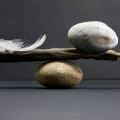 Shoshin
Re: Collecting things
When I worked as a Feng Shui Consultant, I mentioned the hoarding and keeping of things that so many people do, out of obligation, nostalgia, respect and the associated memories...
When we have a modern Habitat throw rug and a minimalist clean-cut sofa from Ikea, it's difficult to accommodate the Chippendale dark wood sideboard our Great Aunt Hilda left us.
Gosh we hate it. It's hideous. It's huge, dark, imposing and utterly out of place in our living room.
Keeping it out of a reason or sense of obligation, is not a good enough reason to keep it.
We should surround ourselves with things we love, admire, enjoy, things which give us immense pleasure each time they catch our eye, that please us and are attractive to us.
William Morris once said:
"Have NOTHING in your home which you do not know to be useful, or believe to be beautiful."
Honestly? no matter its provenance, history or reason for existing: If you don't like or enjoy it, and can't use it or stand it - get rid of it. Appropriately, correctly, usefully.
Pass it on to someone, somewhere, who will appreciate and love it. Unconditionally.
One man's junk is another man's precious treasure.
If ever I give someone a gift, I enclose a note:-
"I hope you like your present, that it brings you pleasure and makes you smile.
But: when it has outworn its usefulness, or you don't like it, want it, or feel the need to keep it, then let it go. Give it away. Really, feel free. Either to charity, or to someone who expresses a liking for it.
I really don't mind and will never be offended, because nothing lasts for ever, and no matter what, the sentiment behind it exists and will still exist, long after this object is gone."
I sometimes think some folk appreciate the note more than the gift!
And that's ok!
 federica
Re: Buddhism and Politics
How can we act and engage with political action/thought if we are constantly training ourselves to silence the mind, to come to a stage of "non-thought"?
The same way Thich Nhat Hanh has done. "Silence the mind" does not mean no thoughts or no actions. It means appropriate thoughts and appropriate actions.

Flow
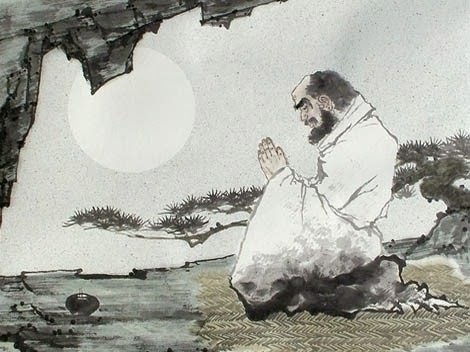
Flow or mindfulness?
Almost any activity can be done mindfully, too – no yoga or meditation necessary.
and ...
“We need to engage in activities that are meaningful to us, that we find challenging and for which we feel that we have the skills required to come out as winners.”
http://www.bbc.com/capital/story/20190204-how-to-find-your-flow-state-to-be-peak-creative
Flow is a samadhi, trance state, mindfulness a practice. Neither is impossible or that rare in Buddhism which goes beyond such temporary inducements.
Mindful flow or attentive awareness, in other words an unfolding stillness, equates more with Bodhi or awake mind.
 lobster
Re: Avoiding the near-enemy nihilism
I think there might be a mistaken idea that thinking about the 4 noble truths for a few weeks or years will end a medical condition.
Would reflecting on the 4 noble truths end cancer or diabetes or Alzheimers? Surely working with 4nt is not a bad idea and can be a boon to anyone but it doesn't end medical conditions to my knowledge aside from those times when a miracle happens right?
I think Pema Chodron talks about a friend of hers in her book When Things Fall Apart (or one of her books/audio as I can't remember) who has depression and how he copes with it including how the dharma had added to his coping.
 Jeffrey
A fear of cruelty
After a pleasant afternoon visit with a friend drinking coffee I was on my way home. I was surrounded by concrete and people speaking unfamiliar Eastern European languages on the train platform, and I was gripped by a dark mood. I was thinking about crimes and unhappy families, and it made me quite unhappy.
So I turned to mindfulness to try and find out what was going on inside, and what I got back was that I was carrying too much of the fear of cruelty, and that my imagination was being gripped by this, and I was projecting a perceived darkness on the dreary surroundings. So I spent the train journey in introspection, attempting to mindfully examine the fear of cruelty. The projecting vanished after a short time.
The thing is, I have a fairly sunny personality, but I’m occasionally prone to seeing the world as quite a dark place. I think it is an illusion perhaps brought on by reading a few too many of the wrong kind of books when I was younger. My introspection did carry some hints of this. These days I notice my personal sensitivity a lot more, I’m much more aware of my inside.
Before I started looking seriously into Buddhism I would never have been aware of these things, but I find I’m quite a sensitive person after all, and I carry impressions from my past which come out in dreams and these kind of moods. Perhaps practicing mindfulness increases one’s inner sensitivity.
Have you found that mindfulness has made you more sensitive?
 Jeroen
Re: Avoiding the near-enemy nihilism
@adamcrossley said:
There have been a few discussions on here recently about the risk of becoming nihilistic through Buddhist philosophy. We’ve mostly agreed that nihilism was far from the message of the Buddha.My problem is, when I get depressed, the nihilistic approach is all I can see. I go to the wisdom that usually inspires and encourages me when I’m feeling well, and it leaves me feeling empty, not in the good, interdependent way. In the hollow, everything-is-pointless way.
Life is suffering —> why continue?
So my question is how to avoid or correct this. Anyone have the same issue?
If it helps to know, I originally came to Buddhism because of depression a couple of years ago.
I don't know if you can relate; I don't suffer from clinical depression, but like probably every single human being at one time or another, I hit the doldrums and feel really low.
Well, really, correction: I used to.
I've managed, through a repeated behaviour, to minimise my hollow 'What's-the-point' moments to the level of virtual extinction (something naturalists everywhere will not miss!)
What I managed to do over time, was to really, really bring myself into that moment, and connect as closely as I could with exactly how I felt. I LET myself feel it, to my core. Then, I'd recognise it. I'd name it. I'd address it, and accept it, as being part of that moment. an important part, an instructive part, a part that existed, was real and deeply-felt.
Then, I'd tell it -
"You'll pass. You always do.
Look, it's today. Today you're here, but tomorrow, you won't be. It's ok, I'm fine, really. You may feel real, but you have a way of playing with me, messing with my mind, making me think you're important. Significant. But you're not.
I see you; I know you're here, but powerful as you think you are, much as you give me thoughts I don't really want, much as you inhabit my being and make me wonder what the point is, I actually know you're weak.
You're an emotional bully. You feed off weakness, but I'm not weak, and you can go, and you're not going to ruin things for me.
I know I feel down right now, but at least I know, that I know. I can see me. I get how I feel. But I know, this too shall pass. I recognise this feeling, and I know it doesn't own me.
So carry on; stay, abide, linger. But I know you'll go soon. And the next time you come, you'll stay for less time. And the time after that, and the time after that until, guess what? You won't matter at all. I'll see you coming, and I'll cope. Because I'm not weak.
I have survived every single bad moment I've ever had. I have 100% survived it. So you can be as low as you like. I'm a survivor. A strong one, at that."

federica