
Best Of
Re: Just for fun: the random, useless announcements thread!
Earlier today I called into the local supermarket and on my way back to the car I stopped to chat with Indian N..........., he's a local character tattered clothes and wears an old rimmed hat often with a feather in it. Sadly he's had an horrendous childhood, survivor of abuse as a child, and in he's adult life now a recovering alcoholic, ... his name Indian N....... came about because as a child he was told that his father was an American Indian (First Nation) who was station in NZ during the second world war...
I often pick him up when he's waiting at the bus stop or when I meet him on the street I stop to chat with him to see how he's getting on and we have had some interesting conversations, lots on spirituality...
Anyhow today he told me of a dream he had last night, in the dream he saw a heart with a figure eight symbol inside it, and to him it represents oneness and he went on to say how it was at times difficult dealing with people whose ego rules their day,he said they are not aware of their ego at play and that he now feels compassion towards them especially when they behave in a negative fashion towards him...He's an amazing colourful character, a deep thinker and very spiritual...
I just thought I'd share one of today's experiences...
 Shoshin
Re: Trust Me I'm Buddha AKA "Taking Refuge in the Three Jewels"
Having recently reupped the Refuges and Precepts in a public ceremony at a Theravadan temple with an aged abbot I can report that the entirely voluntary ceremony, offered at the end of a retreat on the Four Noble Truths, felt more like a public support group in taking daily Dhamma awareness and practice out of the temple and back to our ‘normal’ lives. And not in any way an exclusionary initiation or clubbish rite of necessay passage. Not ‘necessary’ but helpful in the way of personal commitment, shared in a communal public fashion in the presence of supportive teachers and other Dhamma wayfarers.
Plus, everyone got cool Buddha medal necklaces to bang against the chest out on the stressful highways of daily living. (The abbot joked about retreatants who talk about the challenges of leaving the place to return to their ‘normal’ lives. What is so normal about crazed contemporary living?)
 Dhammika
Depression...When The Black Dog Rears Its Head...
I had started on this thread earlier, then left it...But @Zero 's post in another thread
I do feel for him as much of what he has said sounds like wilful self-sabotage and in many of his posts he expresses himself in such an insular way as to suggest, cumulatively, that he's perhaps depressed.
...prompted me to start it...
In the past when a person was exhibiting signs of "depression " they were often told (with best intentions) to "snap out of it...buck their ideas up" which did nothing to help the person that was suffering, only making them even more depressed,increasing the feeling of insecurity & uselessness...
Nowadays most of us have a better understanding when it comes to dealing with depressed people, we have developed more patience & compassion when it comes to understanding their condition ...
But this is not to say that we always pick up on the signs straight away, (we may have personal issues that we are also working on ) at time we might confuse the person's depression with the run of the mill blues AKA mood swings...
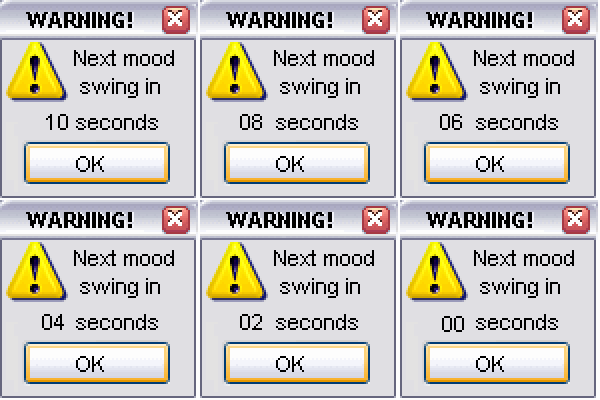
....and expressing our own frustration with the person (whom we might feel is just being inconsiderate & moody) can contribute to their ongoing suffering...hence why it's important to keep our own emotions in check and not let our frustration get the better of us...easier said then done ...hence why we practice the Dharma...
Depression As A Systemic Disease
Most people with depression don't seek help or receive it. They may feel it is a moral failing on their part that they feel the way they do. In this way, referring to depression as a systemic disease may help to remove some stigma from this complex disorder.
How does a meditator deal with episodes of major depression?
I feel it is crucial to be open to anti-depression medication. Although times have changed and meditators these days do seem more open to taking medication when needed, it can still be a sticking point for some who think they should be able to free themselves without medication or think of themselves as “less than” for having to medicate, believing they should be able to rely solely on Buddhist practice.
This is not a wise and openhearted attitude. Antidepressants can be an enormously useful sacred medicine meant to balance that which is unbalanced. Taking them can be compassionate action, enabling someone who is incapacitated from this kind of suffering to meditate in a fruitful way. It is true that the issue of medication is complex and controversial, and that while antidepressants seemed some years ago to be a miracle of sorts, this is not always so. But for many, they are clearly helpful.
Shoshin
Re: Trust Me I'm Buddha AKA "Taking Refuge in the Three Jewels"
I feel simplicity would be more beneficial, so I’m currently pursuing both until clarity descends as to which branch I’ll hang on to
Some people find sticking to a certain school/tradition/sect more beneficial however...
keeping the Dharma simple could just be a matter of following the Four Noble Truths & Eight Fold Path and not any particular school/tradition/sect .(The 4NTs & 8FP are the foundations of the Buddha Dharma and different schools/traditions/sects of Buddhism may have a slightly different take on their application)..If you find you're becoming stuck when trying to put into practice a certain teachings, them cherry pick from the different schools/traditions/sect, one may explain how it's done better than another....
Thus have I heard Zen is for poets, Tibetan is for artists, and Vipassana (Theravada) is for psychologists.
Some days we might dabble in poetry,some days art and some days psychology.... or we might dabble in all three everyday.... whatever floats one's MIND raft and keeps it afloat...
We take refuge in the Buddha Dharma & Sangha...which in effect means taking refuge in The Four Noble Truths & Eight Fold Path....
Shoshin
Re: Trust Me I'm Buddha AKA "Taking Refuge in the Three Jewels"
It grounds me. I start my day by Taking Refuge, and also reciting the first 5 Precepts.
I end my day by Taking Refuge and dedicating everything that has happened (subjective perception coming up, here) - whether good, bad, wholesome, unwholesome, skilful, unskilful - to an acceptance or mental appraisal, discernment and understanding.
Even though Taking Refuge is a ritual for me, it doesn't make it any less serious or significant.
Every time I do it, the feeling is slightly different, the process meaningful, the intention renewed.
 federica
Re: The desire for power
I don't play video games so I don't really "get" the example @Kerome gave in the OP. But I've had to let go of having to control every facet of my life. The really big turning point for that was when I was diagnosed (incorrectly and then correctly 18 months later) with my illness and had to focus on dying sooner rather than later.
I've found that I had to instigate a "kill switch" command in my thinking to stop me getting so worked up about things and making myself sick. I don't want to sound flippant or dismissive, but I actually think it is easier than what we believe it to be. IMO, sometimes we make things a lot more difficult by over-thinking them.
_ /\ _
 Kundo
Re: The desire for power
I agree with you, @lobster, but I am finding it tricky making the mind certain.
It puts me in mind of the Tibetan nine-point meditation on death, which is a great way of focussing the mind on the need to practice spiritually now...
The first Root: Death is certain.
1. No being has ever escaped death [unless one becomes enlightened].
2. I am constantly becoming closer to death.
3. There is not much time to act.The second Root: The time of death is uncertain.
4. The lifespan of human beings is not fixed.
5. More conditions endanger life than support it.
6. This body is extremely fragile.The third Root: Nothing can help at the time of death, except spiritual practice.
7. Wealth can’t help.
8. Friends and relatives can’t help.
9. Your body can’t help.
 Jeroen
Re: Zen.......self-taught or via a Teacher ?
@alex -- I do hope you will note the responses here that seek to avoid this particular mistake or that one in Zen practice. Looking back over a number of years, I find that the mistakes I made were some of the best teachers I ever had... and that no matter how hard anyone may try to escape making mistakes, they will make them anyway.
"Zen practice" is, in one sense, short-hand for "you're screwed ... now get to work."
All best wishes.
 genkaku
Re: Zen.......self-taught or via a Teacher ?
If you read books about about zen the people who wrote them IS your teacher. Even if you only do zazen with no books, the person who taught you zazen IS or was your teacher. If you talk about zen with a guy online, then in a way that guy IS your teacher. You cannot be completely self taught. You probably have many teachers.
 ZenSam