
Best Of
Re: Internet Addiction
In a way every game created makes more dukkha, they all give you goals and imaginary problems to solve. And then they make you feel good by allowing you to resolve the imaginary dukkha, while in fact the real world’s dukkha remains unaffected, you just removed your time and attention from it.
Hmm...
 Jeroen
The weight of words
This is an observation I've been making and a bit of a rant.
Words change meaning over time, they don't have a fixed definition, and that is fine and good with me. Definitions of words often have a certain moral weight behind them, pedophile, murder, generosity. When we think of words like these they have an emotional force behind them.
What I've been noticing though is that often people use words with slightly different meanings as if they have the same moral weight. I expect if I went back and looked this wouldn't be a new phenomena and occurs all across the political spectrum. A word that I've noticed fall into this category is violence. Violence has implied intention in it's definition. I've noticed violence used as synonymous with harm lately, today I heard someone refer to the harm caused by Flint, Michigan's lead in the water supply as a kind of violence.
Words change meaning, what bothers me about the way this word, and I'm sure others, are being used is that the meaning has subtly shifted to take intention out of them while simultaneously being wielded as if they held the same moral weight.
As a Buddhist, I've come to believe that intention is of primary importance in determining the morality of a thought or action. But in this word, as well as in other places, the import of intention in actions seems to be disappearing.
I don't think its just an issue because of misapplied morality, but it also weakens the impact of the words themselves. If speech is now violence, then it becomes justified to use actual violence against someone who's words hurt you since punching someone and verbal abuse are equivalent.
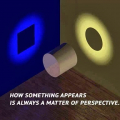 person
Re: Internet Addiction
@lobster said:
I love the idea of excuses. Here are some favs:
- I have to look after my home, spouse, chicken collection
You had better not neglect those chickens, lobster. I've got the Humane Society on speed-dial.

Re: Buddhist atheism
A lot of very good discussion here. And a number of very different ideas about what the OP asked at the beginning.
I come from a situation where in 1986 I was introduced to Thai Theravada Buddhism, after having lived as a Methodist and then a Catholic. From then until 2017, I tried to meld the principles of Buddhism and Christianity. In many ways it didn't work, although one can find wisdom in both belief systems...if you cherry pick...which I endorse, because cherry picking requires actual thought; blind acceptance does not. Now I consider myself an atheistic Buddhist. However, I was taught by monks that Buddhism does not verify or deny the existence of god...that since it is not something we can verify as existing or not existing, we shouldn't worry about it. However, clearly many of us do consider it (and to anyone who says it's an imponderable...thinking that anything is an imponderable is the antithesis of seeking answers). In my view there are actually several possibilities. There is no god. There is a god but he is nothing like the god of the bible. There is a deistic god. There are multiple gods (I see an awfully lot of Thai Buddhists worshiping various Hindu gods). And some would say that there is no evidence for a god. Okay. But then again I find no evidence for 8 levels of Buddhist hell (นรก), 6 levels of Buddhist heaven (สวรรค์), or 16 levels of something that is "greater" than heaven (พรหมโลก). I see no evidence of devas. But there is an important difference between saying a being does not exist and I do not see evidence of a being. And I think we should remember that Buddhism does not require us to believe everything presented to us within Buddhism. In fact, one of the most important things we should do is differentiate between true Buddhist teachings and culture (often as represented by animism in Thailand).
But what is most important, at least to me, is our willingness to see wisdom wherever we find it. To me there is an abundance of wisdom in the Tipitaka. There is also wisdom in the New Testament. And before you jump on me for saying that...can we think Thich Nhat Hanh. Heck...one of these days Donald Trump may actually say something wise...will we be open to the possibility, slim as it might be?
But I think one thing that we sometimes lose sight of is that the main difference between chrsitianity and Buddhism is what each tries to impart. Christianity wants people to believe that all answers to all questions come, either directly or indirectly, from the bible. While Buddhism defines the means by which we can alleviate suffering...our own suffering and the suffering of others. Those are two very different purposes.
The question that clarified things for me when I was trying to have it both ways, was as follows: If tomorrow we somehow learned that there was no god and that the story of Jesus was total fakery, would a christian still have a belief system. I think the answer is no. Heck, christianity would crumble if tomorrow the world learned that Jesus was a Black African. On the other hand, if we learned tomorrow that there had never been a Siddhartha, would the Three Universal Truths, The Four Noble Truths, and the Noble Eightfold Path still be operable? I think the answer is yes.
 vinlyn
Splatter-mind
When I was young, an elder in my tribe taught me how to stalk. One of the less obvious skills was a technique that he translated as 'splatter-vision'. Let's say we were exiting the forest, into a meadow. What I was instructed to do is to look at the horizon without focusing on anything in particular, just taking in all 180 degrees and wait for movement. When movement is detected, then it became time to focus on the movement and see if it was what I was stalking. If it is, proceed. If it is not, then return to splatter vision and wait for the next movement.
I found myself wondering last night if this technique is useful for mind. “Dinner was good tonight. I hope I see Mariah today. I have to get that project done for work by Friday. Watch out, there's a truck coming...” and then the focus: “WATCH OUT, THERE'S A TRUCK COMING.”
Thoughts?
 yagr
Re: Interesting turn of events...
@buddhakai , cease your conflict. What you feel, see, perceive and follow, is what you feel, see, perceive and follow. Be of gladdened heart that you are covering all bases, so to speak.
Because Buddhism does not subscribe to a Creator God, or a Deity as a central tenet, you are quite free to be Christian and Buddhist, because Buddhism embraces whatever is in your heart and mind.
My personal opinion or view - and of course, if you disagree, it's perfectly all right that you do, I'm not trying to convince you! - is that you can wholeheartedly embrace Christianity and incorporate Buddhism completely, but you cannot wholeheartedly embrace Buddhism and incorporate Christianity completely.
Aty times, you may feel stirrings of conflict, or slight unease.
This is perfectly natural and acceptable, but always do what FEELS right.
Don't go against your instincts, or do something because you feel you ought to, or that it's expected of you, or to maintain face. Don't 'perform'.
Be true to yourself, because by being true to yourself, you cannot lie to others.
And please be assured, you are always, and always shall be, most welcome here, to share your views and experiences.
 federica
Re: Enlightenment in one lifetime
Enlightenment in one lifetime
So... What's the truth?
I'm reminded of this...
"If you don't feel that you're Enlightened...You can always try to be!"
~A Hindu Sage~ (whose name I forgot  )
and this...
"Practice is not separate from Enlightenment-Enlightenment and Practice are one ! "
~Dogen~
In other words ...Be kind...Be mindful...Be content with what is... 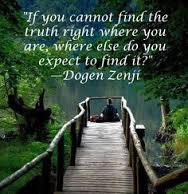
 Shoshin
Re: Buddhist atheism
I make a distinction between small a atheist and capital A Atheist. An atheist simply lacks a belief in a god or gods, an Atheist believes there are no gods, makes a positive metaphysical claim.
I consider myself a small a atheist, in that the notion of gods plays no role in my worldview. When it comes to some of the more mystical beliefs in Buddhism such as rebirth or the magical sort of karma, I think I'd define myself as more agnostic. I'm open to the idea and sort of hedge my bets making a kind of Buddhist Pascal's Wager, but it isn't an active or important part of my motivation or thinking about Buddhist ideas.
person