
Best Of
Re: A particularly good Alan Watts talk…
“it has been well said that Buddhism is Hinduism stripped for export”
Yes Buddhism has its foundations in Hinduism.
Here's my thoughts in a nut/seed shell...
Buddhism can be seen as a tree that grew from the seed of Hinduism,
(The Buddha, born into a Hindu family, was initially exposed to the Hindu worldview, including the belief in a creator god, and the caste system, which was justified by the doctrine of karma and rebirth)
This tree was cultivated and shaped by the Buddha’s insights. (when he encountered the inherent existence of suffering -old age, sickness, and death, this led him to seek a way to overcome suffering.) The Buddha's nurturing and selective pruning ( the removal of a creator god and the permanently abiding self/soul) led to a tradition that shares some common roots with Hinduism but has its own unique characteristics and teachings.
Thanks to the Buddha's insightful pruning techniques, the branches of this tree reach far and wide, touching many parts of the world.
When it comes to a way of life, this way of life often consists of habitual patterns. These patterns, in some cases, are adopted through spiritual practice (such as Dharma practice) by followers of a spiritual path.
For example, I (and no doubt many others on the Buddhist Path) have started to adopt these beneficial habit patterns through mind taming and training. Practices like mind exploration, aka meditation, utilise the Dharma tools provided by the Buddha's insights to cultivate wisdom and compassion. The more one engages in these practices, the more one realises the beneficial elements found on this Path.
The wings of Wisdom & Compassion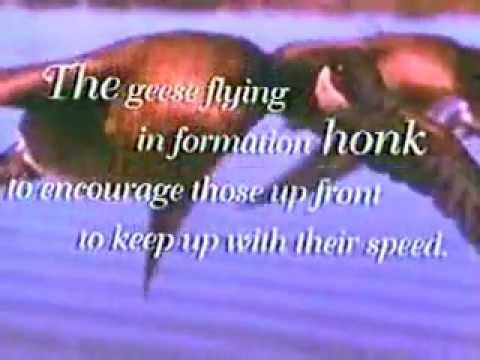
 Shoshin1
Re: Life death and rebirth
@sciencebuff said:
For the longest time I had the interpretation of reality that life was half pleasure/life and half pain/death and that rebirth was at best neutral or the background in which this happened. It really disturbed me to live in a world of half pain. Is this really the nature of things or is rebirth good too and things are at least 2/3 good and 1/3 bad?
If you care about your happiness and actively work to gain happiness and shed unhappiness, you can create a life that during your productive adult years is at least 80% happy. During the later years of your life it depends a lot on how your health develops, a long-term illness can present major challenges.
 Jeroen
Re: A particularly good Alan Watts talk…
Erudite. adj.
having or showing great knowledge or learning.
"Ken could turn any conversation into an erudite discussion"
Vocab word of the day! I never heard it before.
 Vastmind
Re: Life death and rebirth
If you're in the context of rebirth, karma is in the mix. In that sense the ratio of pleasure/pain is related to your karma.
More than a metaphysical worldview Buddhism offers practices to swing that ratio in your favor over time and ultimately free yourself fully from the game.
 person
latest interviews with Noam Chomsky
I found this quite interesting....
Noam Chomsky's Latest Interview on American Empire with Matt Kennard ( Declassified UK )
Chomsky frequently argues that the United States behaves as an imperial power, exerting its influence through economic, military, and political means. He often points out how the U.S. seeks to maintain its global dominance, which he terms as "American Empire," by intervening in other countries' affairs, supporting coups, or destabilizing governments that oppose U.S. interests.
Chomsky has consistently criticized U.S. military interventions around the world, from the Vietnam War to the wars in Iraq and Afghanistan. He argues that these actions are often justified under the guise of promoting democracy or fighting terrorism, but in reality, they are aimed at protecting U.S. economic interests and geopolitical influence.
Chomsky frequently points out the role of economic policies and institutions like the International Monetary Fund (IMF) and the World Bank in maintaining U.S. dominance. He argues that these entities often impose neoliberal economic policies on developing nations, which benefit multinational corporations and the wealthy while undermining local economies and sovereignty.
Another key aspect of Chomsky's critique is the role of the media in supporting U.S. imperial ambitions. He often discusses how mainstream media outlets propagate narratives that align with the interests of political and economic elites, thereby shaping public perception and minimizing dissent against U.S. foreign policy.
Chomsky frequently highlights the contradiction between the U.S.'s stated commitment to democracy and human rights and its support for authoritarian regimes and human rights abuses when it serves its interests. He argues that the U.S. often backs dictatorships or oppressive governments if they align with American geopolitical and economic goals.
Chomsky also raises concerns about how the U.S. prioritizes corporate interests over environmental protection, contributing to global climate change. He often links environmental degradation to broader themes of imperialism and capitalism.
Chomsky frequently highlights the human rights implications of U.S. support for Israel. He argues that U.S.-supplied military aid is often used in actions that violate the rights of Palestinians, such as military incursions, collective punishment, and the suppression of protests. He calls for the U.S. to adopt a more balanced approach that respects the rights and dignity of both Israelis and Palestinians.
He has an amazing mind, a walking, talking encyclopedia on world politics... I never tire listening to his wise, insightful words...
Shoshin1
A particularly good Alan Watts talk…
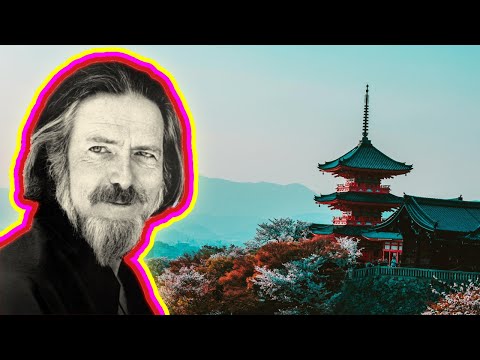
Sometimes I listen to Alan Watts or Ram Dass talks, I just find them insightful and amazingly erudite. So I just wanted to recommend this one, where Alan begins, “it has been well said that Buddhism is Hinduism stripped for export” and goes on to explain that Hinduism is a way of life while Buddhism is more a religion.
Jeroen
Re: A particularly good Alan Watts talk…
I should listen to his points on the matter. Without having listened though and responding to your summary.
First question, is export to where? Buddhism is also native to India. I suppose he means the versions of Buddhism that have migrated out, rather than Buddhism proper.
Second, I'd say that way of life vs religion might have more to do with the way it is used than something inherent in the beliefs? Hinduism in practice had more to do with the society and the people in it, while Buddhism stayed fairly monastic in practice.
I guess I'm saying I think its more about context than essence.
person
Re: What music are you listening to?

Come you masters of war
You that build the big guns
You that build the death planes
You that build all the bombs
You that hide behind walls
You that hide behind desks
I just want you to know
I can see through your masks
You that never done nothin'
But build to destroy
You play with my world
Like it's your little toy
You put a gun in my hand
And you hide from my eyes
And you turn and run farther
When the fast bullets fly
Like Judas of old
You lie and deceive
A world war can be won
You want me to believe
But I see through your eyes
And I see through your brain
Like I see through the water
That runs down my drain
You fasten all the triggers
For the others to fire
Then you sit back and watch
When the death count gets higher
You hide in your mansion
While the young people's blood
Flows out of their bodies
And is buried in the mud
You've thrown the worst fear
That can ever be hurled
Fear to bring children
Into the world
For threatening my baby
Unborn and unnamed
You ain't worth the blood
That runs in your veins
How much do I know
To talk out of turn
You might say that I'm young
You might say I'm unlearned
But there's one thing I know
Though I'm younger than you
That even Jesus would never
Forgive what you do
Let me ask you one question
Is your money that good?
Will it buy you forgiveness
Do you think that it could?
I think you will find
When your death takes its toll
All the money you made
Will never buy back your soul
And I hope that you die
And your death will come soon
I'll follow your casket
By the pale afternoon
And I'll watch while you're lowered
Down to your deathbed
And I'll stand over your grave
'Til I'm sure that you're dead
Shoshin1