
Best Of
Re: Memory as emotional residue
@Jeroen said:
@Shoshin1 said:
...And if our thoughts change so do our emotions...
It's part and parcel of the push me pull you puppet on a string (of thoughts and emotions) thing called living.But what comes first, thoughts or emotions? I’m very much a thought-first person, I find that my thoughts arise in response to impulses from the world, and emotions come in response to thoughts.
I haven't been able to find a beginning. I think of it as falling into dependent coarising, like two cards holding each other up. Emotions give rise to particular thought patterns, thoughts direct and reinforce emotions.
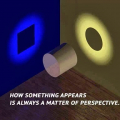
If you change the way you look at things, the things you look at change
By doing so, one's awareness takes control and can start to rearrangeIs there such a thing as control of thought and emotion? I doubt it; I think there is only transformation in response to insight and understanding. And perhaps there is also repression, which we might mistake for control.
From my perspective there is the control of conditioning, what we spend our time and energy towards is reflected in our natural tendencies. And there is the control of awareness, when we're aware that our minds are headed in a particular direction we can use that information to intentionally steer our thinking in another direction. We act from our values rather than react from our emotions. Much of CBT work is this sort of control.
You're right to be wary of repression. Mindful awareness gives us a third way outside of repression or embracing. We hold it mindfully and allow it to come and go.
 person
Re: Memory as emotional residue
...And if our thoughts change so do our emotions...
It's part and parcel of the push me pull you puppet on a string (of thoughts and emotions) thing called living.
If you change the way you look at things, the things you look at change
By doing so, one's awareness takes control and can start to rearrange
 Shoshin1
Re: No Buddhist Quotes
“Thinking serves to sustain you, keep you alive and achieve a goal. But on the moment that goal has been achieved, it is no longer intended for anything. A bird that wants to fly at the top of the tree uses its wings. When he is above, he does not continue to fly, but sits down, folds his wings and relaxes. Well, thoughts are like wings: they lead you to the goal but when that is achieved: 'Ah, yes now I see it', then wings become redundant and then there are no more thoughts.”
— Wolter Keers
 Jeroen
Re: So HUNGRY to NOT CRAVE
For me, the biggest lesson from Buddhism was to always be ready to let go. The Venerable Ajahn Chah called this ‘the mind of letting go’. It is not about renouncing or forcefully pushing things away, but instead learning to just let things drop away when they are ready.
You will find that for example the habit of collecting, or the desire for alcohol, slowly start to vanish as you take in more solitude and it becomes clear to you that life without cravings is more peaceful and joyous. Then when these old habits begin to become less, just let them fall away.
Then, as time passes, you find yourself with less and less craving, fewer habits.
Jeroen
Re: So HUNGRY to NOT CRAVE
Hunger is but a part of, a condition, we all possess.
It is neither good nor bad.
Allowing the hunger to become the the controlling condition, the basic "world", the base from which one sees, lives one's life, is negative (bad).
Understanding that Hunger is but a part, an element within us over which we have control, enables us to overcome, to not be enveloped by the state of Hunger.
When talking of "eliminating desires", it really means redirecting, channeling our desires from selfish and destructive (negative) desires toward selfless and positive desires.
An example in the mundane world is in the desire for a position of influence.
Selfish hunger (desire) says, " I want that position to gain power, to get bigger, better toys, to control.
Selfless hunger (desire) as a manifestation within a higher state, says,"I want the position in order to help, to better serve or represent those who do not have such power or influence.
Thus Hunger is neither good not bad. It is what we wish to do and what we actually do with hunger that makes it something good or something bad.
A Buddha has hunger. But, that hunger (desire) is for the peace and happiness of all the people. That hunger is for the world to become a land of countless Buddhas.
 Lionduck