
Best Of
A Buddhist teacher admits ... BUDDHISM HAS FAILED!
My name is Jundo Cohen. I am a Buddhist teacher, a Zen teacher, who says that it is time for us to admit that Buddhism has FAILED MISERABLY in its key mission. Over two thousand years of sutras and twirling beads, meditation and mantras have yet to realize all that we vowed to do.
Look around: How's that working out for the world?
But now, perhaps there is a chance. Zen and all Buddhism must not be frozen, limited only to means and methods available 50 or 500 years ago. Our way is not a museum of long ago.
Let us learn from our traditions and the past, act in the present, as we open to possibilities for tomorrow. This is the future of Buddhism and Zen.
Please allow me a few minutes to explain ...

 Jundo
Jundo
Re: A Buddhist teacher admits ... BUDDHISM HAS FAILED!
I think this just reconfirms my sense that he is too online. Its not just the headlines that's clickbait its kind of his whole tone.
Buddhism hasn't been the entirety of the social sphere and it won't be going forward, there's no need to get so hyperbolic. I think pretty much every non monastic (and probably the majority of monastic) Buddhist I've heard from takes an integrated approach to Buddhism, melding it with modernity. Maybe his view is informed by his living in Japan with a more traditional mindset? IDK what their attitude is, I'm just speculating.
I think just reiterating a point I made earlier. Jumping heart first into these powerful new technologies makes it more likely that you'll create bad outcomes. You're so eager to do good and think the purity of your motivation will see it through that you become incautious and do harm. "Helping" all the butterflies out of their cocoons.
 person
A dialogue on Thich Nhat Hanh
I’ve recently been exploring what Google’s Gemini Chat AI has to say about various spiritual teachers. So I thought I would post a few pieces of my chat with it about the late Thich Nhat Hanh…
Q: What did Thich Nhat Hanh teach?
A: Thich Nhat Hanh, a Vietnamese Buddhist monk and peace activist, is renowned for his teachings on mindfulness and engaged Buddhism. Here are some core aspects of his teachings:
Mindfulness: This is the foundation of Thich Nhat Hanh's practice. He emphasized cultivating present-moment awareness through everyday activities like breathing, eating, and walking. Mindfulness allows us to appreciate the beauty and wonder of life, even in simple moments.
Breathing Meditation: He developed simple breathing meditation techniques to help people anchor themselves in the present moment and reduce stress and anxiety.
Interbeing: This concept emphasizes the interconnectedness of all things. Everything arises from dependent co-origination – nothing exists in isolation. We are all part of a vast web of life, and our actions have consequences for ourselves and others.
Compassion and Engaged Buddhism: Thich Nhat Hanh believed that mindfulness and meditation should lead to action. He promoted engaged Buddhism, encouraging individuals to apply Buddhist teachings to alleviate suffering in the world and work for social justice and peace.
Non-violent Communication: Thich Nhat Hanh developed methods for mindful communication that emphasize deep listening, empathy, and expressing needs constructively. This approach aims to resolve conflicts peacefully and build stronger relationships.
Here are some additional aspects of Thich Nhat Hanh's teachings:
Everyday Practice: He believed that mindfulness could be practiced anywhere, anytime. Washing dishes, gardening, or even having a cup of tea could become opportunities for mindful presence.
The Healing Power of Nature: Thich Nhat Hanh encouraged spending time in nature as a way to cultivate mindfulness and connect with the interconnectedness of life.
The Sangha (Community): He emphasized the importance of practicing mindfulness and engaged Buddhism in a supportive community, the Sangha.
Peacebuilding: Thich Nhat Hanh was a vocal advocate for peace. His teachings and activism inspired peace movements around the world.
Thich Nhat Hanh's teachings aimed to help individuals cultivate inner peace and well-being, while also encouraging them to work for a more peaceful and compassionate world. His simple and practical approach to mindfulness resonated with people from all walks of life.
Q: In what ways did Thich Nhat Hanh’s teachings differ from orthodox Buddhism?
A: Thich Nhat Hanh's teachings differed from some interpretations of orthodox Buddhism in a few key ways:
Emphasis on Engaged Buddhism: Traditional Buddhism often focuses on monastic life or individual liberation from suffering. Thich Nhat Hanh's concept of Engaged Buddhism emphasizes applying Buddhist principles to social issues and working to alleviate suffering in the world. This includes promoting peacebuilding, social justice, and environmental awareness.
Accessibility of Practice: Thich Nhat Hanh made Buddhist practices like mindfulness meditation more accessible to laypeople. He presented them in a way that could be integrated into daily life, even for those not living a monastic lifestyle.
Focus on Joy and Transformation: While acknowledging suffering, Thich Nhat Hanh also emphasized the joy and beauty inherent in life. His teachings aimed not just for liberation from suffering, but for a more positive transformation and experiencing the fullness of life.
Language and Terminology: Thich Nhat Hanh sometimes used less technical language and terminology than found in traditional Buddhist texts. He aimed to make his teachings understandable and relatable to a wider audience.
It's important to note that:
There's a spectrum within Buddhism, and Thich Nhat Hanh's teachings wouldn't be entirely outside the realm of some Buddhist traditions.
Many Buddhist schools emphasize compassion and helping others, though Engaged Buddhism takes a more active approach.
Mindfulness practices are becoming increasingly popular in secular contexts as well.
Thich Nhat Hanh's approach resonated with many seeking a way to integrate Buddhist principles into their daily lives and contribute to a better world.
 Jeroen
Today
Well it has been a long day and that was yesterday ... 
https://en.wikipedia.org/wiki/Tushita
Today in Heaven, Hell and the Present Middle Way I hope to:
- Improve
- Improvise
- Muddle through the Middle Way
- Believe Nothing is worth opposing but supporting
- To be decided (on advisement)
What is your ungiven advice? 
 lobster
Re: Closure and burying the hatchet, or just let it go?
Another thing is, I wonder how these incidents have affected your overall love life? Have you been able to be romantically involved since the incident? You say you knew one brother, the accessory, very well for 15 years, perhaps some remnant of that closeness is what you are really looking for in thinking to renew contact. Perhaps it is a sign that you are ready to move on romantically with your life.
Just a thought…
Jeroen
Re: The traces we leave
@lobster said:
With the fishies?
Hmm, there's something fishy going on here..
“A pious man explained to his followers: 'It is evil to take lives and noble to save them. Each day I pledge to save a hundred lives. I drop my net in the lake and scoop out a hundred fishes. I place the fishes on the bank, where they flop and twirl. "Don't be scared," I tell those fishes. "I am saving you from drowning." Soon enough, the fishes grow calm and lie still. Yet, sad to say, I am always too late. The fishes expire. And because it is evil to waste anything, I take those dead fishes to market and I sell them for a good price. With the money I receive, I buy more nets so I can save more fishes.”
 Shoshin1
Re: The Other Elephant In The Room
@person it's hard to say when the hostilities will come to an end ...
I think that most people on the outside looking in, want an end to hostilities and see both Israelis and Palestinians living peacefully and equally side by side in two separate states or one state ...
The present situation can't go on forever, a compromise which suits both parties must be reached...
Shoshin1
Re: The Other Elephant In The Room
So if I hear what you're saying, if Israel would stop its settlement expansions, allow greater freedom of movement in and out of Gaza and work harder to prevent excessive use of force from its soldiers the Hamas problem would essentially take care of itself?
The so called Hamas problem is an interesting one...
The New York Times
"As far back as December 2012, Mr. Netanyahu told the prominent Israeli journalist Dan Margalit that it was important to keep Hamas strong, as a counterweight to the Palestinian Authority in the West Bank. Mr. Margalit, in an interview, said that Mr. Netanyahu told him that having two strong rivals, including Hamas, would lessen pressure on him to negotiate toward a Palestinian state."
My history isn't super informed but isn't the restrictive Gazan border a security measure? Didn't the peace talks result in a pretty good two state solution which was then rejected by Arafat and the PLO? In the current conflict didn't Hamas build tunnels and bases in humanitarian zones, also a direct violation of international law? How can one conduct a war against an enemy who metaphorically straps innocents to themselves without harming civilians?
If Israel see it has fair games to kill innocent civilians to get at the target , using the same kind of logic, this would also justify Hamas's attack on innocent Israelis...Hamas could argue that because Israel has compulsory conscription (with few exceptions), in warfare, all Israelis are a potential targets... using this logic...
I guess that where I'm coming from is didn't Israel try some of this stuff only to get things like the two intifadas, isn't the expressed wish of Hamas to eliminate the state of Israel, such that nothing short of "From the River to the Sea" would offer security?
If you think about it, the Palestinian people have had the cards stacked against them from the outset...The British forcefully occupied their land and then gave some of it to the European Jewish settlers aka the Zionists, who decided that the land they had wasn't enough and forcefully removed more Palestinians from their land and have continued to do so ...As it stands Israel is holding over 9000 Palestinians in their prisons, men women and children, some were released with the first hostage exchange but shortly after many were put back in prison again during IOF raids....
Most everything you say is legitimate AND at the same time though, many believe, Israel has legitimate security concerns. They can't simply lay down their weapons and hope to be left in peace.
But they can stop killing innocent men women children and babies....
Over the years the Palestinians have tried peaceful means to stop Israel from illegally confiscating more of their land, for example, through the ICJ but Israel just ignore any of rulings against them.
Which brings me to this other point ....the Bully tactics used by Israel against the Palestinian people...
A bully is someone who repeatedly and intentionally seeks to harm, intimidate, or exert control over others, often through verbal, physical, or psychological means. Key characteristics of bullying behavior include:
Aggression: Bullies engage in aggressive behavior towards their targets, which can take various forms such as physical violence, verbal abuse, threats, or intimidation.
Power Imbalance: Bullies typically possess some form of power, whether it's physical strength, social status, or influence, which they use to exert control over their victims. This power dynamic often leaves the victim feeling powerless or unable to defend themselves.
Repetition: Bullying behavior is typically repetitive and ongoing, rather than isolated incidents. Bullies may target the same individual repeatedly over time or target multiple individuals with similar characteristics or vulnerabilities.
Intent to Harm: Unlike conflict or disagreement, bullying behavior is characterized by the deliberate intent to cause harm, distress, or humiliation to the victim. Bullies often derive satisfaction or a sense of power from their actions.
Lack of Empathy: Bullies often lack empathy for their victims and may disregard or minimize the impact of their behavior on others. They may rationalize or justify their actions as harmless teasing or "just joking," even when it causes significant harm to the victim.
Targeting Vulnerable Individuals: Bullies frequently target individuals who they perceive as vulnerable or different in some way, such as those who are perceived as weaker, socially isolated, or different from the majority.
Overall, bullying behavior is characterized by a pattern of aggression, intimidation, and abuse directed towards others, often with the aim of asserting dominance or control over them. It can have serious and lasting consequences for the victims, including emotional trauma, social isolation, and long-term psychological effects
@person I agree that Hamas is a significant problem when it comes to peace between Israel and the Palestinian people. However, their hatred and resentment of Israel didn't happen in a vacuum. One only has to look at the history of the modern state of Israel and how they have treated the Palestinians. Netanyahu and his predecessors have done very little to bring about a peaceful two-state or one-state solution. In fact, he and his party followers have been stoking the fire of hostilities between Israelis and Palestinians...
In regards to Yasser Arafat...
Yasser Arafat, did not outright reject a two-state solution, but rather his stance on the matter evolved over time and was influenced by various factors:
Complex Negotiations: Arafat engaged in peace negotiations with Israel throughout the 1990s, culminating in the Oslo Accords in 1993. While the Oslo Accords laid the groundwork for a two-state solution by establishing the Palestinian Authority and outlining a process for Palestinian self-governance in parts of the occupied territories, they did not definitively resolve the core issues of the Israeli-Palestinian conflict, such as borders, settlements, Jerusalem, and the right of return for Palestinian refugees.
Settlement Expansion: The continued expansion of Israeli settlements in the occupied territories, particularly in the West Bank, undermined the viability of a two-state solution by fragmenting Palestinian territory and creating facts on the ground that would make the establishment of a contiguous and independent Palestinian state more difficult.
Jerusalem: The status of Jerusalem, which both Israelis and Palestinians claim as their capital, emerged as a major stumbling block in negotiations. Arafat and the Palestinian leadership insisted on East Jerusalem as the capital of a future Palestinian state, while Israel maintained sovereignty over the entire city.
Internal Palestinian Politics: Arafat faced internal political challenges within the Palestinian territories, including opposition from more hardline factions that rejected any compromise with Israel and advocated for armed resistance. Balancing these internal dynamics while negotiating with Israel proved challenging for Arafat and the Palestinian leadership.
Final Status Issues: Despite progress made in interim agreements, final status negotiations between Israel and the Palestinians stalled over contentious issues such as borders, settlements, refugees, and Jerusalem. Arafat's reluctance to make concessions >on these issues, coupled with Israeli concerns about security and the status of settlements, contributed to the breakdown of negotiations.
Shoshin1
Re: The Other Elephant In The Room
What ideas or solutions are being put forward about what Israel should do about Hamas and its security overall?
Immediately stop the killing of innocent Palestinian civilians first...
What they are doing now is having dire consequences but a large part of the motivation is security and the elimination of Hamas rather than a wish to genocide Gazans
You may find "this" article of interest
What they have been doing for many years has led to this...Sadly it would seem killing many Palestinian civilians and a few Hamas fighters and occupying more and more Palestinian land is the Israeli government's approach to security...Netanyahu does not want the conflict to end...
What they are doing now is having dire consequences but a large part of the motivation is security and the elimination of Hamas rather than a wish to genocide Gazans.
Not according to many Israeli officials, they have openly advocated for Gaza to be flatten and its people to be ethnically cleansed, there are quite a number of Israelis who want the ongoing bombardment of Gaza to continue...
For a number of years Netanyahu had planned on claiming more Palestinian lands for the state of Israel and it would seem the opportunity has arrived for him to do just that and he is prepared to do whatever it takes to fulfill this plan...
So just telling them to stop doesn't address this deeper need. Offering an alternate solution allows Israel to take greater care of Gazans without totally giving up on their own legitimate concerns
Palestinians have a right to self determination and not be ruled over by an occupying colonial force...
Trying to force Hamas to stop by killing Palestinian civilians also does not address this deeper need.
"Palestinian self-determination refers to aspirations by Palestinian nationalists for increased autonomy and sovereign independence as well as to the international right of self-determination applied to Palestine. Such sentiments are features of both the one state solution and the two state solution."
The obstacles in the way...
Colonisation, is the process by which a country or group of people establishes control over a territory outside its own borders, often with the intent of settling it with their own population, exploiting its resources, and exerting political, economic, and cultural dominance over the indigenous population.
Key aspects of colonization typically include:
Territorial Expansion: Colonizers seek to expand their territory by acquiring land, often through conquest, treaties, or other forms of coercion.
Settlement: Colonizers establish permanent or semi-permanent settlements in the colonized territory, which may involve displacing or marginalizing indigenous populations.
Resource Extraction: Colonizers exploit the natural resources of the colonized territory for their own benefit, which can include minerals, agricultural land, and labor.
Political Control: Colonizers establish political control over the colonized territory through governance structures, laws, and administrative systems that prioritize the interests of the colonizing power.
Cultural Assimilation: Colonizers may seek to impose their language, religion, customs, and values on the indigenous population, often through education, religious conversion, and other means of cultural assimilation.
Colonization has historically been a significant driver of global expansion and has had profound and often lasting impacts on the societies, economies, and cultures of both the colonizers and the colonized peoples. It has been a subject of considerable academic study, debate, and critique, particularly in relation to issues of power, exploitation, and resistance.
Settlement Expansion: The establishment and expansion of Israeli settlements in the occupied Palestinian territories, including the West Bank and East Jerusalem, are widely considered violations of international law, including the Fourth Geneva Convention, which prohibits an occupying power from transferring its civilian population into the territory it occupies.
Restrictions on Movement: Palestinians living in the occupied territories face numerous restrictions on their freedom of movement, including checkpoints, roadblocks, and the separation barrier, which impede their access to essential services, education, healthcare, and employment.
House Demolitions: Israel has been criticized for demolishing Palestinian homes and structures in the occupied territories, including East Jerusalem and Area C of the West Bank, often citing lack of permits as justification. Critics argue that these demolitions disproportionately affect Palestinian communities and violate their rights to housing and property.
Excessive Use of Force: Israeli security forces have been accused of using excessive force against Palestinian civilians, including during protests and demonstrations, resulting in injuries and fatalities. Human rights organizations have documented cases of arbitrary arrests, torture, and ill-treatment of Palestinian detainees.
Gaza Blockade: Israel has imposed a blockade on the Gaza Strip since 2007, severely restricting the movement of people and goods in and out of the territory. Critics argue that the blockade amounts to collective punishment and violates the rights of Gaza's residents, including their rights to health, education, and freedom of movement.
Israel disputes many of these allegations and argues that its actions are necessary for "security reasons". However, human rights organizations and international bodies, including the United Nations, have repeatedly called on Israel to abide by its obligations under international law and respect the human rights of Palestinians.
Negotiating a comprehensive peace agreement between Israel and the Palestinians that addresses the issue of settlements is crucial. This could involve establishing clear borders between Israel and a future Palestinian state and reaching mutual agreements on the status of settlements located in Palestinian territories..
Shoshin1
Re: The Other Elephant In The Room
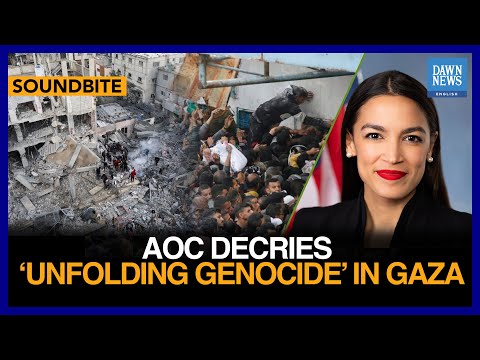
I have always liked Progressive Congresswoman Alexandria Ocasio-Cortez political stance...which comes from the heart...
Mr. Speaker, I know a man, a decent man, who said that preventing genocide is an achievable goal. A goal that requires a level of government organization and engagement that matches in its intensity the brutality and efficiency required to carry out mass killing. Too often, these efforts have come too late, after the best and least costly opportunities to prevent them have been missed. The man that said that was then Vice President and now President Joseph Biden, and he was right.
Mr. Speaker, I rise to say that such a time is now. As we speak in this moment, millions of innocents in Gaza are at the famine door. A famine that is being intentionally precipitated through the blocking of food and global humanitarian assistance by leaders in the Israeli government. This is a mass starvation of people, engineered and orchestrated following the killing of another, the majority of whom were women and children. Hospitals are scarce, and much of this was accomplished with US resources and weapons.
If you want to know what an unfolding genocide looks like, open your eyes. It looks like the forced famine of millions of innocents. It looks like thousands of children eating grass as their bodies consume themselves while trucks of food are slowed and halted just miles away. It looks like good and decent people who do nothing or too little, too late.
It is against United States law to provide weapons to forces who block United States humanitarian assistance, and that is exactly what is happening right now. So much so that the President himself stated during the State of the Union that the United States must and will be building its own port to let aid through. It will be too late. The time is now to force compliance with US law and the standards of humanity. We must fulfill our obligations to the American people to suspend the transfer of US weapons to the Israeli government in order to stop and prevent further atrocity.
Honoring our alliances does not mean facilitating mass killing. We cannot hide from our responsibility any longer. Blocking assistance from one's closest allies to starve a million people is not unintentional. We have a responsibility to prove the value of global democracy, enshrined in the upholding of civil society, rule of law, and commitment to human and civil rights.
This is not just about Israel or Gaza; this is about us. The world will never be the same, and we will never be the same. We must write our story in this moment of what it means and who we are as Americans. And our story must be not that we were good men who did nothing, but that we were a committed democracy that did something. And we must prove that now. With that, I yield back. Thank you.
 Shoshin1