
Best Of
Re: Buddhist Epistemology
Ah, yes, it should have been: “Buddhism, on the other hand, is very much about empiricism, [first-person], and third party verification on the mental [and psychosocial] level and in terms of things that can be tested through mental processes via subjective experience.”
So you’re verifying things subjectively and often with an experienced teacher who can help to verify your progress from their own experience (and even possibly through supranormal ways (psychic powers). But even there, the Buddha gives guidelines on what to look for and how to judge a good teacher from bad, which again is very empirical. The only issue is, the primary focus of the path is something immaterial, our conscious experience of the world, and there’s no real way to test consciousness. One can only see corollary physical phenomena associated with consciousness and its effects on the body and vice versa, never the subject itself. That said, the Buddha did advocate a healthy skepticism in places like the aforementioned Kalama Sutta and Canki Sutta. But again, the heart of those is testing things out for yourself to see the results.
Whereas the knowledge of science is the physics of the material world, Buddhist knowledge is physics of the inner world of our mind—one that has a very specific purpose, liberation from suffering. Even if one doesn’t believe in or have any experience with some of the more metaphysical aspects like rebirth, one can still put the teachings into practice and see what the results are if they so choose. I don’t know how to tell someone when their subjective experience is ‘valid,’ as I think they’re all valid. But if you mean conform to some objective truth or reality, that’s not something I think anyone can do, which is why the Buddha gives so many guidelines—the most basic being observing the results of our actions and the intentions underlying them.
 Jason
Jason
Re: Buddhism and the Suffering of the World
Ah yes, that seeking inner peace is too self absorbed and neglects the suffering of the world. Thich Naht Hahn tells that story about the person that stays calm on the boat helps save everyone else.
 person
Re: Exercise
I passingly mentioned getting up for 5 minutes once an hour earlier. I think this is something I heard a while back that stuck with me. I listened to an interview today about some actual research into this and its actually 5 minutes of very light activity once every 30 minutes. Just something like walking at a light stroll or washing the dishes. The physiology of it is that when we're sitting, or standing, still for extended periods the blood and other bodily fluids stagnate and they can't do their jobs properly. But the effects aren't minor, it turns out they are pretty big in terms of lowering blood pressure, lipid counts, and other things. People report having better concentration and energy when they do return to sitting. Its a small thing with big effects.
person
Re: Buddhist Epistemology
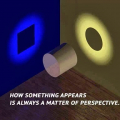
Then there is the whole issue of my truth, your truth, our shared truth. As you were already indicating with your mention of the cylinder seen as a circle or a square, but this in fact extends to many other areas. Dare I mention Trump and American politics - now there is a man who has mastered the art of appearing to some as a perfect circle while to others he is definitely a square.
 Jeroen
Buddhism and the Suffering of the World
A man once asked an old Buddhist monk:
"How can I allow myself to feel peace or happiness when the world is full of suffering, injustice, pain and chaos?"
The monk looked at him calmly and asked:
"If your house was dark...
Would you refuse to light a candle
Because the whole world is not illuminated yet?”
The man stood still.
The monk continued:
"The suffering of the world is real.
But if you completely destroy your own peace,
You create yet another exhausted and hopeless person.”
The man replied:
"But isn't being happy selfish when others suffer?"
The monk smiled softly.
"A drowned man cannot save another drowning man.
Peaceful people heal more than broken people consumed by despair.”
Then the monk pointed to a pond nearby.
“If the water is disturbed, it cannot reflect clearly.
But when it gets quiet, everything becomes visible.”
He looked back at the man and said:
"The same goes for the mind.
A restless mind reacts with fear, anger and hopelessness.
A calm mind responds with wisdom, compassion and clarity.”
The man lowered his head and whispered:
“But the world still feels so heavy.”
The monk nodded.
“Yes.
And that's why your peace is even more important.”
Then he added softly:
"Don't carry the pain of the whole world in one heart.
Instead...
Be nice where you are.
Help where you can.
Speak softly.
Reduce the suffering around you, even in small ways.
A single candle cannot take away all darkness...
But it still changes the room it enters.”
In Buddhism, happiness is not ignoring suffering.
It's learning how to stay compassion
Without letting the suffering of the world completely destroy your mind.
The monk smiled one last time and said:
"Protect your inner peace.
The world needs more calm hearts, no more broken minds.”
Tashi deleck.
Jeroen
Re: Buddhist Epistemology
It’s a topic worth thinking about, how you discern what is true. I’ve heard it said, what is true is “that which is”. Which means, all of the physical world plus that which you can observe. Where you run into trouble is all the constructs of the mind.
What I have found is that the heart perceives more truly than the consciousness when it comes to perceiving what is true. Trust what you feel, rather than trying to work out what you should think.
Jeroen
Re: “502” error on this site
This morning again, intermittently. Another forum which I am a member of at one point had 2200 “guest” bots visiting, while the registered member count was something like 4 most of the time.
Jeroen
Re: Space - the final frontier
From the standpoint of human inquiry, there can be no final frontier.
And I, for one, think that is a good thing.
 Lionduck
Re: The Blue Button/Red Button Dilemma
@Jeroen said:
It’s only an example. Humans can manifest happiness, playfulness, joy. And that may be as good as it gets.
I was in the process of adding an edit when I got the notification that you posted. I was adding something to the effect of having some larger notion of the purpose or value of humanity that they're failing to meet, then yes humans are a sort of obstacle or detriment. I think my previously unexamined motivation is that what humans are for is to have a meaningful, happy life. Lets wish them wellbeing rather than elimination.
person