
Best Of
Re: Which book are you reading?
Things to keep in mind...
Pinker mainly talks about progress from a Western perspective and overlooks how progress can mean different things in different cultures. Also, he doesn't fully consider how colonialism and imperialism have influenced the progress of societies, often leaving out the struggles and contributions of non-Western civilizations.
Moreover, colonial powers often exploited indigenous lands and resources for their own economic gain, without regard for the well-being of indigenous communities. This exploitation led to the dispossession of ancestral lands, disrupting indigenous economies and traditional land management practices. For instance, treaties and agreements negotiated with indigenous peoples were often disregarded or manipulated by colonial governments, resulting in the loss of land and resources vital for indigenous livelihoods.
When discussing progress, it's important to acknowledge these historical injustices and their ongoing impacts on indigenous communities' perspectives on development and progress.
However, in saying this... it's not all bad...
Indigenous movements have successfully advocated for recognition of their land rights and sovereignty. In some countries, legal victories and treaties have been secured, granting indigenous communities greater control over their traditional territories and resources.
In some countries indigenous communities are leading efforts to protect biodiversity, combat climate change, and promote sustainable development practices.
Some Indigenous communities are also gaining greater political representation and participation in decision-making processes. Indigenous leaders are being elected to local, regional, and national offices, advocating for the rights and interests of their communities.
A number of indigenous communities around the world have undertaken efforts to preserve and revitalize their languages, traditions, and cultural practices. Through language immersion programs, cultural festivals, and community initiatives, indigenous peoples are reclaiming and celebrating their heritage.
 Shoshin1
Re: Which book are you reading?
I read the book "Factfulness" by Hans Rosling the other day. If I had the money, I'd buy a bunch of copies and give them away to everyone I know. But since I don't, y'all are getting just a recommendation 
https://www.amazon.com/Factfulness-Reasons-World-Things-Better/dp/1250107814
The general argument is that if you look at the most important statistics concerning what matters most to general human well-being - such as lifespan, child mortality, incidence of death from murder, natural disasters, wealth, malnutrition, etc. etc. etc. - then the world has been dramatically improving over the past 200 years pretty much everywhere, regardless of culture, religion or politics.
However, the second argument is, based on polling which he's done, people in rich countries have a whacked and inaccurate picture of the world. They believe that the world is in much more terrible shape than it is. The way he says it is (paraphrased): "when you give people in rich countries multiple-choice questions regarding basic UN statistics, they respond much worse than chimpanzees!" (much worse than random). This holds true for the general population, the rich and powerful in Davos, development and public-health practitioners... everyone!
He provides many statistics in an accessible manner. I studied development studies around 15 years ago (how to help third world countries) and was shocked at the amount of progress in 15 years. Pretty much, in only 15 years, the world has made massive strides, and for the better.
A big part of the book also deals with the mental-errors or faulty reasoning shortcuts we follow to come to faulty conclusions. I found this also very interesting, but would need another reread to really delve more deeply into this.
Anyway, if you're looking for a bird's-eye overview of the development of humans over the past 200 years and could use (for a change) an optimistic look based on hard-data, this might be a very good read.
PS. The argument is NOT that everything is rosy everywhere all of the time. The argument is that it's still bad, but improving rapidly, more rapidly than people think.
 marcitko
Re: Which book are you reading?
@marcitko said:
I read the book "Factfulness" by Hans Rosling the other day. If I had the money, I'd buy a bunch of copies and give them away to everyone I know. But since I don't, y'all are getting just a recommendationhttps://www.amazon.com/Factfulness-Reasons-World-Things-Better/dp/1250107814
The general argument is that if you look at the most important statistics concerning what matters most to general human well-being - such as lifespan, child mortality, incidence of death from murder, natural disasters, wealth, malnutrition, etc. etc. etc. - then the world has been dramatically improving over the past 200 years pretty much everywhere, regardless of culture, religion or politics.
However, the second argument is, based on polling which he's done, people in rich countries have a whacked and inaccurate picture of the world. They believe that the world is in much more terrible shape than it is. The way he says it is (paraphrased): "when you give people in rich countries multiple-choice questions regarding basic UN statistics, they respond much worse than chimpanzees!" (much worse than random). This holds true for the general population, the rich and powerful in Davos, development and public-health practitioners... everyone!
He provides many statistics in an accessible manner. I studied development studies around 15 years ago (how to help third world countries) and was shocked at the amount of progress in 15 years. Pretty much, in only 15 years, the world has made massive strides, and for the better.
A big part of the book also deals with the mental-errors or faulty reasoning shortcuts we follow to come to faulty conclusions. I found this also very interesting, but would need another reread to really delve more deeply into this.
Anyway, if you're looking for a bird's-eye overview of the development of humans over the past 200 years and could use (for a change) an optimistic look based on hard-data, this might be a very good read.
PS. The argument is NOT that everything is rosy everywhere all of the time. The argument is that it's still bad, but improving rapidly, more rapidly than people think.
It sounds like he is making a similar argument to Stephen Pinker in Enlightenment Now. I really enjoyed that one. I may have to check this one out too. The news is a non random selection of the worst things happening in the world, if you take a step back and look at the data and trends the amount of progress we've made is really remarkable.
Right now I'm reading The Constitution of Knowledge (A Defense of Truth) by Jonathan Rauch. I'm only a few chapters in, but its about how we come to decide what is true. So far my takeaways have been objectivity isn't so much an individual effort, though we can make some efforts on that front, but coming to truth is more of a collective, social effort. Like in the scientific process it requires not just experiments, or truth claims, but counterpoints, corrections and refutations from the community. Democracy works much the same way.
Discovering truth also requires some social norms to act as incentives to prevent authoritarian sentiment and dogmatism. Fallibility, that there's no final say, and empiricism, no personal authority. People have to be free to make claims and counter claims without fear of reprisal.
 person
The Work by Byron Katie
Have you ever heard about this series of techniques? It’s very good, even people who have been in a spiritual way for a long time find benefit from it. Basically what it comes down to is first questioning, finding a statement that honestly encompasses what you feel. Then, there is the process of turning statements around to their negative and seeing how true that is. This process of turning around helps you relate to the things you think in new ways.
If you want to see how it works, there is a podcast called At Home with Byron Katie where she goes through the process with people. It’s a great series of examples of how people’s pain gets tackled. Here’s a link to an episode.
Even if you have a measure of spiritual freedom, this process can help you release some of your pain points.
 Jeroen
Re: The traces we leave
@lobster said:
I feel ahimsa to what ever degree we can manage, is a worthy goal.
Well… the Jain monks do take it rather far. They don’t eat after dark for fear of swallowing flying bugs, and carry a small brush of very fine wool as their only possession in order to be able to sweep the spot where they are just about to sit, so that they don’t crush any ants or small insects. They often wander around naked as well.
I feel it is good to signal our devotion, so that people can see what we consider important in our lives and inspire others.
“Once I was chastising Maharajji for giving photos to people who were worldly and didn’t care about him. He said, “You don’t understand me. If I tell a man he is a great bhakta (devotee), I am planting a seed. If a person already has the seed planted and growing, why should I plant another?” I said, “You are telling these drunkards, liars, and dacoits that they are real bhaktas. They will just go home and carry on their old behaviors.” Maharajji said, “Some of them will remember what I said of them, and it will make them want to develop this quality in themselves. If ten out of a hundred are inspired in this way, it is a very good thing.”
― Ram Dass, Miracle of Love: Stories about Neem Karoli Baba
Jeroen
Re: Ostara', 'Eastre' or 'Eostre's Blessings...
@Lionduck said:
And through thousands of years, Easter has devolved into a weird chocolate rabbits and boiled eggs hidden in the weeds.
....and Zombies
Shoshin1
Re: Unsocial Media
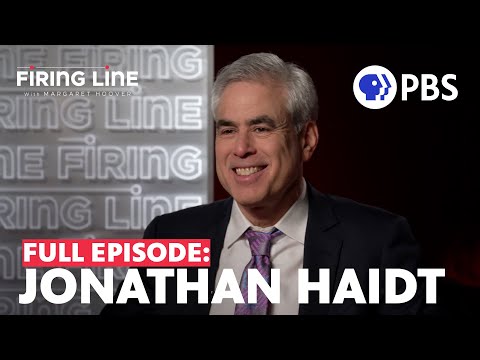
Just saw an Interview with Jonathan Haidt, one of my favorite public intellectuals, on his new book "The Anxious Generation". I think he makes a compelling case and offers good solutions.

person

Re: Unsocial Media
I have a few websites, like this one, that I find interesting and occasionally contribute to discussions.
I have never had a facebook account. Same for instagram or any of the others. A full rich life is quite possible, and probably enhanced, by such avoidance.
 Steve_B