
Best Of
Re: No Buddhist Quotes
When you’re deeply looking at something, you’re loving it. And I think that when you do that, whether it’s with a person or a nonhuman animal or a plant or a tree, it is a way of witnessing and being witnessed.
Ada Limón, “Decentering the Self”
 Jeffrey
Re: Buddhist View of Justice
RobinH I think you make a very good point. Most people’s sense of outrage is more developed than their actual sense of justice, and that outrage spills over into anger and violent retribution. It is well known that people individually can be kind, sensitive, good-hearted, but as a mob can be much more volatile.
I think it’s very interesting with all the information coming to light from the Epstein files, that there has been a lot of outrage but very little actual consequence. It seems that in the structure of society today it is a lot more difficult for action to manifest than in the past. Reputational damage is about as far as it seems to go — I don’t think Deepak Chopra will be selling as many books.
 Jeroen
Re: The Plant Medicine Path
One thing I found very interesting about the interview were Pollan’s comments about how psychedelics and meditation support each other. He said parts of a recent psychedelic vision only became clear in meditation, he was talking about being bumped into by two blimps, one of which was labelled ‘fear’, and that in meditation it became clear to him that this was the fear of losing his loved ones.
Jeroen
Re: The Plant Medicine Path
@lobster said:
Thought this interview might be of interest...https://www.theguardian.com/books/2026/feb/08/michael-pollan-psychedelics-consciousness
Thank you @lobster … this is right up my street, I will definitely buy a copy of the new book when it appears, or sometime soon afterwards. I see that A World Appears is going to be out on the 24th of February, but the initial copies are hideously expensive, 28.99 euros for the paperback if you preorder so I might wait until it comes down to the usual 12 euros.
Very interesting that he considers this new book on consciousness to be present in seed form in the earlier book on psychedelics — it seems to be clear that the psychedelics do illuminate the workings of consciousness to a certain extent. I’m very curious to see what Pollan has to say about consciousness, I have a lot of respect for his journalistic capabilities.
Loved the interview as well, @person, the bit where Pollan says “scientists in print are very clear and definitive, but in person they are a lot more diffident, saying things like, it was a limited study, or, this is what we know now.” Some nice nuggets in there.
A new Michael Pollan book is a treat.
Jeroen
Re: The Plant Medicine Path
@Jeroen said:
The thing is, there is a whole area of human experience which modern life has excised.
Of course, the other thing that modern life has excised is the respect for the invisible world. Most indigenous people hold that there are two worlds, a visible world and an invisible world. The invisible world is mediated by the shaman, but in Europe all the remaining shamanic practitioners and wise women were killed off by a thousand years of Roman imperialism and the subsequent Catholic Inquisition.
That led to an investment in the physical world, the European Enlightenment and the Industrial Revolution which spread to North America, and has lately spread by successive phases of globalisation to much of the rest of the world. The understanding of the invisible world is a social stream that seems to be dying out, and with it a respect for the spirits of wild plants and animals.
Without a respect for the invisible world, can we truly understand our own mind and being? The mind affects the body profoundly, as Gabor Maté’s book on trauma also showed, so do not the spirits that we perceive also affect the mind and the body?
Jeroen
Re: Can the mind be conditioned into enlightenment?
For me right now I think is it "THE enlightenment and then it's ongoing enlightened activity"? I think without conditions there would be no realizations... and that without realizations there wouldn't be further realizations. Are realizations conditioned? If so then how could a string of conditioned realizations result in something that is non conditioned? If no then if all of the realizations are unconditional then why is there a big enlightenment at the end that is different from the earlier "waking up"?
And then what of morality and waking up? We've all had some glimpses and we all do immoral things. But what if someone is very awake but is doing terrible, stuff that most anyone would agree is terrible
Jeffrey
Re: What documentary are you watching?
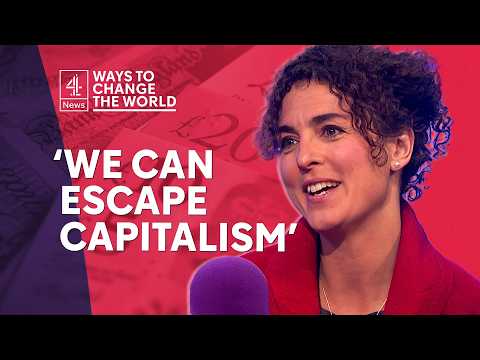
This is an interview with Clara Mattei about the book on UK’s Channel 4. The interviewer is a bit of a straight up establishment guy, but it’s very interesting to see how she talks to his points.
Jeroen
Re: The AI tsunami
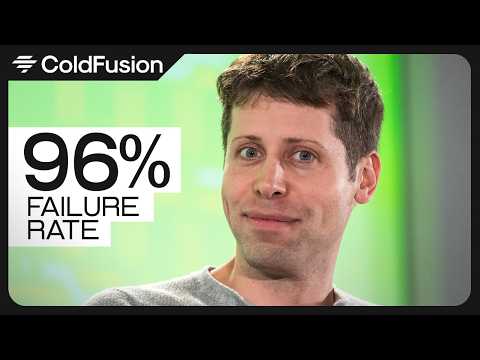
I think the leap from “pattern matching machine trained on the internet” to “generally intelligent software entity” is going to be a lot harder than commenters are assuming. I largely agree with Michael Pollan’s take, that AI merely mimics a human mind. After all it runs on deterministic computer systems, without the random elements that human beings have.
Recent stock market performance is another thing that shows that the cleverest people out there are pricing in a much longer trajectory to really competent AI. Microsoft shares fell nearly 20% in recent days, which reflects what the market expects from OpenAI and from AI PCs generally. It seems like the AI bubble is bursting…
Jeroen
Re: "Walk For Peace" monks in the US from Texas to Washing D.C.
These Monks, in their walk have faced both hardship and praise. They have been welcomed and demonized. They have crossed many hundreds of miles.
Still, their message of hope and peace endures.
 Lionduck