Best Of
Re: How to Change Your Mind
How to Change Your Mind
...Change is inevitable (thoughts -wholesome & unwholesome- continually changing how we see things) ...Suffering (the changing thoughts) optional
No need to try to change the mind.... just unfetter it...
"Unfettered Mind" refers to a state of mental freedom and clarity, often associated with various contemplative and meditative practices. It's a term used in Eastern philosophies, particularly in Zen Buddhism. In this context, it signifies a mind that is not bound by attachments, cravings, or delusions, allowing for a deep sense of presence and insight. The goal is to transcend habitual thought patterns and emotional reactions, leading to a more open, clear, and liberated way of perceiving and interacting with the world. This concept is central to many spiritual and mindfulness traditions.
 Shoshin1
Re: Space - the final frontier
Thank you @Jeroen, that was a very interesting read. As the article states, everything heavier than iron cannot be made by stars using fusion - but is rather made in supernovae and... as I've learnt today kilonovae for the even heavier elements. Our human body contains elements heavier than iron in small amounts - so for us to be, there must have been a supernova somewhere close by. The Universe is truly incredibly interesting. Thank you again.
 marcitko
Re: Space - the final frontier
Fascinating article about kilonova’s and how the heavier elements are formed.
 Jeroen
Ryokan, the art of living
I came across this essay in Dutch and thought you might enjoy, here is a translation
“One of the most important playwrights of the last decade of the twentieth century, the Austrian Werner Schwab, puts the following words in the mouth of Greet, a muddy woman of the people, in his play The Presidentes: “Now you have to surrender to life, Erna, so that life can enjoy you.” And Erna, ‘an old age pensioner with house apron and orthopaedic shoes', sighs: “Yes, of course, but that is so easy to say. In reality it is difficult to pick up a life's enjoyment, when saving has marked you in the flesh and in the blood. But once in life such a person must also achieve happiness, who always has to brush away the dirt of the other people.”
The art of living is problematic for the sparing, calculating and from apparent certainties living individual. The woman from Greet’s people knows what she requires: surrender. A total waste of every trick we have taught ourselves to stand up to the fickle reality as an independent individual. The art of living is a gift, not in the sense of a special quality, but in the sense of a gift, which I can only receive if I am willing to give, open my hand, let go. The art of life requires that I let myself go, to let life invent itself from this movement, which is not a movement but the creative zero of my existence.
Exemplary of the art of life are the art and life of the Japanese calligrapher, poet and Zen priest Ryokan Taigu. He was born in 1758 as the eldest son of the village chief Inan, who was also a merchant, shintopriester and a poet of haiku. Inan had hoped that his firstborn would succeed him as village chief, but in the footsteps of Shakyamuni Buddha, the boy left the house at the age of eighteen. After first seated at a local Soto-zen temple, Ryokan went to study under the master Kokusen, who was in charge of Entsu-ji at Tamashima. Kokusen was a straight-by-sea zenman, who qualified his zen style as 'stacking stones and wearing dre.' For about twelve years, Ryokan stayed with his teacher Kokusen, from whom he also received transmission.
After Kokusen's death, Ryokan left Entsu-ji for a five-year wandering. His mother had already died during his stay in the Zen temple and in 1795 his father committed suicide in Kyoto. Ryokan provided his funeral ceremony. At the age of forty, he returned to his native region of Echigo, the cold and remote snowland in the far north of Japan. There he established his 'one-person community-of-monks' in a meagre hermitage in the densely overgrown forest on Mount Kugami. The hut bore the name Gogo-an, which means 'five cups', which refers to the amount of rice that the previous resident, an abbot of the Shingon sect, was allowed to receive each day. We can't say that Ryokan saved it in the flesh and in the blood. He lived exclusively from what was given to him during his daily begging trips. He gave away what he loved. Ryokan dealt with people from all walks of life: landlords, beggars, merchants, fishermen, farmers, with whom he drank 'the hot water of transcendent wisdom' (sake) and prostitutes, with whom he played at marbles. But above all he also played with the children from the village. Ryokan's life at Gogo-an was a life of self-forgetfulness in the moment: “Tomorrow? The day after tomorrow? Who knows? We are drunk on today!” Our muddy Greet couldn't have said it better!
Around his sixtieth birthday, Ryokan moved to a cabin at the foot of Mount Kugami. Because his health deteriorated, he was forced to move again eight years later. He was given a hut on the Kimura family estate, where he felt like a caged bird. At this place, at the age of seventy, Ryokan finally met the travel companion he asked for so often in his poems. It was the beautiful, twenty-nine year old nun Teishin. Almost immediately they fell in love with each other. As often as they could, they were together and wrote poems, talked about literature and religion or walked through the fields and surrounding villages. 'Two people, one heart,' Ryokan wrote. In the early morning of January six, 1831, Ryokan died at the age of seventy-three in the company of his beloved. He wrote about their relationship:
In this dream world
We nap
And speak of dreams –
Dream, dream on
As much as you want.
One of the few things Ryokan didn't like were 'poems of a poet and calligraphy of a calligrapher'. Ryokan practised calligraphy all his life. Every morning he brushed sheets full and even during his begging rounds he drew characters with his finger in the air or with his foot in the sand. Already during his life, his calligraphy was highly valued. Ryokan made his clean writing for people in his area and anyone who provided him with some food, tobacco or sake could count on a work of art. When a shopkeeper once asked him to put something simple on paper that everyone could read, Ryokan wrote the characters I Ro Ha (A B C) and then One Two Three. These two pieces of calligraphy are now considered among the greatest works of art in this genre in Japan.
Ryokan's calligraphy exudes clarity, softness, a subdued yet unhindered power and simplicity. Sometimes the characters in his work seem almost childish due to the straight writing and the accurate use of the thin line, as can be seen in the entsu-ji poem. But in his poem Autumn Leaves we see the characters like swirling leaves falling down the paper. Yet here too the modesty, the softness and the accuracy of the brushstrokes are prominent again. In Ryokan's calligraphic work, the characters almost seem to write themselves. Effortlessness is one of the main characteristics of his clean writing and its greatest power; a product of his sublime brush mastery and his freedom of mind.
The same effortlessness, simplicity, modesty and clarity that we encounter in Ryokan's calligraphic work can also be found in his poems. He practised many different styles of poetry, such as classical Chinese, haiku, waka and folk songs. Yet he did not always adhere to the stylistic rules. All in all, he wrote about fourteen hundred poems. 'Under his literary legacy, we also come across lists of things that the forgetful Ryokan mainly had to remember in order, according to him, ''not to get into trouble'':'
Don't sleep too much;
Don't eat too much;
Don't take too long afternoon nap;
Don't exhaust yourself;
Don't neglect yourself;
Be silent when you have nothing to say;
Hide nothing in your heart;
Drink sake always warm;
Shave your head;
Cut your nails;
Rinse your mouth and use a toothpick;
Take a bath;
Keep your voice clear.
He also wrote a memo to himself in waka- form:
Waiting for a visitor, I drank four or five
Bowls of this excellent sake.
Already completely drunk, I had forgotten who was to come.
Be a little more careful next time!
Just as Ryokan's characters seem to form themselves, so his poems seem to write themselves. Ryokan's art was an expression of his daily life. And his daily life was art, a highly personal, unhindered expression of what can never be expressed:
A cold night – I'm alone in my room
Which is only filled with incense smell.
Outside a bamboo forest with a hundred trees;
On the bed a few ties of poetry.
Along the top of the window the moon shines,
The whole neighbourhood is quiet except for the insects.
In all this is boundless emotion,
But when I approach it, not a single word.
As a Soto Zen monk, Ryokan practised shikan-taza. This is a meditation practice in which everyday life is expressed in full presence. But shikan-taza is not bound by a formal attitude. In Ryokan's life, his daily worries, his art and his zen practice are indistinguishable. Every action, every thought, every perception, every emotion and every line of poetry is the practice and realisation of shikan-taza:
My life may seem melancholic,
But travelling through this world
I entrusted myself to Heaven.
In my begging cup three sho rice;
At the fireplace a bundle of firewood.
If anyone asks me about the characteristic of enlightenment or illusion,
I don't know what to say – opulens and honour are just dust.
When the evening rain falls, I sit in my cabin
And stretch both my legs in response.
Ryokan's Zen practice is indeed about the distinction between illusion and enlightenment. “Look around you! There is nothing but this,” he calls out to us at the end of one of his poems. And this 'nothing but this' Ryokan expresses crystal clear and accurately in his poetry, so that you get the impression that his poems derive directly from and give voice to his Zen practice:
A lonely winter day, clear, then cloudy.
I want to go outside, but don't do it; I tarry.
Unexpectedly comes an old friend who asks me
To drink with him.
I'm delighted now, I grab a brush, ink and a lot of paper.
Ryokan is not exclusively focussed on his daily activities: begging, zazen, picking flowers, listening to the birds, taking night walks, nap in the afternoon, reading and writing poetry, playing with the children, or drinking sake with the farmers. His empathy with his suffering fellow man also occupies an important place in his work:
Travelling to a distant region
Accompanied by the nightingale
And of thoughts about the sadness in this world.
And:
Thinking of the people in this flowing world
Deep in the night –
My sleeve is soaked in tears.
Jeroen
Re: How to Change Your Mind
Lots of effort has been going into the use of psychedelics to help people with PTSD or other emotional problems they may be having, in controlled, therapeutic settings and have been used in spiritual contexts for the history of humanity. It can open people up to the possibilities of seeing things in new ways. I agree that they can be powerful tools for waking people up and opening their hearts in new and profound ways.
I suppose I'm wary of them as a path in themselves or a widely applied panacea. I think recreational or personal use doesn't always lead to positive growth. There's a danger or recklessness potential. Also, as a spiritual path I view their use as more of a crutch than a true path to awakening.
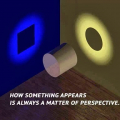
My posting Think Again was mainly to point people to other methods to change one's mind, to open oneself to possibilities.
 person
Re: Space - the final frontier
I am totally sure that won't serve to increase our global carbon footprint or the amount of space trash polluting Earth's orbit. While all the poors struggle to survive in a world after another 1.5 degrees Celsius temperature increase, at least the rest of us will have cheaper trips to space thanks to the guy who tanked Twitter! #debbiedowner
 Jason
Jason
Re: To exist or not?
Perhaps it's simpler.
That which is selfish suffers from the causes of its own disintegration.
That which is selflessness, is suffering's absence itself.
The experience of Death simply being those balance weights measured.
And perhaps some wonder that for all those moments of life or death, that was all it was.
Which is enough.
 how
how