
Best Of
Re: How to practise
There is an analogy that was used by the Buddha in reference to how one should concentrate while meditating, which was like the strings on a musical instrument. String them too tight and the instrument sounds harsh, string them too loose and the instrument loses its melodiousness.
Generally I have found that when the impulse to meditate slackens, it is a good idea to change ones method a bit. For example a few years ago I switched from vipassana style “watching the belly rising and falling with the breath” to shikantaza “just sitting”, and that really helped me.
 Jeroen

Re: Clinging to reason and science
We are all interconnected although we perceive separateness.
Science and religion should be compatible. However, too many persons, especially derived from the Abrahamic traditions, treat science as conflicting with or hostile to their interpretation on religion.
Buddhism and science are, in general, compatible. Even the Buddhist schools that have beliefs at variance with science accept the variances as merely the realm of religion vs the realm of science and continue to embrace both.
(Of course, there are the rare exceptions, but they do not carry the weight of the anti-science movements we see in our Western cultures, especially in the USA.)
Peace to all
 Lionduck
Re: Clinging to reason and science
Telepathic induction is unavoidable so long as there is a being that feels and senses.
We speak to each other here on topics now but we speak from the entire accumulation of our past. We are each other's brothers, sisters, fathers, mothers, sons, daughters, friends, and enemies.
A statement can be taken in a hundred ways. How is the way in which it was intended deduced?
Whether or not it's so, we are not in a closed ecosystem from each other. In fact we are tightly packed in here and every volition from every source reverberates against others, causes others, and proliferates. We each have the opportunity to enhance or diminish those reverberations and bring rise to or cease our own. Wisdom is in knowing what to do with which.

Re: Clinging to reason and science
I do not cling to science, although I appreciate and trust science in the realms of scientific purview. Engineering is the application of a part of science. Engineers applied the concepts arising from science. Science led to all our modern appliances, our medical advances and our understanding of the physical universe as we know it today.
But, i the end, science is a tool or a set of tools, not an ideology.
The purpose of religion is to enhance the quality of life from the non-physical, the spiritual side of life. Religion is supposed to provide a moral guideline, a compass to traverse the vicissitudes of life and enable us to enjoy and gain meaning within our lives.
so, when there is a contradiction between science, it is not science challenging or contradicting religion. It is rather certain religious dogma not accepting the findings science.
It was once, and in some instances, still is, the religious belief that diseases and illnesses were caused by demons and evil spirits. As the understanding of medical science improved, we now know that those demons and evil spirits are bacteria and viruses. We now have vaccines and medicines to counter these "demons and evil spirits".
It is odd that today, so many deny science while using the products of science and the engineering derived from that science to make those denials.
No, I do not cling to science. I do accept the benefits and shortcomings of science. I do accept that the truths of science and that while some truths, in our mundane world, are fact (gravity as applied to daily life, for instance), a great many will and should be constantly challenged for the sake of expanding our knowledge and understanding of the world we live in to better our physical and physiological well being just as we must continue to question and seek our spiritual growth as we are, by nature, seeker after knowledge and truths both in the scientific and the religious realms.
enough stirring of the mud for now.
Peace to all
Lionduck
Re: What is the "Middle-wayed Way" and is that different than the Right Way?
@FleaMarket said:
the times I've had something click and realize you all had been talking about it months ago and I just didn't grasp the way it was discussed really blows my mind. It's comical how an answer can be dangled right in front of the nose and still one can miss it.
The fact that you are seeing these things now means you are gaining new understanding, and that is a very good thing. I would keep on asking questions, because that is the way you get answers formulated to your comprehension.
Jeroen
Re: What is the "Middle-wayed Way" and is that different than the Right Way?
@FleaMarket said:
@Jeroen said:
The fact that you are seeing these things now means you are gaining new understanding, and that is a very good thing. I would keep on asking questions, because that is the way you get answers formulated to your comprehension.Good advice 2 out of 3 current volitions would agree with, but what good is asking if asking proliferates non-positive energy to others?
How does that differ from being a fool causing problems?
What makes asking still wholesome behavior?
not addressed to me, but this reminds me of the basic concepts of virtue and non virtue by the teachings of Lama Lena. To paraphrase, non virtue basically is narrowed down, fixated and accumulation of tensions. Whereas virtue leads to abundance and openness, the widening of attention.
In that sense, as we relate to others and situations we are contributing to either tensions or releasing of such tensions. Do we make those around us filled with more energy, more joy and more openness? Or do we make those around us filled with tension, with strife, etc.
At times we come into situations, where there is a general momentum of virtue or non virtue. Do we add to it? Do we do something else?
And that kind of sense of important to feel and see directly. No one else can do that for us so to speak. And no one can also respond in a way that produces the desired effects.
If our goal is the cultivation of virtue and the moving away from non virtue then it's fairly clear in our system what is going on. In that respect, it is that moment of seeing and responding that is the whole creative challenge of dharma. It's somewhat of a challenge because it's so black and white. Meaning there isn't room for confusion or doubt. There is tension or there is openness/flow.
Obvious capacity needs to be taken into account. Generally in the beginning it's best to avoid negative situations that cause us and others to tense. But once we are able to manage our own mind and being, we are in a unique position to create a LOT of virtue as conscious response. Sharing joy, sharing love, sharing a positive state, sharing in a smile, a kind gesture, a warmth in our tone, to how we hold the door knob, to cracking a joke, to highlighting the beauty in appearance. The ways of virtue are literally endless.
but tldr: virtue is basically energy. positive energy. a fullness of being. non-virtue is a depletion, a tension, a tightness of being, narrow focus which only considers myself. so in that sense its a very clear economics of energy and leaves zero room for fantasy or ambiguity.
just some opinions from a stranger on the internet.
 taiyaki
Re: Time is....
I've often wondered about zooming out the other side of the big bang. Would we eventually see more big bangs fill our view? If the big bang is like a space/time bubble and there are many co-existing at once, it would mean there would have to be a much larger or grander sense of time beyond the one we experience to account for the distance between big bangs or space/time bubbles.
I wonder how much time I've wasted on it.
Re: Attempting to follow a wholesome feeling
In my view most everything is a balance. Take something good to its extreme and it becomes problematic, remove counterbalancing and tempering forces and that good thing becomes fragile.
Measuring the quality of an action by its wholesome feeling I believe is known as moral sentimentalism. When we do something good for someone it gives us a positive, warm feeling. A lot of what we're able to decide about the morality of our choices can stem from that.
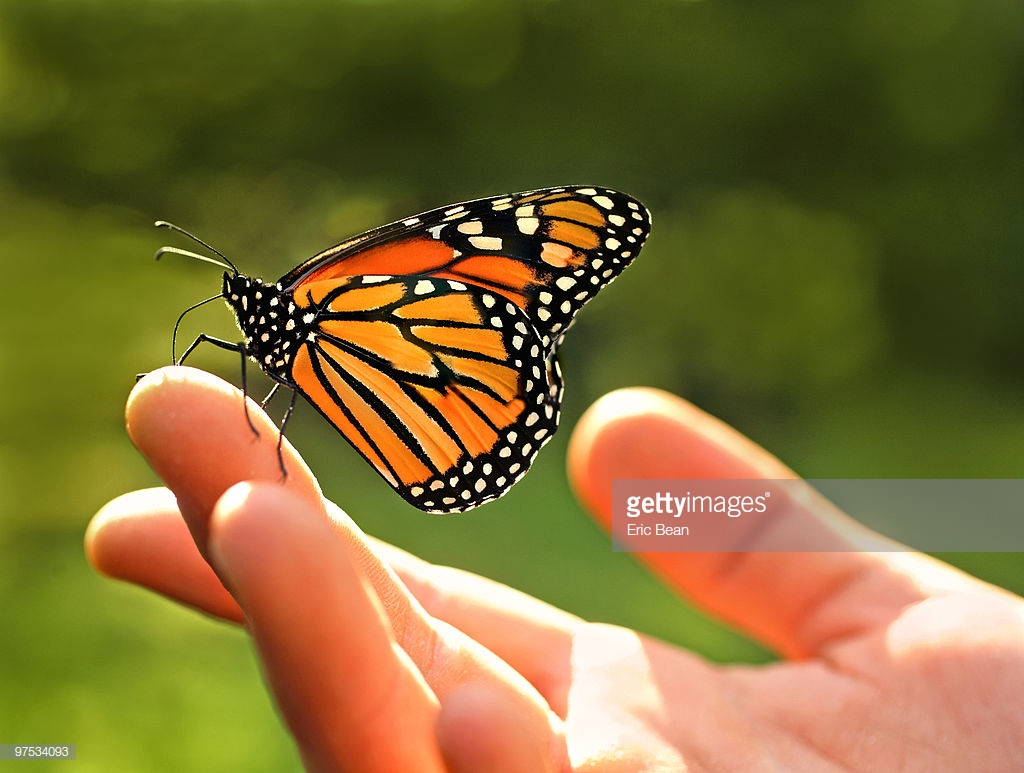
If we let that become the sole driver for our ethics though it can lead us astray. Its important to have a clear understanding of our actions. There's the example of the person who out of kindness helped free butterflies as they were leaving their cocoons. Butterflies need the effort of wriggling out for their wings to work properly though, so his moral sentiment might have given him good feelings about helping, but in his misunderstanding he actually was causing harm.
I think I'm trying to say that while the overall feeling ones conceptual framework of the world gives can guide us in effective ways, it is still important to put effort into knowing the pixels so we're guiding in a true direction. If I'm understanding your analogy correctly.
 person